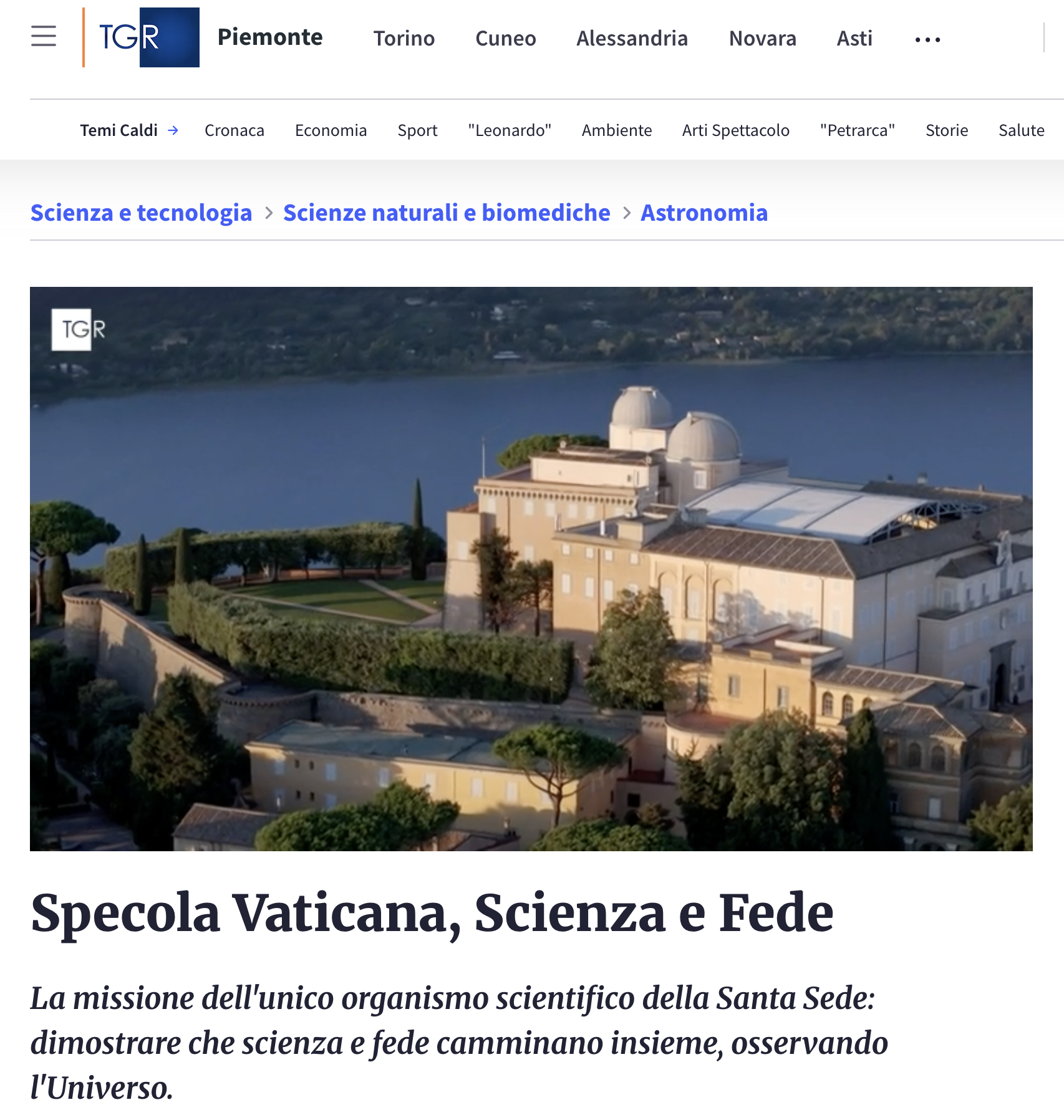
La Specola Vaticana, unico organismo scientifico della Santa Sede, è protagonista di un servizio trasmesso dalla RAI all’interno del programma TGR Leonardo. Il servizio presenta il Direttore, Padre Richard D’Souza SJ, e illustra le principali attività dell’Osservatorio, dall’osservazione delle galassie alla ricerca alla ricerca su intelligenza artificiale e cambiamento climatico. Un’occasione per scoprire come scienza e fede possano camminare insieme attraverso lo studio dell’Universo.
Un documentario affascinante che illumina la storia del telescopio Carte du Ciel, custodito presso le Cupole Barberini della Specola Vaticana, simbolo di un’ambiziosa impresa astronomica tra fine 1887 e fino a 1952. Questo strumento storico fu cruciale per la Carte du Ciel, un’iniziativa internazionale per mappare fotograficamente l’intero cielo stellare. Coinvolse numerosi osservatori nel mondo in una collaborazione pionieristica, catturando posizioni e luminosità di milioni di stelle. Il film utilizza filmati originali, archivi e interviste a vari membri della Specola Vaticana per narrare questa epopea scientifica. Offre uno sguardo sul dialogo tra Chiesa Cattolica e scienza moderna, evidenziando come il Vaticano abbia sostenuto la ricerca astronomica. Realizzato con la Facoltà di Scienze Sociali della Pontificia Università Gregoriana, il documentario mira a valorizzare questo patrimonio e diffondere la storia dell’astronomia a un pubblico ampio.
Può sorprendere il fatto che tra il personale dell’Osservatorio Vaticano impegnato nella ricerca vi sia anche un meteorologo. È così: si tratta di padre C. Bayu Risanto S.I.. E non è il primo.
Infatti, il primo direttore dell’Osservatorio Vaticano, padre Francesco Denza, dell’Ordine dei Barnabiti, era a sua volta un meteorologo. Prima di essere nominato direttore dell’Osservatorio Vaticano, fondò l’osservatorio meteorologico di Moncalieri e la Società meteorologica italiana. Inoltre, le «Direttive per la Specola Vaticana», approvate da Leone XIII nel luglio 1890, in vista della fondazione ufficiale dell’Osservatorio avvenuta nel 1891, stabilivano che una delle cinque principali aree di ricerca dell’istituzione sarebbe stata la meteorologia.
In passato, lo studio della meteorologia presso gli osservatori astronomici era un fatto comune. Noto per il suo «meteorografo» era per esempio padre Angelo Secchi S.I., il pioniere dell’astrofisica il cui osservatorio, costruito sopra la chiesa di S. Ignazio a Roma con il sostegno finanziario di Pio IX, fu un predecessore dell’Osservatorio Vaticano. Quella stazione meteorologica meccanica, sviluppata negli anni Cinquanta dell’Ottocento, era in grado di «registrare simultaneamente tutti i fenomeni atmosferici con indicazioni grafiche continue e reciprocamente confrontate». Oggi, gli studi dei meteorologi sull’atmosfera della Terra, offrono insegnamenti applicabili alle atmosfere planetarie in generale, così come gli studi sulla stella più vicina, il Sole, forniscono indicazioni utili per la comprensione delle stelle.
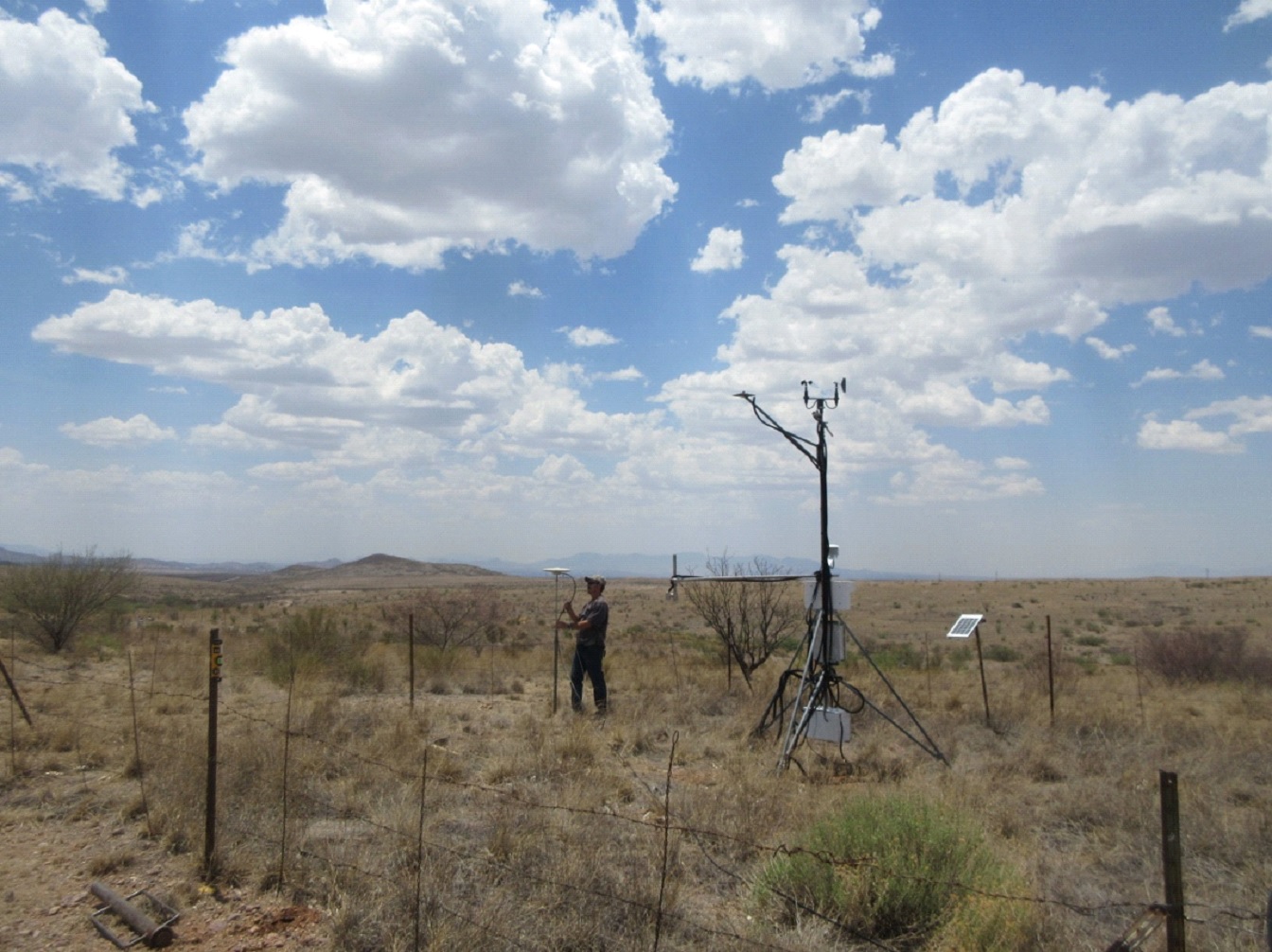
Installazione di un’antenna GPS presso il sito della stazione meteorologica automatizzata a est di Tombstone, in Arizona. Foto di David K. Adams.
Indubbiamente, la gente ha maggiore familiarità con i meteorologi che con gli astronomi. Ai nostri tempi le previsioni meteorologiche sono indispensabili. Vengono consultate per ogni cosa: dalla gestione delle attività quotidiane personali al trasporto di merci attraverso gli oceani, dalla pianificazione delle rotte dei voli commerciali alla gestione delle compagnie assicurative. Le previsioni meteorologiche moderne si basano su equazioni di dinamica fisica (dei fluidi) che modellizzano l’atmosfera terrestre e sono alla base dei modelli meteorologici. La natura delle atmosfere planetarie è tale che queste equazioni sono estremamente sensibili a piccole variazioni nei dati di ingresso e richiedono calcoli ripetuti per produrre una previsione attendibile. Solo con l’avvento dei moderni calcolatori, negli anni Cinquanta del Novecento, questo tipo di previsione ha potuto compiere reali progressi, soppiantando il precedente metodo analogico, nel quale il previsore confrontava le osservazioni del presente con schemi meteorologici del passato per anticipare l’evoluzione del tempo.
Una parte del lavoro di padre Risanto si concentra sull’assimilazione dei dati, finalizzata a migliorare le prestazioni dei modelli meteorologici. Questi necessitano di dati di ingresso relativi a determinati processi microfisici, come le variazioni nella quantità di vapore acqueo presente nell’atmosfera o la collisione e la coalescenza delle gocce d’acqua nelle nubi; su questi aspetti, tuttavia, i meteorologi non dispongono ancora di una comprensione pienamente soddisfacente. Per limitare le conseguenze di tali incertezze, aggiornano con regolarità alcune variabili del modello (come il vapore acqueo) mediante l’immissione di nuovi dati, così da correggerne l’evoluzione e ridurre gli errori di previsione. Questo procedimento è per l’appunto noto come «assimilazione dei dati».
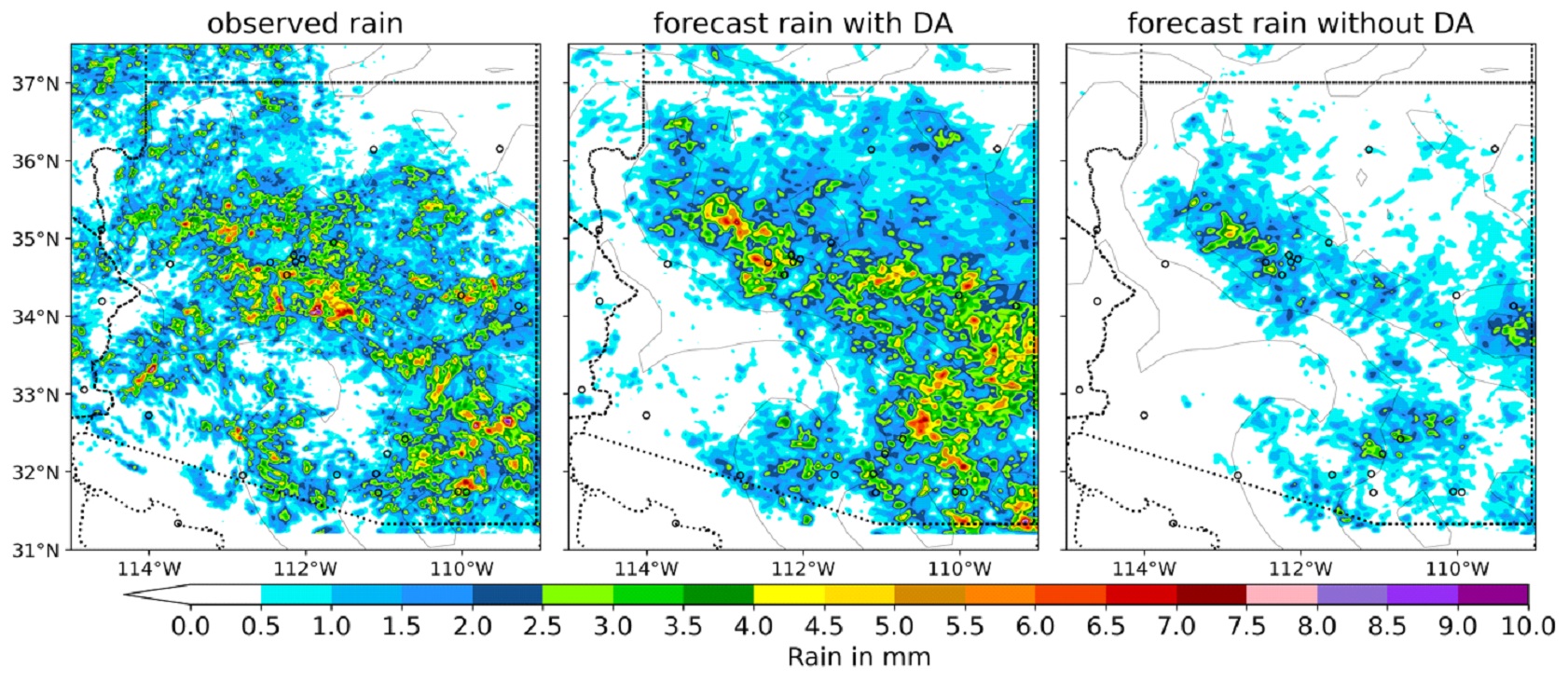
Precipitazioni osservate (a sinistra), precipitazioni previste con assimilazione dei dati (DA) (al centro) e precipitazioni previste senza assimilazione dei dati (a destra) sul territorio dell’Arizona. Si noti che il modello accoppiato con l’assimilazione dei dati migliora la previsione delle precipitazioni. In assenza di assimilazione dei dati, il modello prevede precipitazioni molto scarse. (Da un lavoro di Risanto et al. attualmente sottoposto a revisione paritaria).
Nel 2023 padre Risanto e un gruppo di altri meteorologi hanno pubblicato l’articolo «On the Collective Importance of Model Physics and Data Assimilation on Mesoscale Convective System and Precipitation Forecasts over Complex Terrain» sulla rivista Monthly Weather Review. Più recentemente, il suo gruppo ha presentato il contributo «Impacts of Assimilating GPS-PWV in Convective-permitting Model on Forecasting Monsoon Precipitation over Arizona Complex Terrain» all’Assemblea generale 2025 dell’European Geosciences Union (EGU). Il lavoro discusso all’EGU illustrava una collaborazione tra l’Università dell’Arizona e l’U.S. National Center for Atmospheric Research: una mini campagna sul campo per l’osservazione dell’umidità atmosferica, che è stata effettuata nel 2021 valendosi di antenne del Global Positioning System (GPS) collocate in trentuno siti distribuiti in Arizona (Stati Uniti) nel corso dell’estate, ossia la stagione monsonica (figura 1). Il gruppo di Risanto è riuscito a migliorare in modo significativo le previsioni, come si può osservare nella figura 2. Attualmente, l’obiettivo è quello di compiere ulteriori progressi sfruttando una quantità maggiore di dati da assimilare: entrano in scena i dati sull’umidità rilevati, mediante uno strumento denominato MicroPulse Differential Absorption Lidar, che si aggiungono a quelli forniti via GPS.
In questo modo, l’Osservatorio Vaticano contribuisce a migliorare uno strumento scientifico indispensabile nell’epoca di Leone XIV, onorando al contempo la propria missione storica così come fu delineata da Leone XIII.
Christopher M. Graney Responsabile delle pubbliche relazioni della Fondazione Osservatorio Vaticano
Una bella notizia per la comunità scientifica: due asteroidi hanno ricevuto il nome di due gesuiti legati alla Specola Vaticana. Non è la prima volta che accade, ma ogni nuova intitolazione è un segno di riconoscimento importante per il lavoro svolto nel campo dell’astronomia.
(805215) Junkes = 2016 CA389
Scoperto il 29 febbraio 2012 da K. Černis e R.P. Boyle sul Monte Graham, l’asteroide (805215) Junkes è dedicato a Joseph Junkes(1900-1984). Gesuita tedesco, padre Junkes entrò a far parte del Laboratorio Astrofisico della Specola Vaticana nel 1935 come assistente e ne divenne direttore nel 1953. Contribuì in modo significativo alla realizzazione di importanti atlanti spettrali, strumenti fondamentali per lo studio delle stelle. È ricordato anche per aver sviluppato e perfezionato il metodo della “fotometria a larghezza equivalente delle righe spettrali”.
(824655) Funes = 2017 DG71
Scoperto il 24 novembre 2012 dagli stessi astronomi, l’asteroide (824655) Funes porta il nome di José Gabriel Funes (nato nel 1963). Gesuita argentino, padre Funes è stato direttore della Specola dal 2006 al 2015. Specialista in ricerca extragalattica, si è occupato in particolare della formazione delle galassie e dell’evoluzione stellare. Durante il suo mandato ha seguito il trasferimento dalla sede centrale dell’Osservatorio dal Palazzo Pontificio ai nuovi spazi, rafforzando le attività scientifiche e promuovendo con impegno il dialogo tra fede e scienza.
Queste due nuove intitolazioni si inseriscono in una tradizione già esistente: nel tempo, diversi asteroidi sono stati dedicati a gesuiti e collaboratori della Specola. Ogni nuovo nome assegnato testimonia il contributo che gli scienziati della Specola hanno dato, e continuano a dare, alla studio dell’universo.
Lo scorso 30 gennaio presso l’Istituto Massimiliano Massimo si è tenuto l’evento “Un secolo di luce e di amore” in ricordo di Padre Sabino Maffeo, SJ.
Padre Sabino ha ricoperto molti ruoli importanti sia nella Compagnia di Gesù che in Vaticano. È stato provinciale della Provincia gesuita di Roma e ha ricoperto incarichi di grande responsabilità presso l'Istituto Massimo, Radio Vaticana e infine alla Specola Vaticana.
Dal momento che sarebbe stato difficile riassumere nel corso dell’evento la storia della sua vita, per ricordarlo abbiamo pensato fosse più significativo dare voce alle persone che lo hanno conosciuto nelle diverse fasi della sua vita.
Siamo stati molto onorati della presenza di Mons. Emilio Nappa, Segretario Generale del Governatorato dello Stato della Città del Vaticano.
L’evento è cominciato alle 18,00 e ha visto la partecipazione di circa centocinquanta persone tra le quali molti ex alunni di Padre Maffeo.
La Santa Messa è stata celebrata da Padre Federico Lombardi, SJ che ha lavorato con Sabino a Radio Vaticana.
Al termine della celebrazione sono seguiti alcuni interventi in ricordo di Padre Sabino.
Padre Sergio Cavicchia, S.J, attualmente parroco di San Saba ed ex-collaboratore di Padre Maffeo, che ha insegnato fisica e religione all'Istituto Massimo ci ha raccontato del famoso laboratorio di fisica da lui realizzato.
lI Prof. Ezio Bussoleti, Presidente di E-geos che ha lavorato per anni presso l’ASI, ci ha offerto uno sguardo sulla figura di Padre Maffeo dal punto di vista dei suoi ex alunni.
Padre Gabriele Gionti, vice-direttore della Specola Vaticana, ci ha parlato dell’operato di Padre Sabino presso la Specola Vaticana.
Alla fine abbiamo avuto l’intervento del Dottor Vincenzo Scoto di Palumbo, ginecologo e nipote di Sabino, che in rappresentanza della sua famiglia ci ha offerto uno sguardo più intimo sulla figura di Padre Maffeo.
L’evento si è concluso con un rinfresco che ha contribuito a creare un clima di piacevole condivisione tra i partecipanti.