
01 The Origins of the Specola
The Specola Vaticana (Vatican Observatory) can trace its roots to two different strands of astronomical institutions supported by the Church. Astronomers at the Vatican participated in the Gregorian reform of the calendar in 1582, and the Vatican continued to support astronomy as a part of the Holy See on and off for the next three hundred years. Meanwhile, other astronomical research programs were begun by the Jesuits at the Roman College at the time of Galileo.
However, by the 1860s most of the territory of the Holy See had been incorporated into the new Italian state, and in 1870 Rome itself became part of Italy, leaving the Holy See as merely a small enclave around St. Peter’s. The expropriation of the Roman College Observatory by the new Italian State in 1879 deprived the Holy See of the last place to carry out astronomical research. This was all the more to be decried because this institute, the home of the Jesuit astronomer Fr. Angelo Secchi (cf pp 89-90), had become a world-renowned observatory.
But the Church soon found a new motivation for the support of science.
In 1888, for the jubilee of the priesthood of Pope Leo XIII, a special exhibit was set up of instruments used by the scholars of the Italian clergy in meteorology and seismology. This display had a clear apologetic purpose: it was meant to show that the Italian clergy were not as backward in science as certain quarters would have led one to believe. The collection of instruments made up one of the most interesting sections of the great fair and it met with approval of the Pope, who was known for his interest in the development of science.
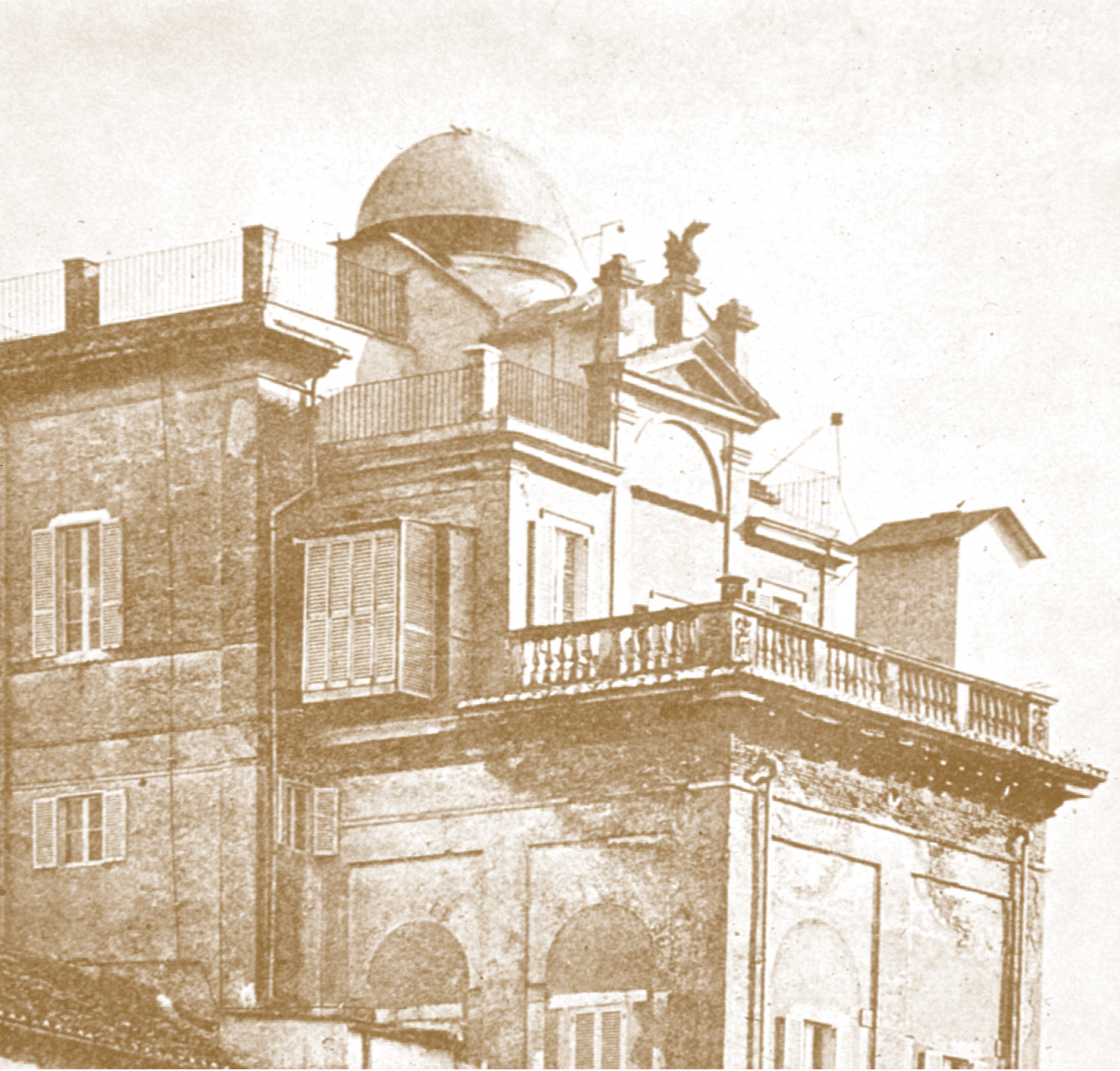
When the exposition ended, the gifts of artistic value found homes in the various parts of the Pontifical rooms. But the Pope had a particular interest in the scientific collection and he wished to see it kept together and used for scientific research. Father Francesco Denza suggested that the instruments be arranged in Gregory XIII’s Tower of the Winds, which had been abandoned for some time. There, where an earlier incarnation of the Vatican Observatory had been located up until 1821, once again the observations could be taken up which would bring new glory to that ancient place of study and research. This new institute, Specola Vaticana, would depend on the Supreme Pontiff through the Secretariate of State with respect to the projects it was to pursue. For administrative matters, on the other hand, it reported to The Prefecture of the Sacred Apostolic Palaces.
The Specola was founded at a propitious moment. Leo XIII saw that not only would such an institution offer the opportunity for official recognition for the Church in a field of international scientific research, but as a Papal observatory it would also offer the Holy See a way to be recognized by other nations as an independent body, and not a part of Italy.
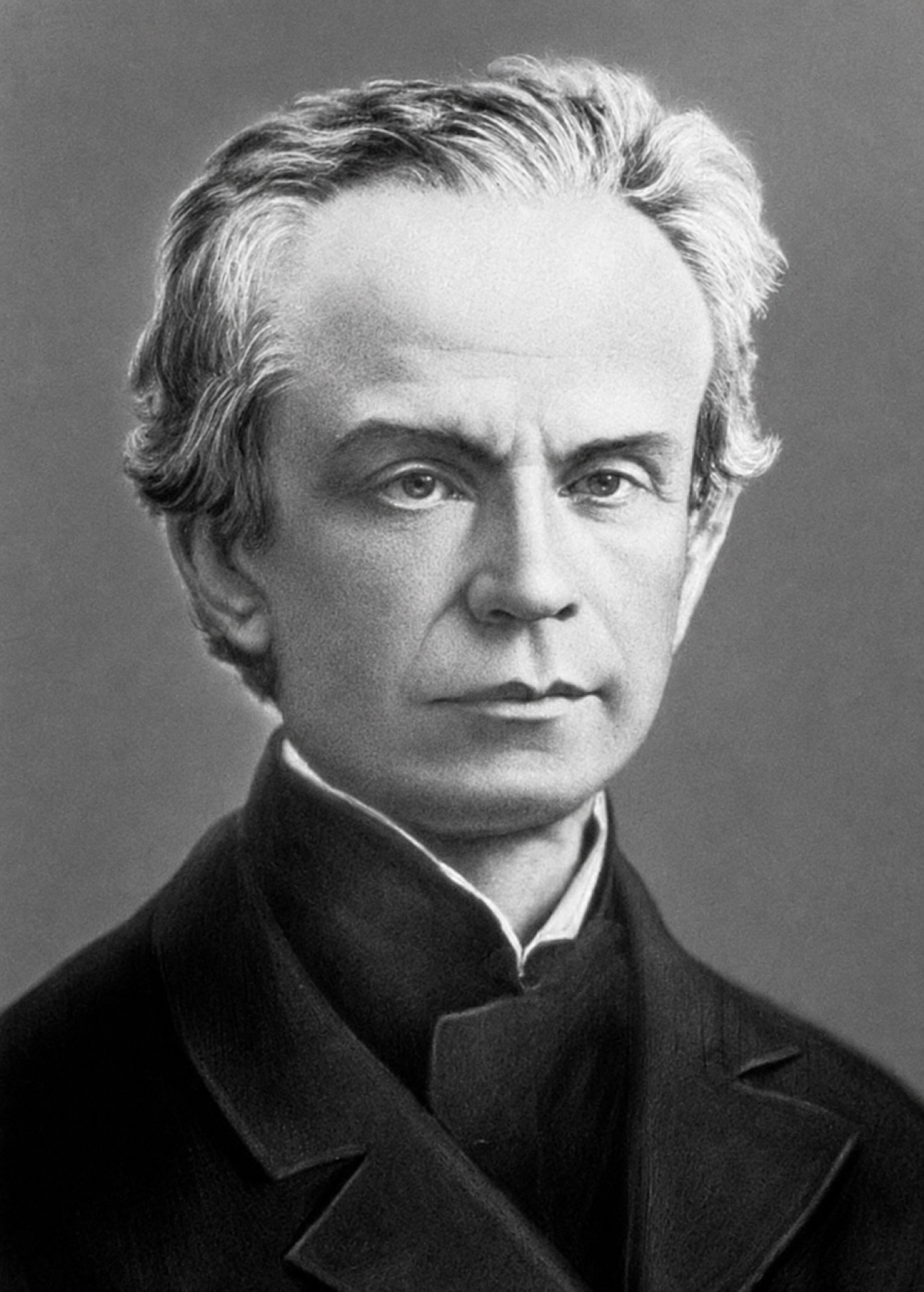
The Pope appointed Denza as director of the new institute, and appointed to the staff those who had helped him in preparing the exposition. Denza was able almost immediately to enrich the existing array of instruments with others coming from the estate of the Marquis of Montecuccoli, who had operated a private observatory at Modena. Among these instruments there were two valuable Merz refractors, one of aperture 10.2 cm on an equatorial mounting and the second of 10.6 cm aperture on an altazimuth mounting. In addition there was a Stark coudé meridian telescope and four precision pendulum clocks for the measurement of sidereal time, plus another clock donated by Riefler of Munich for the jubilee of the Holy Father.
A rotating dome of 3.5 meters with a slit opening of 58 cm was soon installed on the Tower of the Winds to house the small Merz equatorial. This was the first of four domes that would be erected within the next few years in the Vatican. Thus the observatory soon began to operate.
02 Denza and the Carte du Ciel
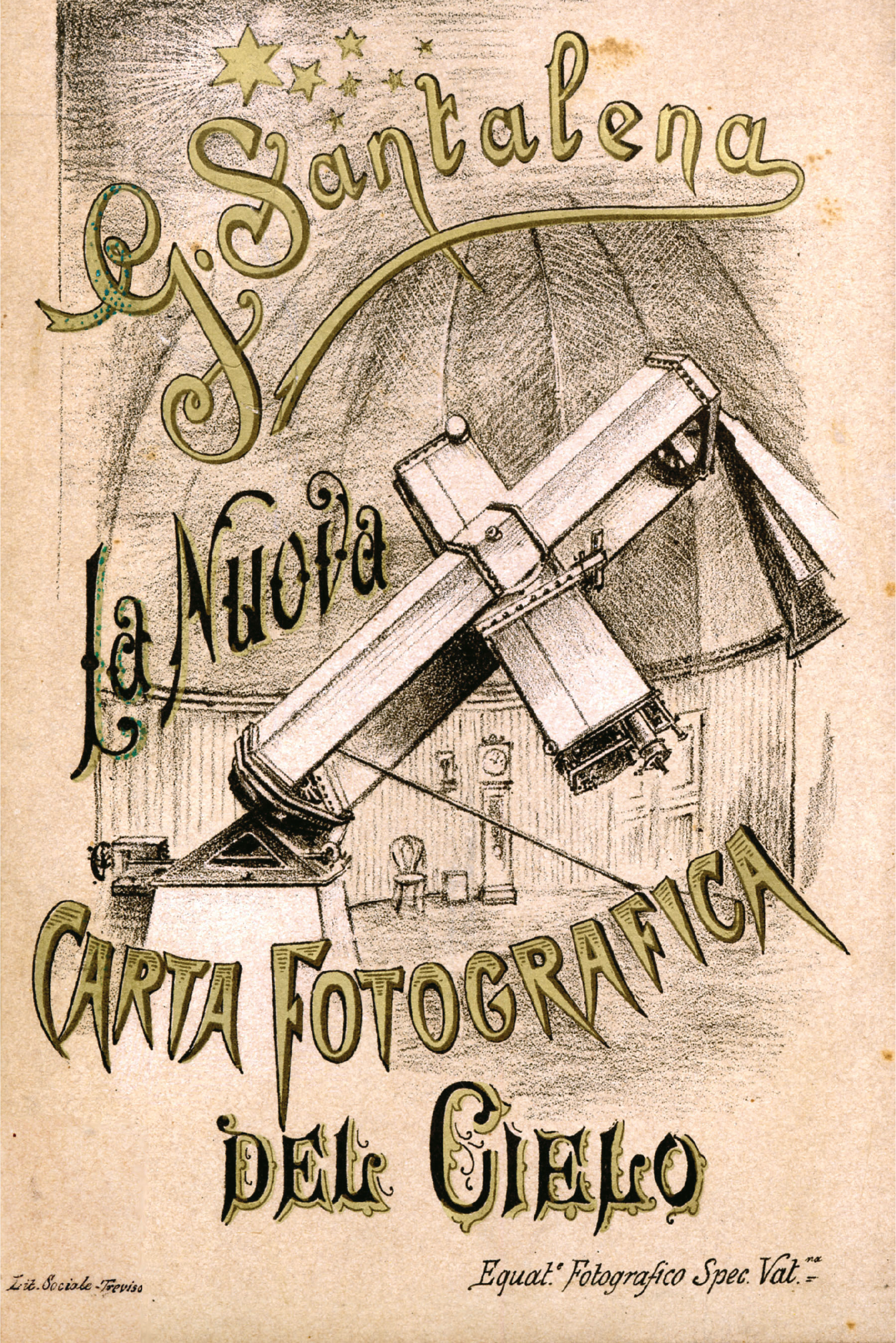
Denza had, in fact, followed with close attention the most recent efforts of the astronomers of his day. At that time a number of astronomers under the leadership of the director of the Paris Observatory, Admiral Mouchez, were preparing an international initiative to photograph and measure the whole sky in a uniform way. From this would come the first photographically-based atlas of the stars: the Carte du Ciel (Map of the Sky). Based on these photos, a map and a catalogue of the stars would be produced.
The first meeting of these astronomers, assembled in Paris in 1887 under the patronage of the Academy of Sciences, set up the basis for this grandiose project and spelled out the direction to be taken. In a second meeting in 1889 the exact details of the undertaking were established. First of all it was necessary to set up the individual zones of the sky and to assign them to observatories that were willing and able to participate in the huge project.
Denza had a sharp eye for recognizing this as an excellent opportunity for the Vatican Observatory and he proposed to the Holy Father that they become part of this initiative. He argued that participation in this program was the most fitting opportunity that could be offered to the Specola at that time, so that right at the beginning it would have the recognition necessary to carry out in the most effective way possible the mission given to it by the Pope: to nourish to the maximum extent the dialogue between the Church and the world of science.
The proposal was accepted, and the Vatican was given its swath of the sky to map. Denza obtained one of the standard astrographic telescopes to be used by all participants, and ordered from Gautier a macro-micrometer for the measurements of the catalogue plates. Afterwards the French government, with Admiral Mouchez as intermediary, bestowed the prize of Knight of the Legion of Honor on Denza in recognition of his work in having the Specola involved in the astrographic research of the Carte du Ciel.
In the history of astronomy this enterprise represented the first great example of international collaboration in an astronomical program which was both well defined by agreements and worked out beforehand. In fact eighteen observatories located in countries on all continents participated in the project; later on four other observatories joined. Each of the participating observatories was assigned a strip or zone of the sky, lying between two parallels of declination of the celestial sphere, and two series of photographs were to be taken: a short exposure to catalog the stars down to 11th magnitude by their brightness and position; and a longer exposure to reach 14th magnitude. Enlargements of the photographs were to be printed for the map.
The Specola was assigned the strip between the parallels of +55 and +64 deg. To cover this completely and with some overlap would require 1040 plates (later reduced to 540), both for the Catalogue and for the Map.
In order to guarantee that one would be able to distinguish true stellar images from spurious ones due to imperfections on the photographs taken for the mapping project or on the prints, multiple exposures were taken on a single plate, at least for half of the plates. For the Map it was decided that three forty minute exposures would be taken on each plate by closing the shutter and moving the telescope slightly in such a way as to place the three images at the vertices of a very small equilateral triangle at whose center lay the exact position of the star. Also for the Catalogue it was decided to take three exposures of 6 minutes, 3 minutes, and 25 seconds by moving the equatorial telescope between exposures by a small angle in declination. The exposures were much shorter than required for the Map, since the Catalogue only went to 11th magnitude.
On every plate, whether for the Map or for the Catalogue, before the exposure a faint reticle, which consisted of 26 x 26 little squares, one-half cm on a side, was photographed to serve as a reference frame for the precise determination of the position of each star. The triple image of each star was also useful for identifying those stars whose images might be covered by one of the lines of the reticle.
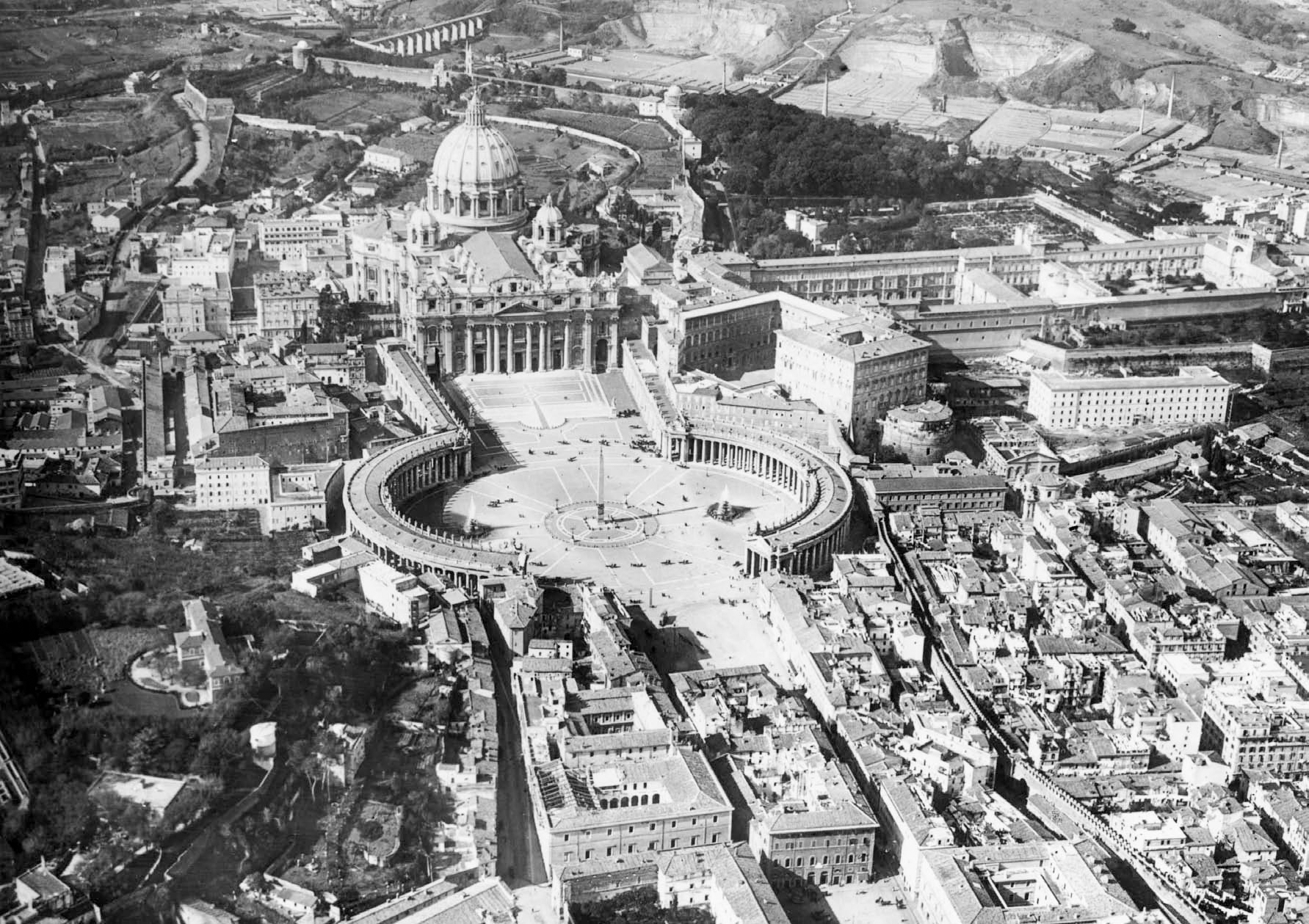
Now it became necessary to find a place for the Carte du Ciel telescope. This construction, close to the present-day location of the Vatican heliport and known today as the Torre S. Giovanni (St. John’s Tower), has walls a good four and a half meters thick and is one of the few bastions still standing of the fortification which was called “leonina” because Saint Leo IV had it built in 840 as a defense against the Saracen invasions. The circumference was large enough for the installation of an eight meter dome, and the strong vaulted arches guaranteed that the astrograph would be free of oscillations. Since the tower rose to a height of twenty meters above ground level on the highest point of the Vatican Hill, at about one hundred meters above sea level, there was an unobstructed view on all sides. (And, of course, in those days electric lights from the city were not yet a serious problem for astronomers.)
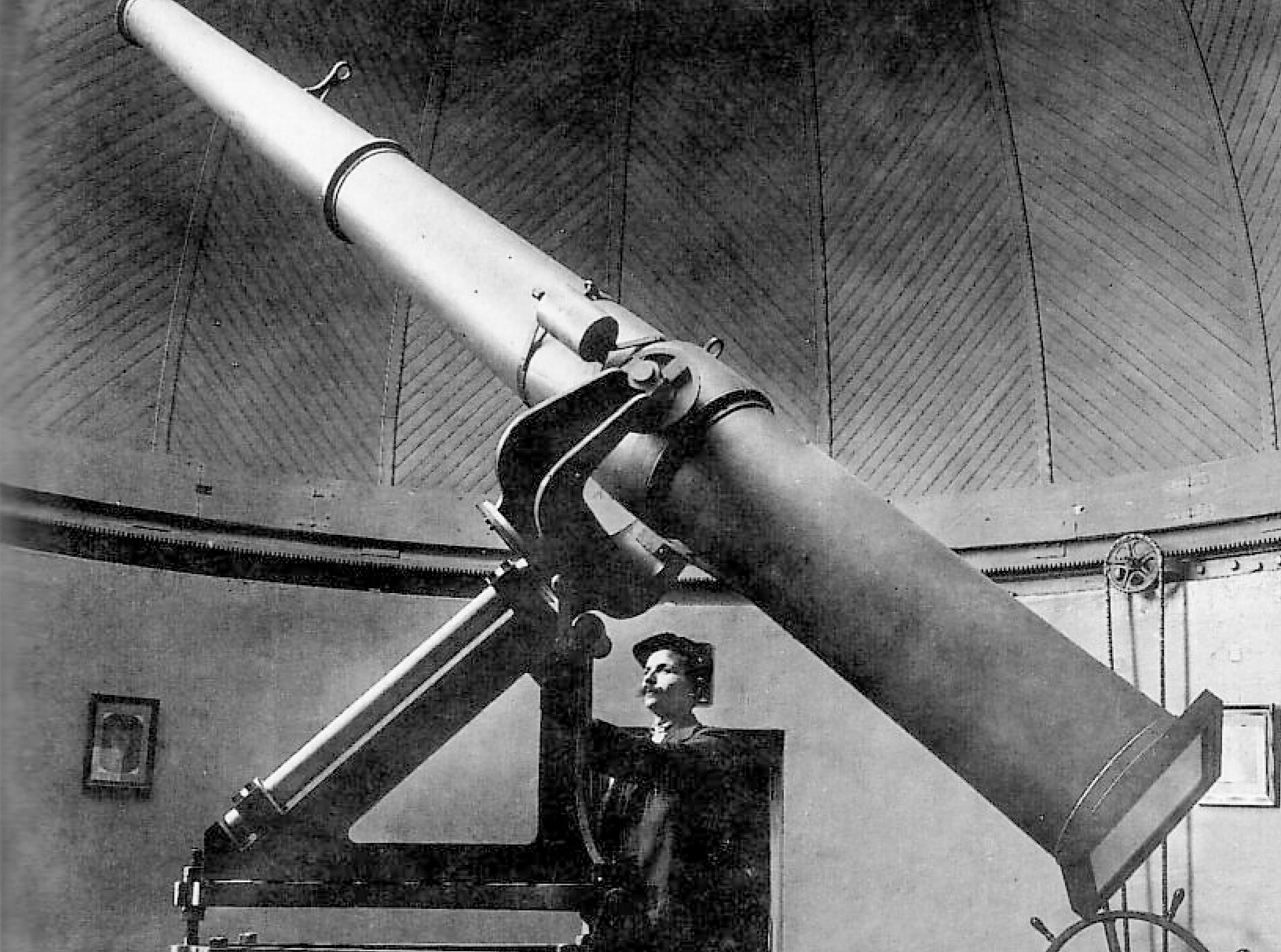
The photographic equatorial telescope and the rotating eight meter dome, which was also constructed at Paris in the Gilon workshops, were set in place on the Leonine Tower in 1891. The characteristics of the objective gave, on a photographic plate 16 cm square, a useful field 13 cm square, equivalent to two degrees on the sky, about four times the diameter of the moon. The scale, therefore, was about 1 arc-minute/mm.
The Paris agreements provided that all of the eighteen observatories participating in the Carte du Ciel would obtain instruments – not necessarily from Gautier and Henry – that had the same characteristics so that a perfect homogeneity of the results would be assured. The proven ability of the brothers Paul and Prosper Henry of the Paris Observatory in the fabrication of objectives particularly suited for sky photography was a decisive factor in convincing their director, Admiral Mouchez, to undertake the international sky mapping project. Thus in 1891, with the sound placement of this principal instrument in order to collaborate in the great program initiated in Paris, the new Specola had all of a sudden gone from its modest beginnings to become an important institute on the international scene.
On 14 March 1891 Leo XIII solemnly confirmed, with his Motu Proprio, Ut Mysticam, the foundation of the Specola Vaticana (see pp 166 ff); and with a financial contribution he assured its operation.
In 1893 the Specola’s equipment was still further enriched with a heliograph, a telescope especially designed for photographing the Sun. It had been made in Paris, the optics by the brothers Henry and the mechanics by Gautier according to plans of Prof. Janssens of Meudon. It had an objective of 14 cm diameter and a focal length of 2.15 m. With its magnification system it reached 4.4 meters in length and produced on the photographic plate an image of the Sun 27.5 cm in diameter. The first of its kind in Italy, it was placed on the terrace of the monumental New Wing of the Museum of Pius VII and for esthetic reasons it was covered by a sliding flat roof and not by a dome. Later on it was placed under a small dome on the terrace of what is today the convent, Mater Ecclesiae, which John Paul II brought to the Vatican.
From the time he first came to the Specola as Director, Denza took care of the continual flow of correspondence with other institutes and individuals. The remainder of his time he spent in editing the observatory publications. In 1892 he was appointed president of the Pontifical Academy of the Nuovi Lincei (PANL), the Vatican’s academy of sciences at that time, but unfortunately he was not able to enjoy very long the fruits of his incessant labors to give new life to the Specola. His energies were depleted and coming to an end. In 1886 he had already suffered a cerebral hemorrhage which paralyzed his right side. Fortunately, there was no damage to his intellectual faculties, so that, after learning to write with his left hand, he continued to dedicate himself to the almost superhuman task which he had taken up. But on 13 December 1894, following a Papal audience and a visit to the Cardinal Secretary of State, he suffered another stroke and the following day he passed away. He was mourned by his colleagues throughout the world. He dedicated the last energies he had to the completion, in an incredibly short time, of the great work and he made sure that it was provided for in the future.
03 Lais and the Photographic Project
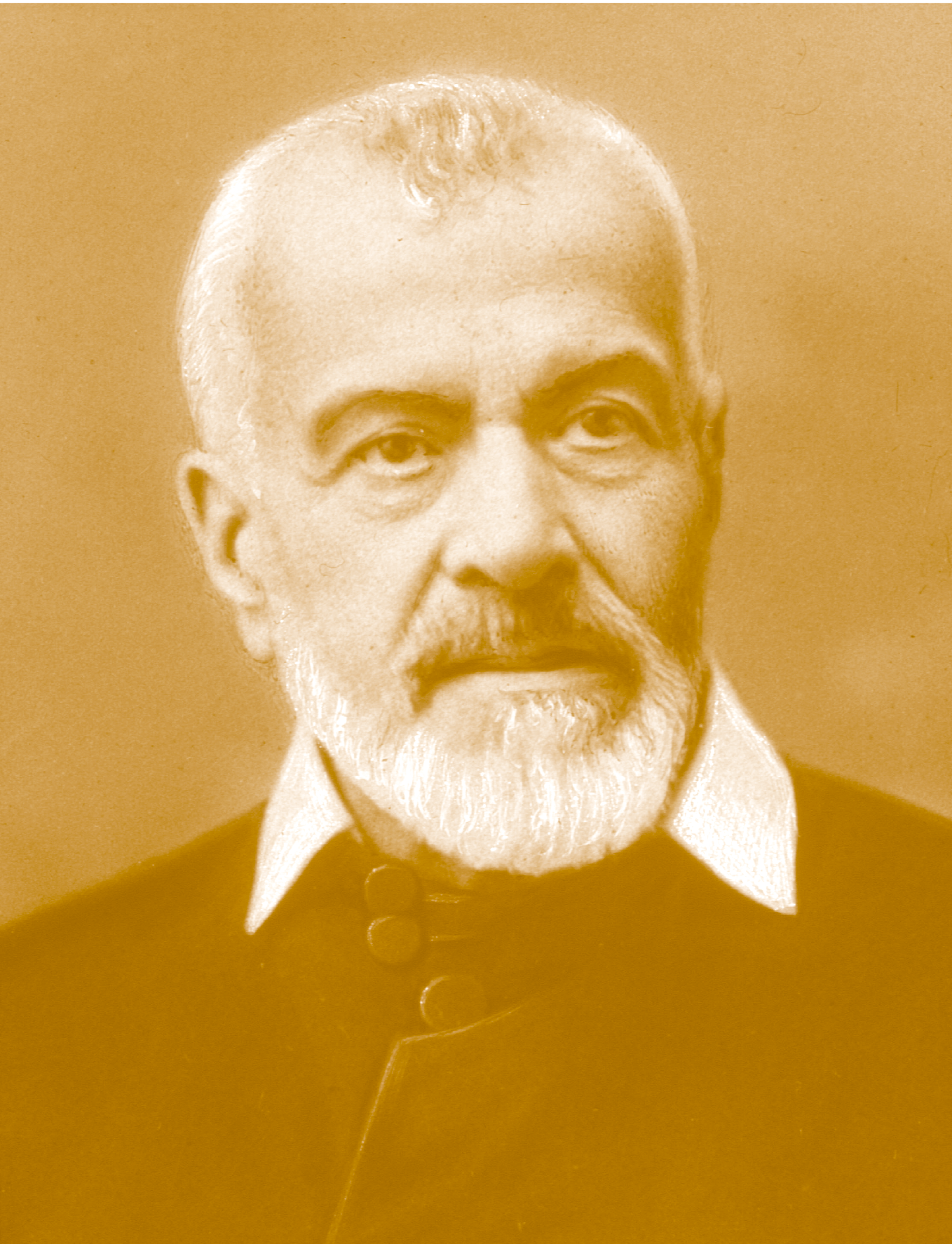
Although Denza’s death was a serious loss to the Specola Vaticana, he left the conduct of the principal project, the photographic map of the heavens, in competent hands and, thanks to the conscientiousness and tenacity of the vice director, Father Giuseppe Lais, there was no delay in the project.
When Denza invited the Italian clergy to join in the collection of instruments for the exposition, Lais not only made a contribution of instruments but he gave himself enthusiastically to organizing and preparing it. It is no surprise, therefore, that after the celebrations he was called by Leo XIII to assist at Denza’s side, as Vice Director, in the reconstruction of the Specola Vaticana.
Since he was dedicated to celestial photography, for many years the principal research work of the Specola, it is impossible to speak of this work without recalling the painstaking work which Lais performed for the Astrographic Catalogue and the Map of the Heavens without interruption right until the time of his death. He showed no self interest and completely dedicated himself to serving the Specola in this work. In fact, in addition to the fact that he received no payment for his work, on not a few occasions he made contributions to the photographic work and he obtained grants from the Académie des Sciences. He also donated some costly and important magnetometers to the Specola.
Lais was a member of the PANL from 1875 onwards and he was dean for many years. He demonstrated competency in a vast array of professional interests. His innumerable articles, listed in the Proceedings and the Memorie of the PANL and in the publications of the Specola, range from meteorology to astronomy, from the history of science to archaeology, from chemistry to physics, from geophysics to celestial photography.
At the death of Father Bertelli in 1905 he was named to succeed him as President of the PANL. He fulfilled seven two-years terms of office and served almost to the time of his death, 26 December 1921. Only a few days before Pope Benedict XV had sent him a gold medal with a letter of thanks and praise for his constant zeal, exemplary accomplishments and completely selfless dedication to serving the Holy See.
With youthful enthusiasm Lais, already 45 years old, put himself to the job of carrying out the photographic program taken on by the Specola at the Paris meeting. He went to Paris and at the observatory of the French capital he learned the secrets of astronomical photography and of how to measure stellar positions on photographic plates.
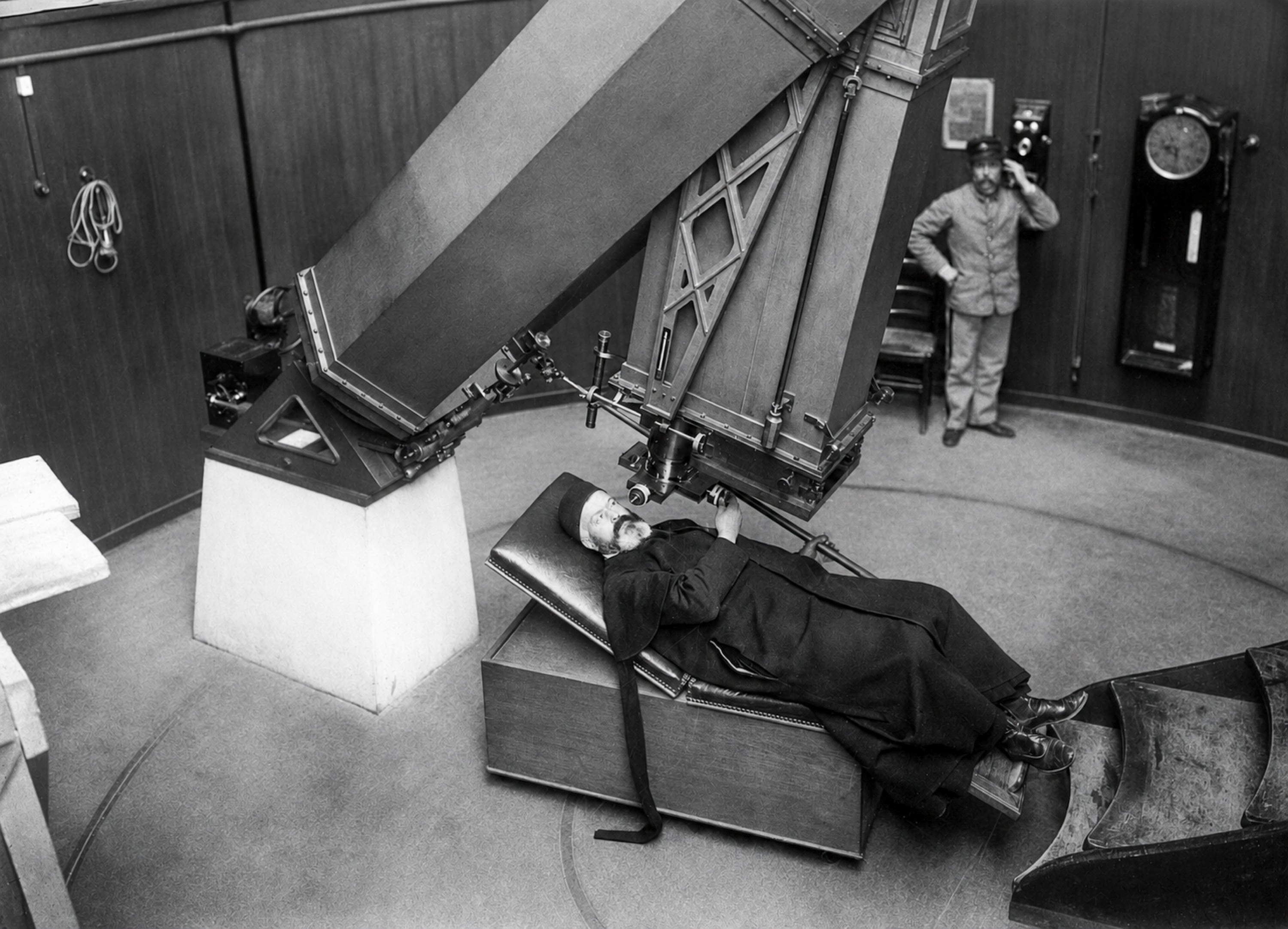
The photographs for the Catalogue began in 1894 and those for the Mapping in 1900. In the first years he worked only every other night in the Leonine Tower in close collaboration with Engineer Mannucci. However, when Mannucci was called to another job, it was left to Lais alone to carry out this monotonous work for twenty long years, a work which he accomplished most conscientiously and without counting the personal costs.
There is little doubt that the real reason why the Specola did not have to face any particular difficulties, as did many other of the participating observatories, especially at the beginning, in the Carte du Ciel program, was that a person like Lais was right from the start able to dedicate himself totally to this work.
The “trials and strain” did not hinder him from enjoying a degree of contentment in certain by-products of the work itself as when, for instance, upon examining a plate taken on 28 October 1900 in the constellation of the Pleiades he discovered an asteroid.
Of the 1040 plates which the Specola was to take for the catalogue, almost all were completed at the time of his death in 1921; and of the 540 plates for the mapping project, each requiring a two hour exposure, 277 were completed and some of them enlarged and published. But the Catalogue, consisting of a list of the stars by magnitude and position, was not yet worked out, even though this was really the principal goal which the Specola had set out to accomplish. As we shall see, it was left to Father Hagen to take up this work and bring it to a happy ending.
04 A Jesuit Comes to the Specola
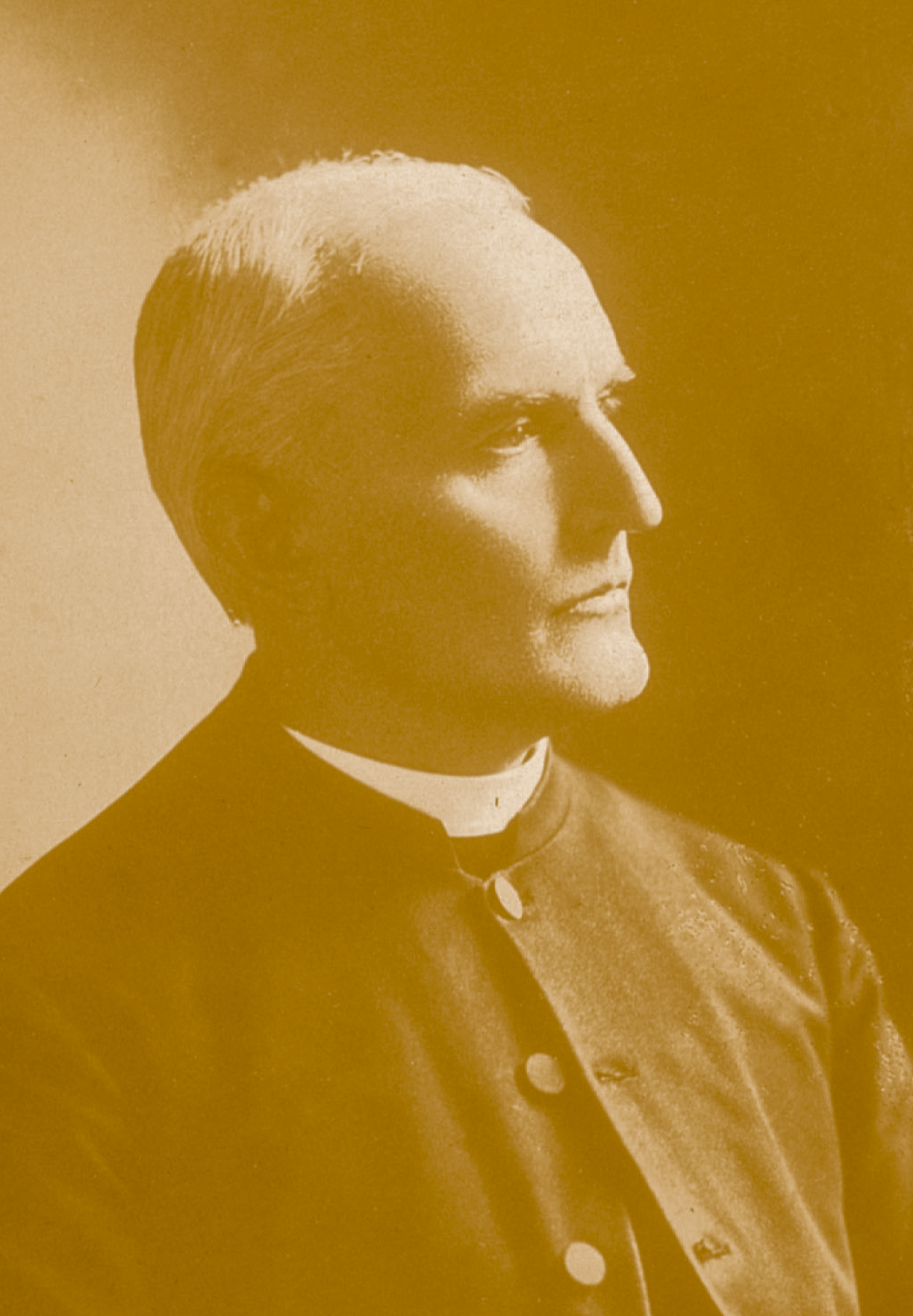
Upon the death of Father Denza, it was difficult to find a new director. For four years, the Specola continued its work under the administration of the Vice-Director, Father Lais; but Lais was completely taken up with photographing the sky at the telescope. Meanwhile, other scientists assigned to the Specola included a seismologist (following a strong earthquake felt in Rome on 1 November 1895) and a meteorologist, who was named its director. Unfortunately, their attempt to help out with the astronomical work was less than successful, and the scientific reputation of the Specola began to suffer. Finally, in November of 1904, Pope Pius X appointed the archbishop of Pisa, Pietro Maffi, to reorganize the Specola and search for a new director. After more than a year of very delicate negotiations, in February 1906 the decision was finally made: the new director would be the Jesuit priest Johan Hagen (born in Austria, but by then an American citizen and director of the Georgetown Observatory in Washington). And, at the insistence of the new director, its work would concentrate solely on astronomy.
At the age of almost 60 years the new director did not face an easy task. Helped in his first four years by Father Johan Stein, a young Dutch Jesuit astronomer and his future successor, Hagen put himself to the task of reactivating the Specola with youthful vigor and an iron will, reorganizing its astronomical and scientific programs.
For some time the astronomers had faced a serious inconvenience due to the fact that the space assigned to the Specola was too spread out and that the employees did not have sufficient living and work areas. At the suggestion of Monsignor Maffi, Pius X in 1906 sought to remedy the situation and he very graciously put at the disposal of his astronomers his personal Villa, today the headquarters of the technical division of the Vatican Radio. (Leo XIII had had the Villa constructed as a summer retreat in the shadows of the ancient Leonine fortifications; in his last years the old Pontiff had stopped going there and his successor, Pius X, had no intention of making further use of it.) The availability of space and the favorable position of this building, in direct contact with the second large tower still remaining of the fortification, made it the most appropriate for the the observatory offices.
The massive tower next to the little villa was just as stable as the other tower which already supported the photographic telescope, and actually had a larger circumference. It was immediately chosen for the large refractor which was placed there in 1909. The mechanical structure was made by Gautier of Paris and the optics by Merz of Munich. It had an objective 40 cm in diameter, a focal length of 5.5 m, and it was placed under a dome 8.8 m in diameter.
Under the dome and the strong vault which supported the telescope, there was a circular room in which Leo XIII had used to give audiences during the summer months when he resided there. On the semi-spherical vault the Pope had commissioned the noted painter, Ludwig Seitz, to paint the starry sky over Rome at the time of the culmination of the constellation of Leo – an obvious allusion to the Pontiff’s name – so that this constellation stood out among the others at the center of the vault. It was the best place imaginable to set up a museum. In fact, right in the center a display case, at first a rectangular one and then an octagonal one, was placed and the meteorites which had been donated to Pius X by Marquis De Mauroy were arranged in it. Around the circular wall there were cabinets where illuminated transparencies showing selected celestial objects were mounted.
In the meantime in 1907 the small 10.2 cm Merz refractor with its 3.5 m dome, which at one time was on the Tower of the Winds, was set up on the so-called half-tower – named for its semicircular form-intermediate between the two large towers and lying next to the grotto, a copy of the one at Lourdes. On a lower floor of the same building a small 10.6 cm Merz refractor on an altazimuth mount was placed for observations near sunrise and sunset of comets close to the sun. But the heliograph, which was at one time on top of the Museum of Pius VII, was placed on the terrace of the police barracks, which today is the monastery of the cloistered nuns, Mater Ecclesiae. Access from the little villa to this terrace was provided by a passageway on the fortification wall which connected the two buildings. Now that the esthetic considerations (which, on the Braccio Nuovo, had required that there be only a flat sliding roof to cover the heliograph) were no longer applicable, it was possible to cover this instrument with a 6.2 m rotating dome, the fourth and last of the series.
In the meridian room on the topmost floor of the little villa, the meridian telescope or the transit instrument for measuring sidereal time was placed. This was the Starke coudé which Denza had acquired from the equipment of the observatory of the Marquis of Montecuccoli. Later on this instrument went out of use when a radio receiver for time signals to control the clocks was installed.
In the rooms on the lower floors there was a clock room where there were four precision pendulum clocks with mercury compensators, three of them for sidereal time and one for mean solar time. These were also from the observatory of the Marquis di Montecuccoli.
A special room was set aside for the Gautier macromicrometer, which was used for measuring stellar positions on the plates of the astrographic catalogue. Repsold micrometers, more precise and easier to handle, soon took the place of this instrument. Other rooms were assigned to meteorological instruments and to the library.
However, the arrangements which had been made for the observatory had one defect. In 1854 the wall which connected the two principal towers and provided a passageway between them had collapsed, so that to go from one telescope to the other one had to suffer the inconvenience of going down one tower and up the other. W. P. Doerr, an architect from Chicago visiting the observatory in the summer of 1906, suggested to Hagen that the problem could be easily resolved by means of a bridge whose cost would be about $5,000. No sooner said than done. In a few months Hagen raised $6,000 among his friends in America and in 1907 he had his bridge. It was made of iron, 85 meters long, and held up by four scaffolded steel pillars. It linked the dome of the astrograph to the office complex, where soon the visual telescope and dome would be erected. And so the whole length of about half a kilometer of the old fortification wall with all of its three towers was made available to the Specola. In the new space there was even room enough to place other instruments which were still in the Tower of the Winds; after twenty years of service to the Specola, that Tower could finally and definitively be emptied out.
With like enthusiasm Hagen put his talents to the job of ordering and enriching the observatory library. He arranged it in the room that had once been the study of Leo XIII and in the adjoining room. He attempted to complete the series of publications and journals which were incomplete by either buying them or requesting help from various authors and observatories and in a short time, thanks to the kindness of his colleagues, he succeeded. With the Pope’s approval the ancient treasures of the Vatican Library which were of astronomical interest were also transferred to the Specola. Among these were the complete series of the publications Comptes Rendus of Paris and the Philosophical Transactions of London.
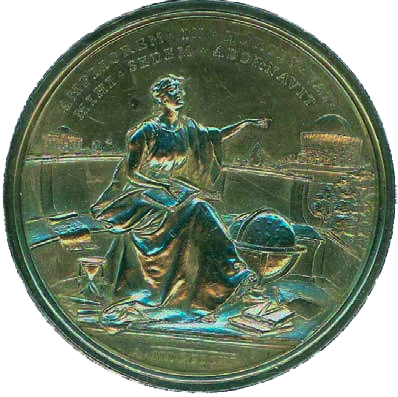
On 17 November 1910, Pius X granted a special audience to the staff of the Specola to officially celebrate the new headquarters. The following year, as a commemoration of the eighth year of the pontificate of Pius X, the historical medal which was customarily coined each year in gold, silver and bronze and distributed to the members of the Papal Court and Ecclesiastical Dignitaries on the Feast of the Apostles Peter and Paul, had inscribed on one side the allegorical figure of Astronomy speaking the words: Ampliorem. in. Hortis. Vat. Mihi. Sedem. Adornavit (“He has prepared for me a more ample seat in the Vatican Gardens”). Today near the entrance to the chapel of the Vatican Radio in the little villa of Leo XIII one can still see a plaque recalling the new housing of the Specola.
From 1910 on, after his assistant, Stein, had been summoned back to Holland, Hagen was able to hire, first for four hours each day and afterwards for six, a secretary in the person of Pio Emanuelli, who as an astronomy student was able to help with calculations and with the correction of proofs.
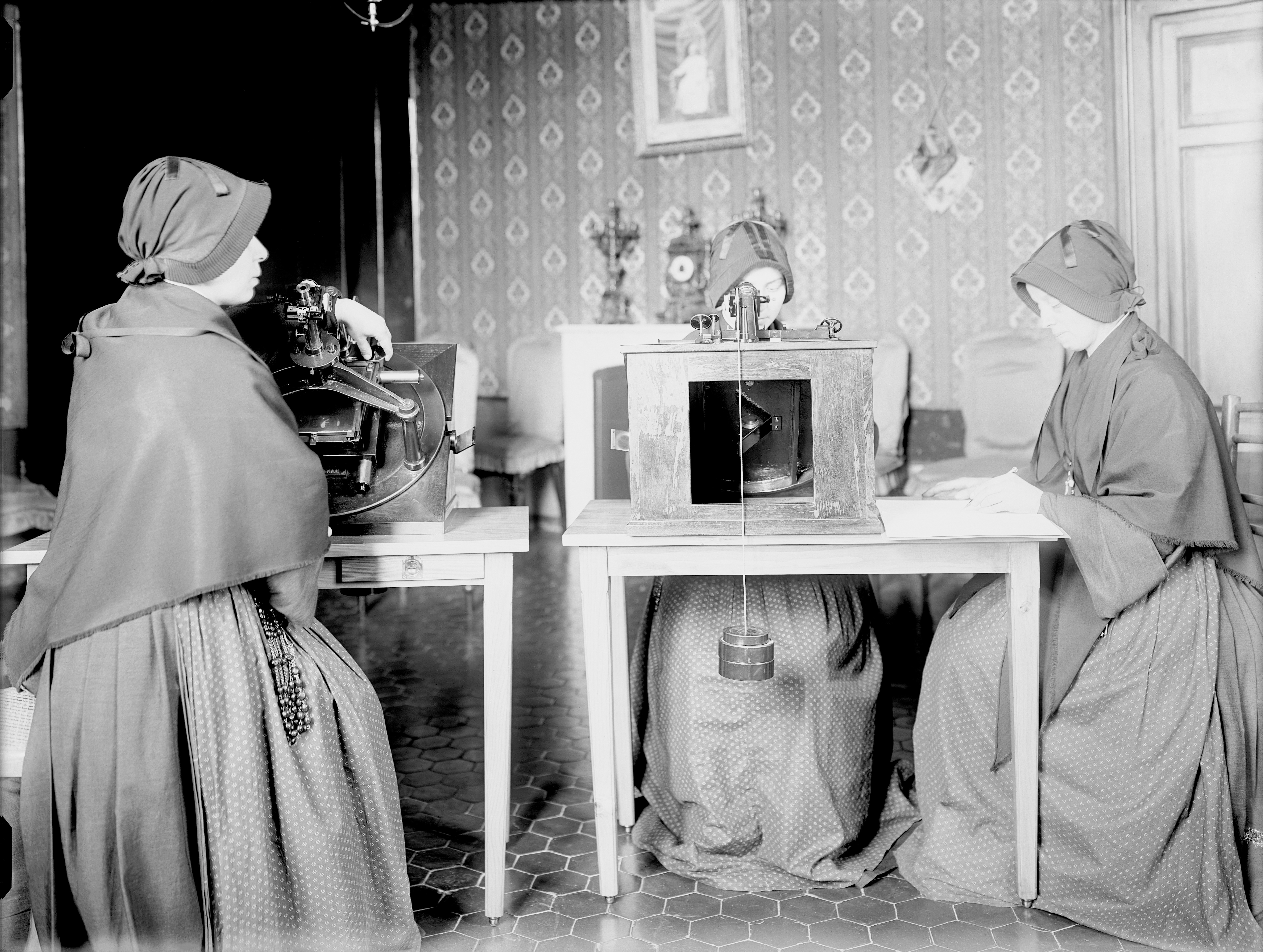
Hagen’s first worry was to organize the research for the Astrographic Catalogue, whose timely completion was a question of honor. The Gautier macromicrometer proved to be too slow for such a large program, so Hagen decided to visit the various observatories which were already well along with the plate measurements and, based on their experience, he studied the best measuring technique and prepared for the best instruments to accomplish the task. So he had the firm Repsold of Hamburg make two measuring machines and, following the example of the Paris observatory, he went to the nearby Institute of the Child Mary of Saint Bartolomea Capitanio, and they kindly made three sisters available from 1910 until the completion of the measurements in 1921. The position and magnitude of the stars were taken two times with the plate in inverse positions by measuring respectively the coordinates of the image on the three minute exposure and the diameter on the six minute one.
After years of tiring and difficult work, the mighty task was completed. It listed the brightness and the positions in rectangular coordinates of 481,215 stars. The ten volumes were printed with extreme care by the Vatican Press and the job, begun in 1914, was finished in 1928.
The Specola Vaticana was the fifth among the eighteen observatories that had taken responsibility for the mapping to finish its section, preceded only by Greenwich, Oxford, Algiers and the Cape of Good Hope. This was, indeed, an eloquent indication of the enormous difficulty of the undertaking, whose immensity could not be evaluated at the time of the initial enthusiasm. Hagen’s selfless contribution to the Astrographic Catalogue is even appreciated more if one realizes that he by personal choice was, and wished to remain, a visual observer of the old school. He never succeeded in developing an enthusiasm for astrophotography which had already progressed so much since he was a young man, although later in his old age he did not disdain to use photographs for drawing the star charts for his Atlas Stellarum Variabilium.
Hagen did not have the same success in his second big project, the publication of the maps of the Vatican zones for which the observatory had assumed responsibility within the International Committee for the Photographic Sky Map.
It is true that Lais, thanks to substantial support from the French Académie des Sciences and from some French families, had already completed more than half of the required photographs; but when Hagen died in 1930 only 107 of the 540 maps were published. One of the principal obstacles was the large sum of money required for such a project, so much so that, precisely for that reason, some participating observatories right from the beginning had to withdraw from any publication of the charts. It was only after the Specola was transferred (along with the astrograph) to Castel Gandolfo under Hagen’s successor that the partly-finished work was taken up again.
The best time for observing was during the war of 1915-1918, when the city of Rome was totally dark at night. But afterwards, because of the increasing night-time illumination in certain parts of Rome, Hagen was forced to limit his observations to the northern parts of the sky. These serious problems, confronted in the attempt to complete the survey study of dark clouds were, as we shall see, the first reason for beginning to consider having a branch of the Specola in a place more protected from artificial sky illumination.
05 The Rotation of the Earth
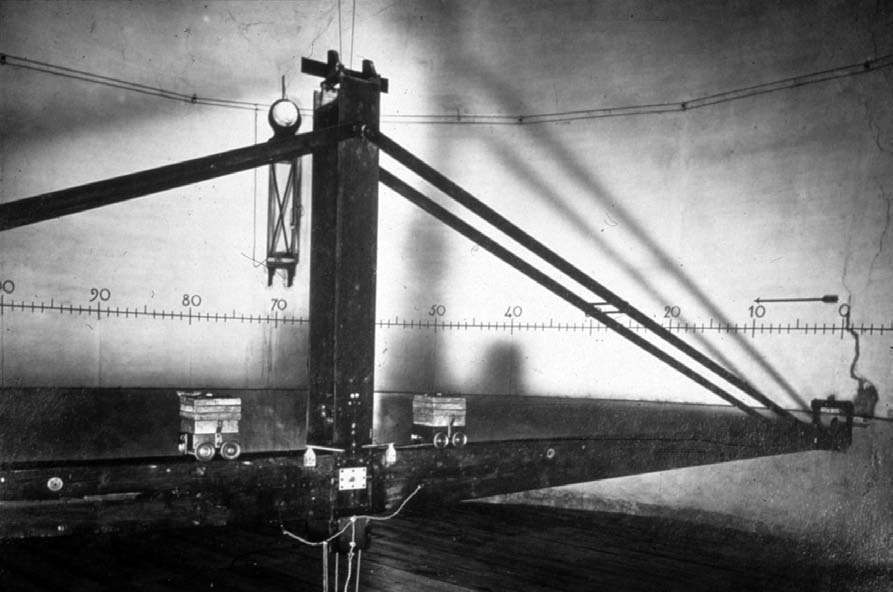
Besides his interest in the strictly astronomical problems, Hagen’s untiring passion for scholarship led him to become involved in problems in physics, and in particular in proofs from mechanics for the Earth’s rotation. In his work La rotation de la terre et ses preuves mécaniques anciennes et nouvelles, he gathered together and examined all of the attempts made up until that time to measure the Earth’s rotation and then he described two experiments of his own. The first was the application of a principle of mechanics whereby in a system of two masses rotating about a common center the rotation accelerates or decelerates as the masses change their distance from one another. Hagen clearly demonstrated this fact with an instrument that has become a classic. He called it the Isotomeografo and he installed it on the basement floor of the astrograph tower. An 8.5 meter horizontal beam was hung by a two-strand steel cord about 7 meters long. Two small lead carriages weighing 90 kilos each could move on symmetrical tracks along the beam from the middle towards the ends and vice-versa. During the simultaneous movement of the carriages the Earth’s rotation caused the beam to undergo a small rotation in the horizontal plane, the rotation in the northern hemisphere being clockwise when the carriages moved from the middle to the ends of the beam and counterclockwise, just like the local component of the Earth’s rotation, when they moved towards the middle from the ends. The principle had been known for a long time but there was a long road to travel before the experiment, which showed quantitatively the effect predicted by the theory, was carried out.
In relationship to the proofs for the Earth’s rotation Hagen also repeated the experiment of the deviation to the east of falling bodies. This time, however, and for the first time in history, at the suggestion of Engineer Mannucci he made use of a slow fall by employing an Atwood machine 23 meters high which he installed in the Vatican Museum, within the triangular stairwell of Bramante. The experiment gave the predicted deviation to one percent. The principle which explains this phenomenon is also a simple one: when a body is lifted above the ground, since it is further from the Earth’s axis than the ground itself, it is displaced a bit more rapidly than the ground as the Earth rotates. So Hagen won further acclaim as he was the first to make use of the Atwood machine, known since 1784, to show the rotation of the Earth. He received resounding applause from the participants at the fifth international congress of mathematicians at Cambridge in 1912 as they heard him give a paper describing the experiment.
After this Hagen took up research on a second phenomenon, the “apsidal rotation” as it is called. It is connected with the free pendulum oscillation; as the amplitude of the oscillation decreases, the “oval spiral” made by the pendulum slowly gets “tighter towards the center” at the same time it goes on getting wider in the direction perpendicular to the “getting tighter” direction. This effect had been seen by many scholars and it was the 19th century Jesuit physicist Father Angelo Secchi who was the first to intuit that it might be due to a “force of projection” acting on the pendulum in a direction perpendicular to the plane of oscillation, due to the Earth’s rotation. Hagen interpreted the increase in the minor axis of the “oval spiral” as the major axis decreased as due to the law of areas and he held that the phenomenon was a new proof of the earth’s rotation, completely independent of the one given by Foucault of the substantial stability of the plane of oscillation of the pendulum. This conclusion received further confirmation when one of his fellow Jesuits, Father E. F. Pigot, Director of the Seismological Observatory of Riverview College in Sydney, Australia, was asked to repeat the experiment in the southern hemisphere; he verified that the apsidal rotation occurred, as was to be expected, in the opposite sense to that observed in the northern hemisphere.
And so Father Hagen, 83 years old before death took the pen from his tireless hand on 5 September 1930, could look back contentedly at a successful life full of work to the good of science and the Church. Especially linked to his name will always be the reorganization of the Specola Vaticana. A crater on the moon has been named for him.
06 The Move to Castel Gandolfo
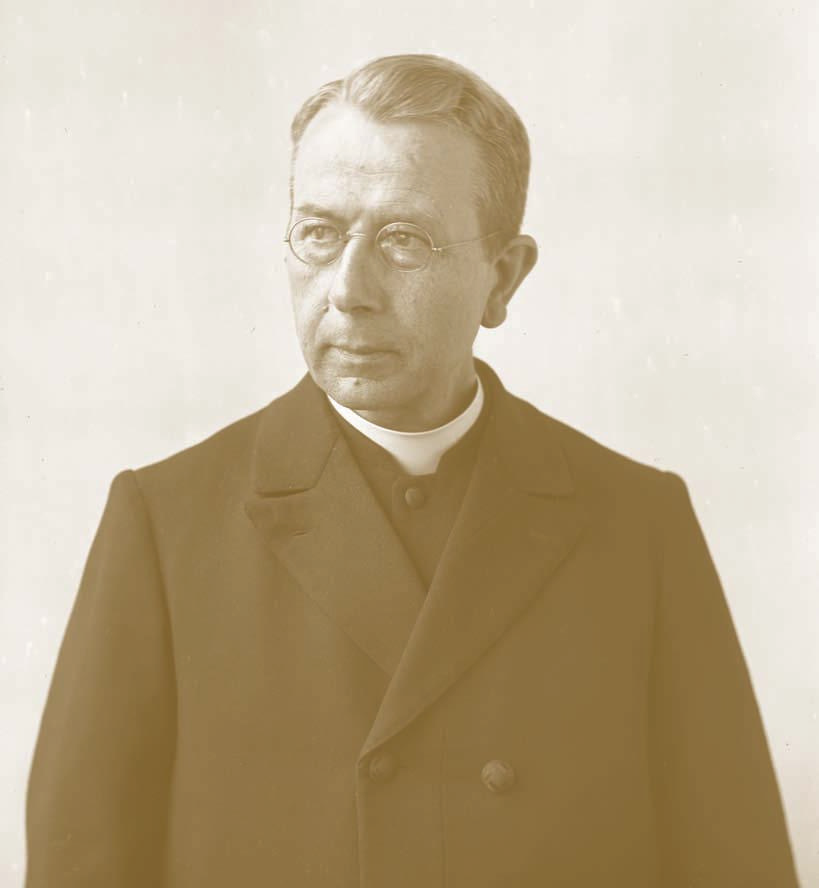
After the death of Father Hagen, Pope Pius XI called upon another Jesuit, Father Johan Willem Stein, to succeed him. Stein was not new to the Specola, since he had been an assistant to Hagen from 1906 to 1910.
The first challenge facing the new director was to find a new location for the Specola.
Writing in 1932, Stein described the move to Castel Gandolfo by noting the problems of encroaching city lights on the telescopes at the Vatican. He then wrote:
To keep up with the times the Specola needed two things: a new mounting for the visual telescope, and a new high-power astrograph with the necessary auxiliary instrumentation. But who would have taken on the responsibility of the costs, when the conditions of the Specola were so precarious. And furthermore where was there a location suitable for a new astrograph, since the two principal towers were already being used.
The solution was found by His Holiness, a solution which was acclaimed by astronomers in Italy and abroad. His Holiness would make available his Pontifical Villa at Castel Gandolfo 22 kilometers from Rome on the condition that the surroundings and the atmosphere should prove to be suitable for a branch of the Specola.
In order to verify this condition, on some nights during November and December 1931 we photographed in the villa some star trails and pairs of double stars at various altitude and azimuth positions in the sky in order to sample the sharpness and clarity of the images. The result was fully satisfactory. On some nights the view of the Milky Way was truly beautiful and enchanting. To the East the atmosphere was usually clear right to the horizon. It is true that quite low to the Southwest over the Tyrrhenian Sea there normally hung a stretch of clouds, while far away on the Northeast horizon was seen the glow of the Eternal City; but one never, or at least seldom, observes so close to the horizon.
Following the report of our experiments, it was in principle decided by His Holiness that the branch of the Specola would be established and a new first-class photographic telescope acquired.
There remained the problem of selecting the most suitable place for the new branch. At the beginning His Holiness had called our attention to land in the huge gardens of the Villa Barberini, joined to Castel Gandolfo. But quite soon his idea changed and he showed a preference to see the new telescope mounted on the top terrace of the Castle, unless there would arise problems of a technical nature. In fact, that terrace from a height of 430 meters above sea level provides a magnificent view and seemed to be an ideal place to set up an observatory.
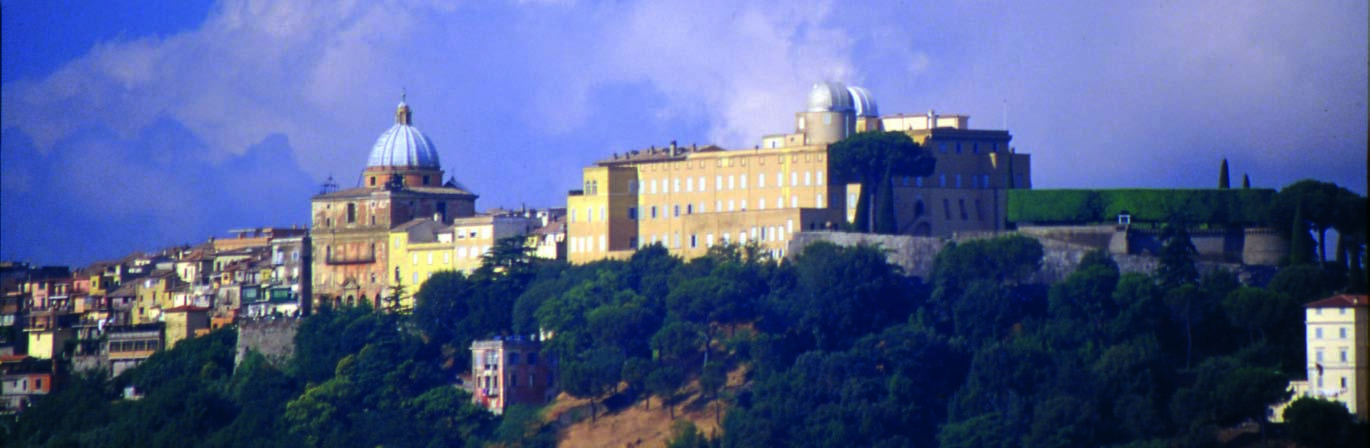
The plans for the new Specola were prepared by the famous firm Carl Zeiss of Jena. Professor Paul Guthnick, director of the Berlin Observatory at Neubabelsberg, took a great deal of interest in the new undertaking and made his vast experience available to Stein. The Specola was to be equipped with the most powerful instruments, not necessarily the most massive, but of a high quality and practicality, matching that of the best modern observatories.
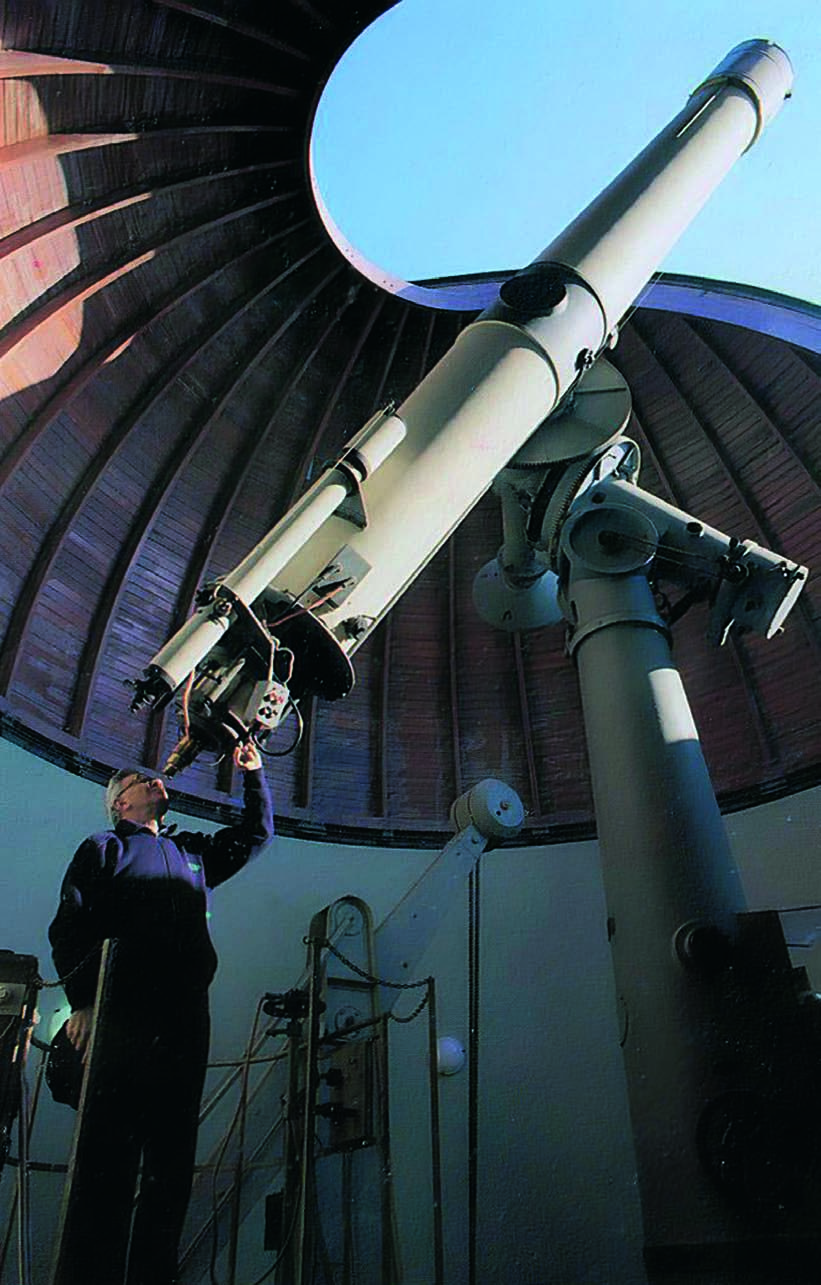
Construction began in 1932 and by 1935 it was mostly complete. The new visual refractor was installed under a large wooden dome 8.5 meters in diameter resting on the massive round construction of the palace’s ancient spiral staircase. Zeiss had previously planned that this telescope would follow the measurements of the old Rome refractor. It was to have been used for observing Hagen’s dark nebulae at the planned observing station in the southern hemisphere. Now, since a new mounting and dome would be required, it was not worth the trouble to bring this old instrument to Castel Gandolfo. Nevertheless, it was planned to use the old lens, but, when a careful optical test was performed, it showed such great stress that the firm suggested the purchase of a new lens with the assurance that they would take back the old lens and compensate for it in a small way.
Thus Zeiss provided a completely new telescope with an equatorial mounting, a 40 cm objective of 6 m focal length, together with a set of 9 eyepieces and various accessories. The instrument was also provided with a Graff photometer for observing variable stars and with a micrometer for measuring double stars. Later on a Danjon stellar interferometer was added. This was constructed in the Specola workshop and could be used for the determination of distances and positions of double stars and the diameters of planets.
In the second rotating dome, 8 meters in diameter, also made of wood constructed on the solid foundation offered by the northeast corner of the palace, the principal instrument of the observatory was placed: the Zeiss Double Astrograph. It consisted of a refractor with a 40 cm four-lens objective of 240 cm focal length and a reflecting telescope with a 60 cm parabolic mirror of 200 cm Newtonian focal length and an equivalent 8.2 m focal length at Cassegrain focus. Both instruments plus two finders and a guide telescope were rigidly linked together and mounted on the same polar axis.
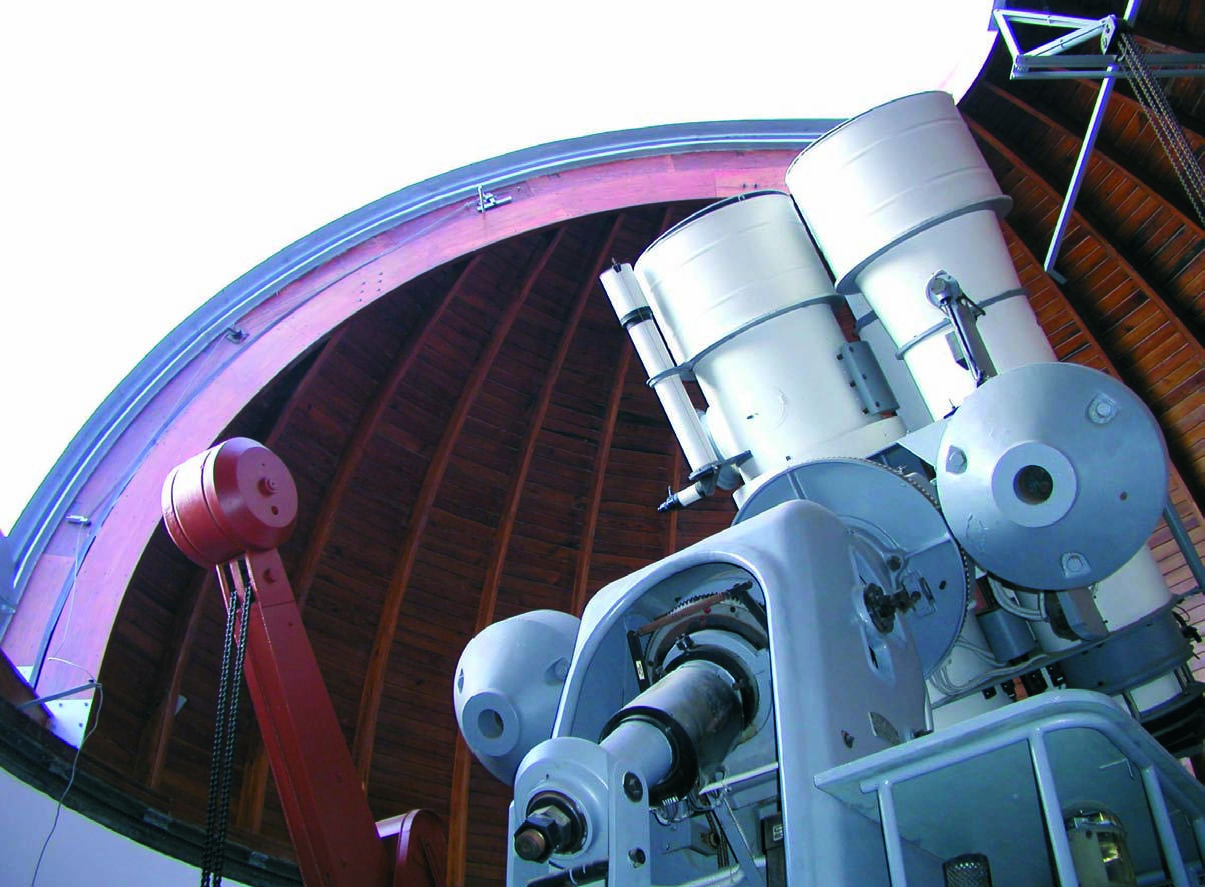
A large spectrograph could be mounted on the reflector for astrophysical research. The four-lens astrograph allowed 30x30 cm photographs with image correction to be taken; it was particularly suitable for photographic observations of variable stars and for the photographic determination of the positions of minor planets and comets. Two large (61.2 cm diameter) flint prisms of refracting angle 4 and 8 degrees respectively could be attached singly or together at the upper end of the reflector or refractor, thereby allowing spectra to be taken over large fields.
For the various measurements to be carried out on the photographic plates, Zeiss supplied a large Komess coordinate measuring machine, a Hartmann spectrocomparator and an eclipse comparator, which was especially useful for variable star research and for minor planets. For the measurement of photographic stellar magnitudes the firm Ascania of Berlin supplied a microphotometer which allowed measures according to the Hartmann method (subjective) or the thermoelectric method (objective). Later on this instrument was improved with the addition of a photomultiplier tube. In order to transport the observer to a convenient observing position at the telescope, both domes were outfitted with a new invention of Zeiss, a tribune that could be raised, lowered and rotated.
The offices, the map collection, the archives, the Starke meridian telescope and the storage of batteries for direct current supply were arranged on the top floor, the fifth, of the Apostolic Palace. A large room was reserved for the operations center for keeping sidereal time. A Riefler pendulum clock of great precision served as the driver for four other clocks, two of them placed in the domes. Controls were effected by a radio receiver tuned to time signals from Paris. The library was arranged on the fourth floor, while the collection of meteorites and minerals were placed in a room on the second floor.
07 The Astrophysical Laboratory
The idea to associate an astrophysical laboratory specializing in spectroscopy with the astronomical observatory was motivated at least in part by the rich collection of meteorites in the Specola’s possession. But certainly it was well understood that it is almost exclusively through spectroscopy that precious information can be obtained about the age and structure of the objects from which the meteorites came. Spectroscopy has, in fact, the advantage that it requires only a very small amount of this precious material for the investigation and that the concentration of the scientifically interesting elements is quite often very small. At Stein’s suggestion, Pius XI appointed Father Alois Gatterer to draw up a plan for an astrophysical laboratory which he would direct.
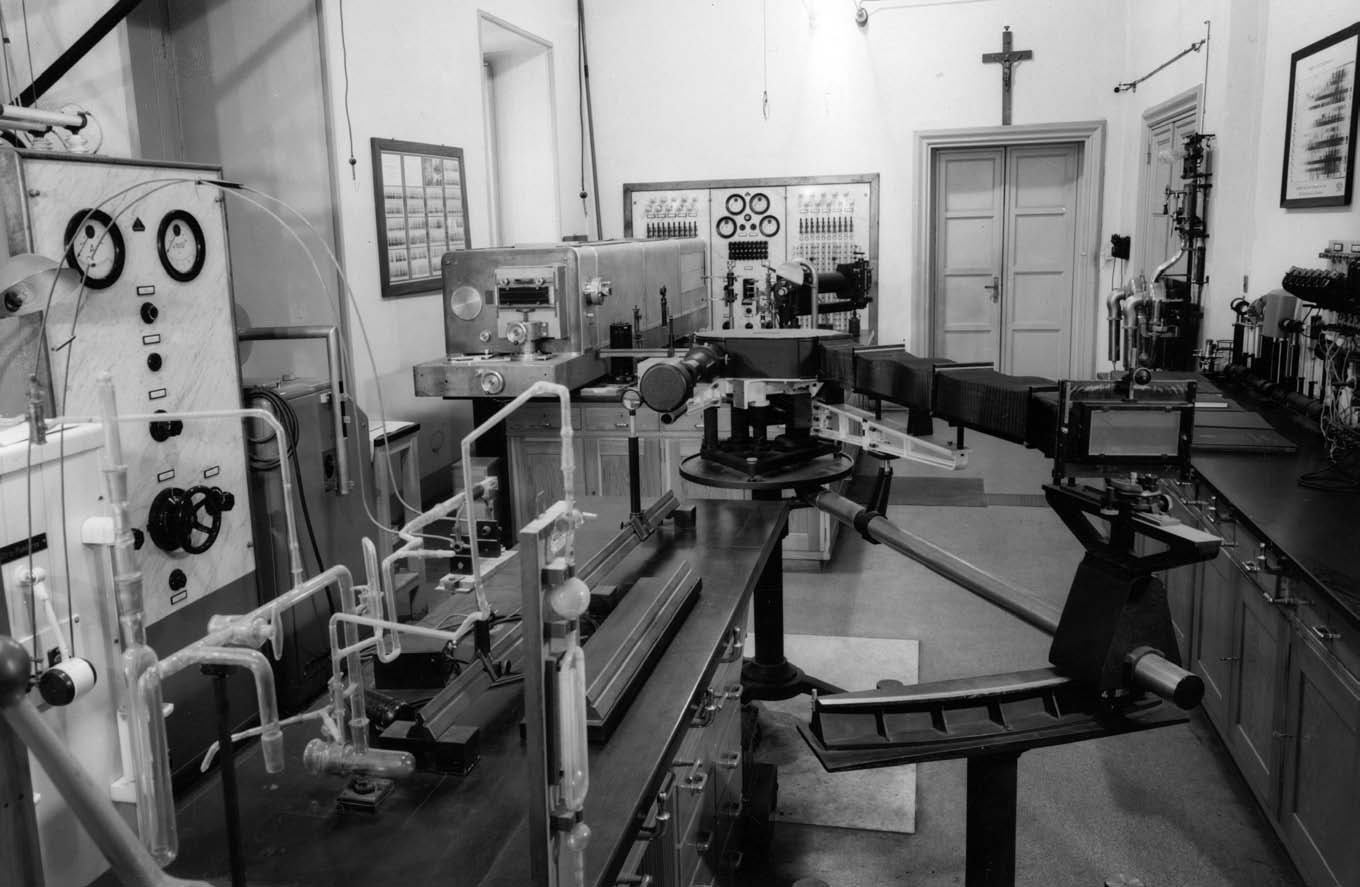
The Pope provided space on the ground floor of the Papal Palace for the laboratory and in the summer of 1933 work began on setting it up. Almost all work was completed by the following year. The laboratory was equipped with a powerful array of spectrographs providing all that was necessary for this difficult field of research. At the beginning there was a Zeiss grating spectrograph with a photographic camera and a large GH spectrograph of the firm Steinheil of Munich with three prisms for the study of visual light and two quartz prisms for the ultraviolet. In order to make full use of the resolving power of the prisms, Gatterer had a 160 cm focal length camera made for the spectrograph and it proved to be excellent; in fact, it was so excellent that the company was called upon to build such large spectrographs for other institutes. Little by little other spectrographs were added to the original ones. There were two especially for the ultraviolet: one with two prisms by the firm Halle of Berlin and an intermediate one of quartz by Zeiss. For the visual and infrared a three-prism spectrograph was purchased from Zeiss. It could be used in an autocollimation mode so as to double the dispersion and was, therefore, especially useful in examining spectra of elements that had many closely packed lines. Later on in 1957, through the generosity of Pope Pius XII, a grating spectrograph was purchased from the Jarrel-Ash Company of Boston and a large spectrograph with three prisms and one half prism was built.
Various kinds of electrical current provided the work places with the energy necessary to excite to luminescence the materials under examination. For the study of the spectrographic plates the laboratory had at hand the most modern instruments for measuring the wavelengths and the strength of the spectral lines. Later on there was added to all of this equipment a large Zeiss photoelectric photometer, a projection comparator for comparing spectra on different plates and an ingenuous universal stand for holding meteorites to be examined with the spectroscope. These were all constructed, according to designs by Gatterer, by Brother Karl Treusch, the Specola’s skilled mechanic.
The Laboratory was also furnished with a sophisticated dark room for the development, enlargement and printing of the plates for the spectral atlases and with a chemical section, small but well equipped, with its own supply of gas, vacuum, compressed air, and liquid air for the preparation of the substances to be examined.
After the construction work had been completed and most of the instruments were set up and functioning, Pius XI wished to have a solemn inauguration of the new Specola on 29 September 1935 with the presence of his Secretary of State, Cardinal Pacelli (later Pope Pius XII), Cardinal Bisleti, and a large number of ecclesiastical and lay dignitaries and scientists. In his discourse (see pp 168 ff) the Holy Father gave the following motto to the Specola: Deum Creatorem, Venite Adoremus (Come, let us adore God the Creator). This invitation, inscribed in the bright marble which stands out on the south wall of the dome of the double astrograph, has been an incentive to the astronomers who for years have gone there to their night’s work and it is still an inspiration to the visitors who come to admire the work of a Pope who was an enthusiastic champion of the sciences.
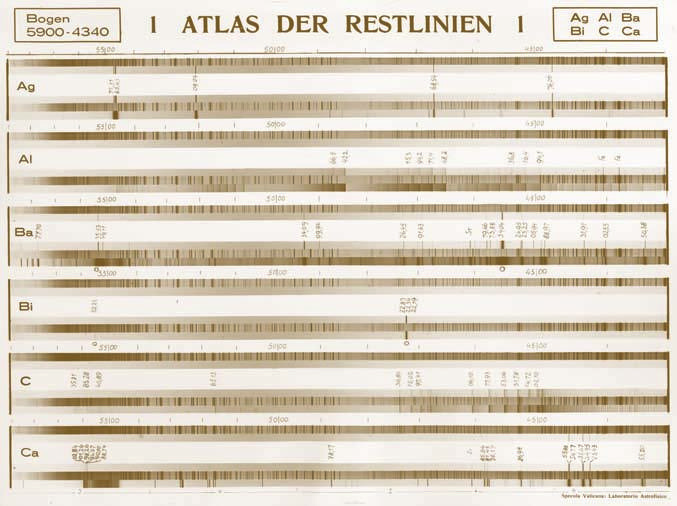
The work of the Spectral Laboratory consisted principally in the production of spectral atlases. The first were the arc and spark spectra of iron, originally intended for in-house daily use in the laboratory; but they proved to be so useful that it was decided in 1935 to publish them. The first atlas consisted of 13 pages of figures and presented only the ultraviolet portion of the iron spark spectrum from 4650 to 2242 Å; the second with 21 plates of figures presented the arc spectrum also in the visible from 8388 to 2242 Å. A second edition, revised and updated, was published in 1947.
Having witnessed the success of the first atlases and how enthusiastically they were received by spectroscopic institutes, Gatterer and Junkes decided to compile a spectral atlas for each of the chemical elements that might be of interest for future spectral analyses. After 12 years of patient labor this work was completed in 1949. Over the next 25 years, other atlases followed. The death of the last of the spectrographers, Father Salpeter in January of 1976, finally led superiors to the decision to close the Laboratory.
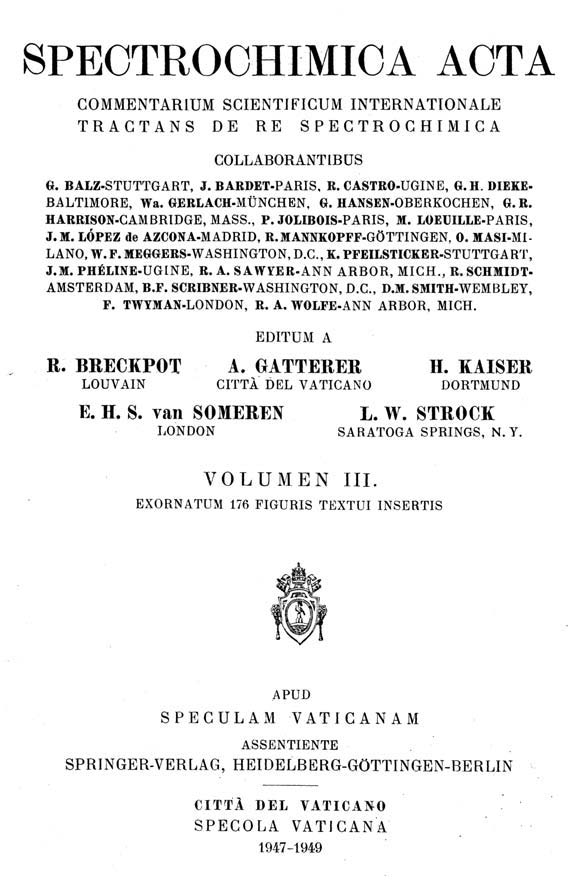
At the time that the Laboratory was founded there did not exist a journal dedicated specifically to spectroscopy. To improve this situation Gatterer in 1939 began an international journal dedicated exclusively to spectroscopy, entitled Spectrochimica Acta. In 1944 after the publication of the second volume the journal was forced to cease publication because of the war. When hostilities ended, the publishing house, resurrected from the ashes of war, considered starting the journal up again and they asked Gatterer whether, for the difficult post-war period, it might be published in the Vatican. Pope Pius XII, who was always sensitive to whatever might nourish scientific collaboration among nations, not only gave his approval to this very important work in the field of spectrochemistry, but he also helped to assure its future with some financial assistance. What came to be known as the Vatican Volume contained reports of spectroscopic research carried out during all of the war years in Great Britain, Belgium, France and the Soviet Union. When the general situation returned to normal in 1949, it became possible to entrust the journal to the Pergamon Press. Since 1953 when Gatterer, the founder of the journal, died, no member of the Specola has served on the editorial board. Towards the middle of the 1960s the journal had reached an annual mean total of 2,000 pages and it was, therefore, divided into two sections: section A for molecular spectroscopy and section B for atomic and analytical spectroscopy. From at least 1980 on, section B has been generally recognized as the most prestigious journal in the field.
08 Castel Gandolfo Before the War
With the refoundation of the Specola at Castel Gandolfo Pius XI also arranged that the running of it would be entrusted to the Society of Jesus. Thus, since that time, it has been the responsibility of the Society’s General to propose to the Pope the person to direct the Specola and to provide for it an adequate number of Jesuit scientists. And so it was that Father General Ledókowski responded immediately to the request for collaborators which Stein and Gatterer had addressed to him and he assigned a certain number of Jesuits to the staff. Thus little by little between 1933 and 1940 an international community began to form consisting of eight fathers and four coadjutor brothers. Then as now this community is a unique example of a group of Jesuits dedicated to scientific research under the direct administration of the Holy See.
Pius XI assigned to his “sons of the sky,” as he one time jokingly referred to his astronomers, a fine apartment on the second floor of the Pontifical Palace on the side facing the lake. Five fathers helped Stein in the strictly astronomical research, while Gatterer, director of the Astrophysical Laboratory, had a collaborator from outside in expectation of the arrival of Father Junkes.
Two of the four brothers were mechanics and took care of the maintenance of the equipment and the construction of new instruments. One of those two soon left the Specola; the other one, Brother Karl Treusch, stayed at the Specola until 1978. Before becoming a brother he had gained invaluable experience as an employee of the famous firm Carl Zeiss of Jena, experts in telescope construction; thus he was destined from birth for the Specola!
Right from the beginning it was a point of honor for the new Specola to carry on the works taken up previously and to bring them as soon as possible to completion. The first such case was the publication of the eighth volume of the Atlas of Variable Stars which Hagen had left unfinished. The maps were no longer drawn as before but rather produced in the laboratory of the Specola by a photographic process; they were the first photographic maps of their kind which give a view of the sky as it really appears to the human eye. With this volume IX in 1941 Hagen’s great Atlas of Variable Stars was completed.
Another task which required completion was the continuation of the photographs for the Carte du Ciel and the publication of the respective charts. Lais had already finished 277 of the 540 plates required but, at the time of Hagen’s death, only 107 maps had been printed. For that matter the other observatories who were participating in this international effort were also in a similar situation. On the other hand, Hagen was too occupied in his last years with his own research and in the more important work of compiling the Astrographic Catalogue. Because of this the reproduction of Lais’ plates had made very little progress, and furthermore, for lack of a competent observer, no more plates were taken after his death. When the main work of getting the new Specola in order was finished and enough help had been obtained to carry out the astronomical research, Stein put himself to the task of completing the Carte du Ciel.
In the meantime the sky photography with the astrograph, still located in the Vatican, was not neglected. The number of plates required to complete the Vatican zones of the Carte du Ciel still had to be completed. But it was soon realized that this instrument should also be transported to Castel Gandolfo without further delay. Pius XI approved and in 1938, during his last walk before returning to Rome from his summer stay at Castel Gandolfo, he looked around for a place in the gardens of the Villa Barberini where one might consider putting the new installation. But it was only in 1942 under his successor Pius XII, and despite the fact that the war had already begun, that it was possible to effect the transfer. On that occasion the old refractor and the dome that housed it were carefully restored after fifty years of service. An epigraph in Latin, inscribed on the north telescope pier, recalls this new restoration which occurred fifty years after the refoundation of the Specola.
09 The Specola and World War II
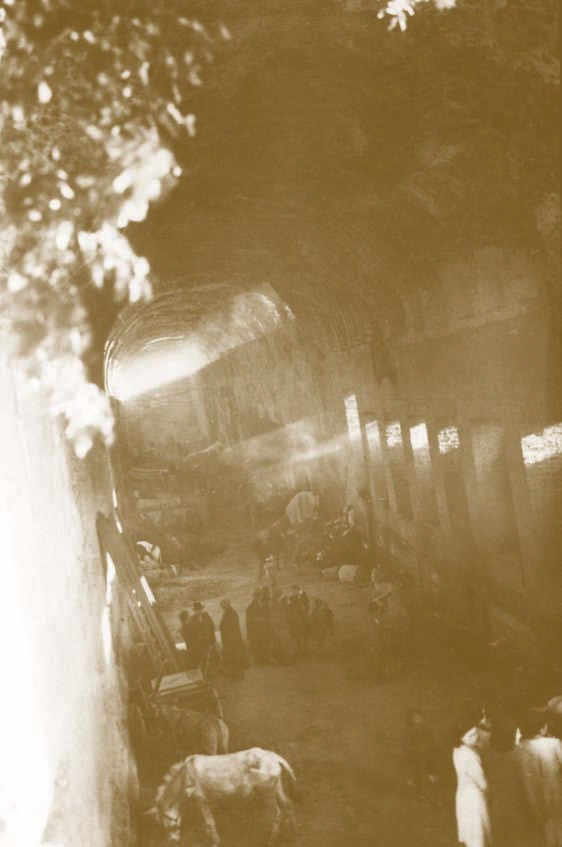
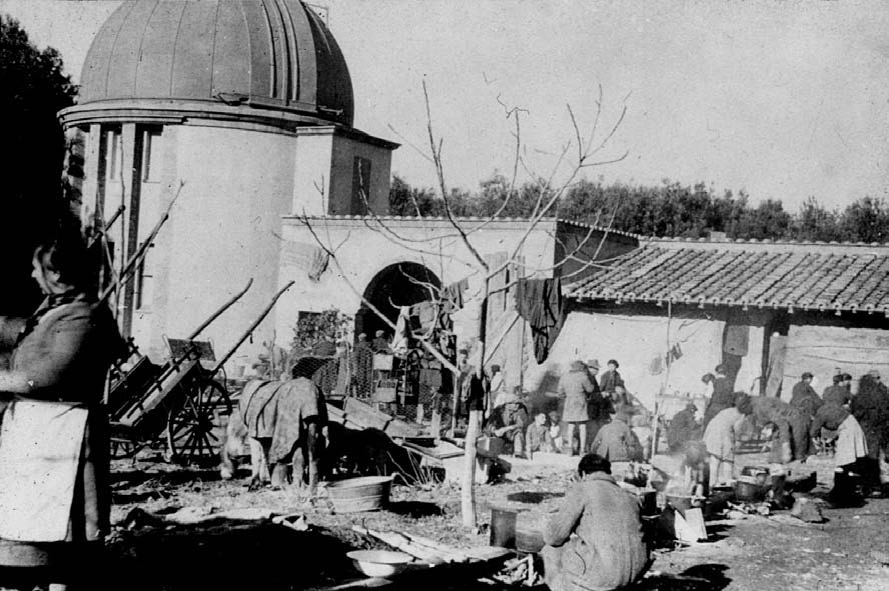
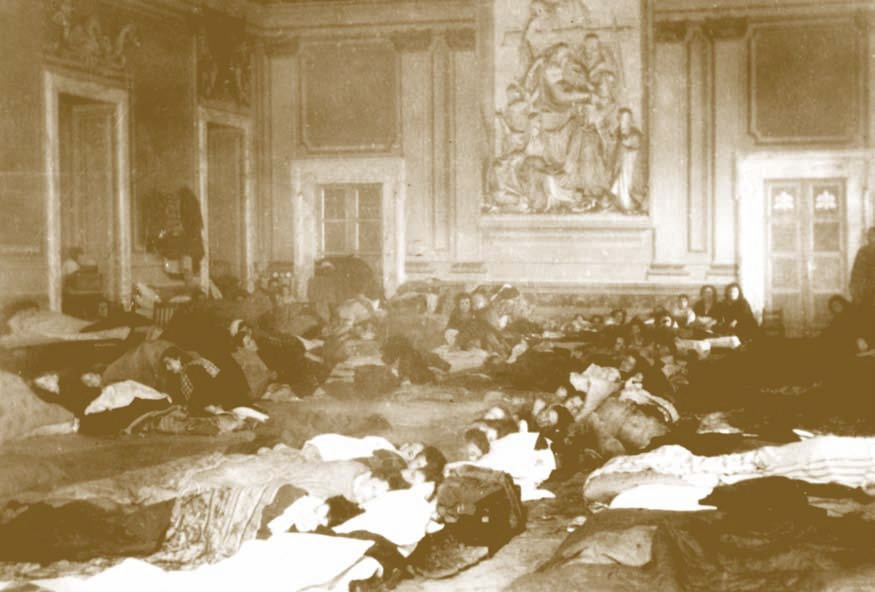
In the early years of the war, the work of the Specola (as a part of the neutral Vatican City State) was only slightly affected. All that changed after the Allied landing at Anzio on 22 January 1944; now the war was in the sight of the astronomers. The populations of Albano and Castel Gandolfo were forced to leave their houses and the greater part of them took refuge either in the Papal Villas or in the Papal Palace, trusting that the fighting factions would respect the extraterritoriality which was well indicated to aircraft by the Papal colors. About two thousand persons found refuge in the Palace for more than four months, 127 of them occupying ten rooms of the Astrophysical Laboratory, all of them with equipment disassembled and in disarray and filled with baggage and belongings of every sort which the evacuees had brought with them. Even the space on the ground floor of the Carte du Ciel astrograph was occupied by a family from Albano.
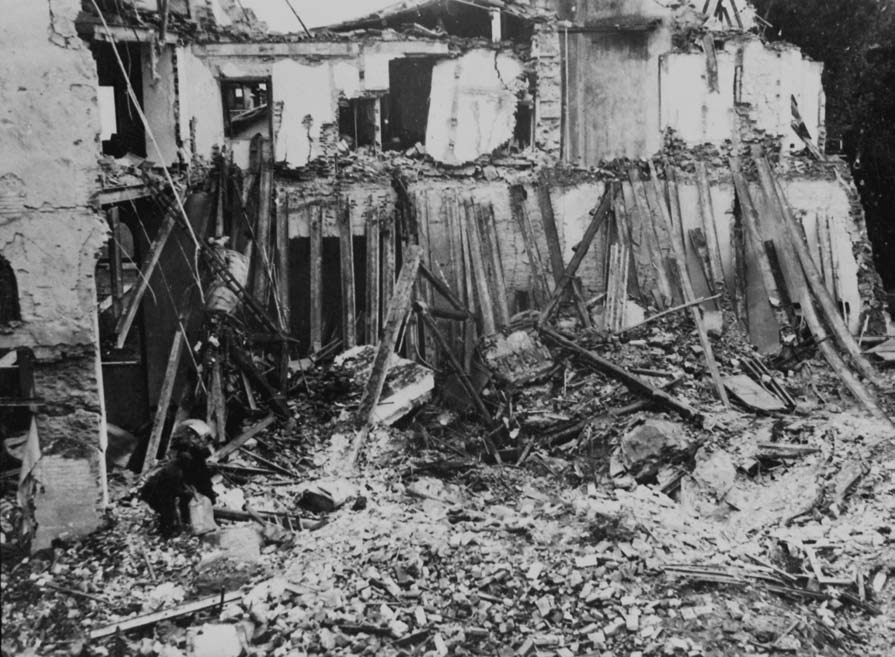
Right from the beginning the situation proved to be difficult and dangerous, because of the intensified air bombardment of the German positions whose command station was situated in some small villas overlooking Lake Albano, very close to the summer location of the college of the Propaganda Fide, part of the extra-territorial area of the Villa Barberini.
The Specola and the war
After the invasion of Anzio in January, 1944, the area around the Papal Palace and gardens were subjected to heavy bombardment. Some 2,000 refugees from neighboring towns took refuge for most of that winter and spring in the Papal Gardens attached to the Pope’s Summer Residence in Castel Gandolfo, which was neutral territory during the war.
On January 24, even though the Palace was already full, the Specola put up for some days eighty-four Jesuits who had to suddenly evacuate the novitiate house at Galloro in the neighboring town of Ariccia. We read in the diary written in the telegraphic style of Stein:
On the 28th of January the Superior exhorted the inhabitants of Castel Gandolfo to offer themselves willingly (to avoid worse fates), since 40 men were needed to work for the Germans. He joined in the work squads. The same happened the following day with a handful of fifteen men. A baby born in the Palace: Eugenio.
1 February. Albano bombarded: Dead about 15 cloistered nuns, 3 Christian brothers, 1 Giuseppino brother, some lay people. Our fathers and brothers helping.
2 February. 14 large caliber bombs fallen in the Villa Barberini (one not exploded).
10 February. Bombardment in the Villa Propaganda Fide. Many (c 500) dead or injured. ...Father Pignatelli, Treusch and Timmers to the Villa to help dig out the victims. Father Pignatelli the whole night. The aqueduct broken, lacking water.
12 February. Father Provincial agrees to let the sisters pass through our corridor. Cloister limited to our rooms downstairs.
On the night 13-14 February. A machine gun bullet has hit the photographic dome, has made a hole, then hit a small beam, and then fell unexploded on the floor.
18 February. Evening. Big pieces have fallen behind the Church of C.G. The burgomaster is dead. Windows of the Church broken and the windows of the Palace on the lake side, already three holes in the photographic dome. Father Pignatelli with four brothers and the donkey lead the 5 cows on foot from Galloro to Rome (to the Gesù).
Between the 16th and the 21st of February, given the increasingly dangerous situation, the Jesuit community with the Holy Father’s consent moved to the Jesuit General Curia (the Jesuit Headquarters) in Rome. Only Father Zirwes and Brother Treusch stayed behind to share the lot of the refugees and help alleviate their sufferings. We quote again from the diary: 21 February ...Instruments sent to the Vatican, under the library.
30 May: Father Zirwes arrives in the Curia. Left only Brother Treusch at C.G.
Among the many things that Treusch did to help the refugees there was keeping the men occupied, putting them to the building of a cistern to help solve the chronic lack of water and to the digging of an underground hideaway for protection from the bombardments. This difficult situation went on until the first days of June of 1944 when, with the arrival of the Allied forces, the war front moved to the north of Rome. At that time all of the evacuees returned to their houses, most of which had been damaged or destroyed. The Jesuit Community returned to the Specola on the 21st of that month.
On 1 February 1947 Stein notes in his diary: “Monsignor Montini communicates: the industrial complex and the items in storage of the Zeiss firm transferred to Russia as war-time reparations.” And so, due to the war, the first objective of the visual telescope, which had been sent back to Zeiss in Jena to be corrected, and the first G 80 spectrograph designed by Gatterer were lost.
10 After the War
When the war ended, the astrograph was again put to work. Making use of every favorable night, by about the middle of 1953 Junkes and then De Kort managed to finish the number of plates that had to be taken to complete the Carte du Ciel. Then by the end of 1955 Brother Mattieu Timmers at first and then, after his untimely death, Brother Luigi Puhl, under the direction of Father Peter Albert Zirwes, completed the enlargements and the production of the photostatic copies. And so after 55 years from the beginning of work the Specola Vaticana brought to completion the most laborious part of the task that had been assigned to it in that far away year of 1889 by the Permanent Committee of the International Sky Mapping Program ( Carte du Ciel ). The Catalogue had been completed in 1928. All stars down to the fourteenth magnitude in ten zones of the sky between 55 and 64 degrees of declination had been reproduced on 540 charts, 26 x 26 cm square. If we lined them up edge to edge we would have a 140 meter ribbon! About 100 copies of the whole work were printed and about ninety of them were sent to the chief astronomical observatories in the world. The official announcement that the Vatican Observatory had completed its work was given at the General Assembly of the International Astronomical Union (IAU) in Moscow in 1958.
In addition to the works described above, which we might call traditional for those times, the Specola with its new high-quality equipment set itself to another specific goal: research on the structure of our own stellar system in order to understand how stars are distributed in the Milky Way.
To know the stellar component of the Milky Way one selects a certain number of stars as probes of given regions. For instance, the study of variable stars, specifically Cepheid and RR Lyrae stars, allows us to determine distances to selected regions and, therefore, to estimate the dimensions of the Galaxy. Spectral studies of the stars gives us information on the composition, temperature, atmospheric pressure, magnetic fields, their motions, and hence how the stars are rotating with the Galaxy. The extinction and polarization of starlight gives us information on the kind of material existing in interstellar space and on the interstellar magnetic fields. The analysis of eclipsing variable stars allows us to determine the masses of the component stars. Multi-color photometry gives us information on variability, its causes, etc.
In order to complete the research in a limited amount of time, spectral classification was begun on stars in fifteen regions near the galactic equator. The high quality of the spectrograph with the 4 degree objective prism allowed one to obtain classification spectra of stars as faint as 14th magnitude in four hours of exposure, a limit probably never reached elsewhere with a refractor.
Research in stellar spectroscopy had been successfully begun by Dr. Hermann Brück and by the young Hungarian Jesuit, Father Mátyás Tibor before the war. Later on in 1940 Junkes joined the staff, when Tibor had to leave the Specola for health reasons, and by attaching an objective prism to the reflector he obtained a series of high quality reference spectra of standard stars.
But these first projects also showed the limitations of the Zeiss double astrograph for taking stellar spectra. On the one hand the achromatic correction of the refractor to accommodate the photographic region placed limits on the usable bandwidth for spectroscopy. On the other hand the attachment of two prisms at the same time did not give good results for long exposures because of the instrumental flexure due to the excessive weight of the prisms. These are the reasons why, a few years later, a Schmidt telescope was purchased.
Right after the war, Father Walter Miller arrived at the Specola from the United States. He pursued research on faint variables in selected Milky Way regions. In his nine years at the Specola he accumulated more than 3,500 photographic plates, almost all taken directly by himself, the remainder borrowed from other observatories. Using this precious collection of plates, he was able to classify about 500 new variables, which soon became known as Vatican Variables (VV). This work drew the attention of a good number of specialists who had a particular interest in the study of the structure of the Galaxy. During those same years, De Kort concentrated his research on RR Lyrae type variables and eclipsing variables.
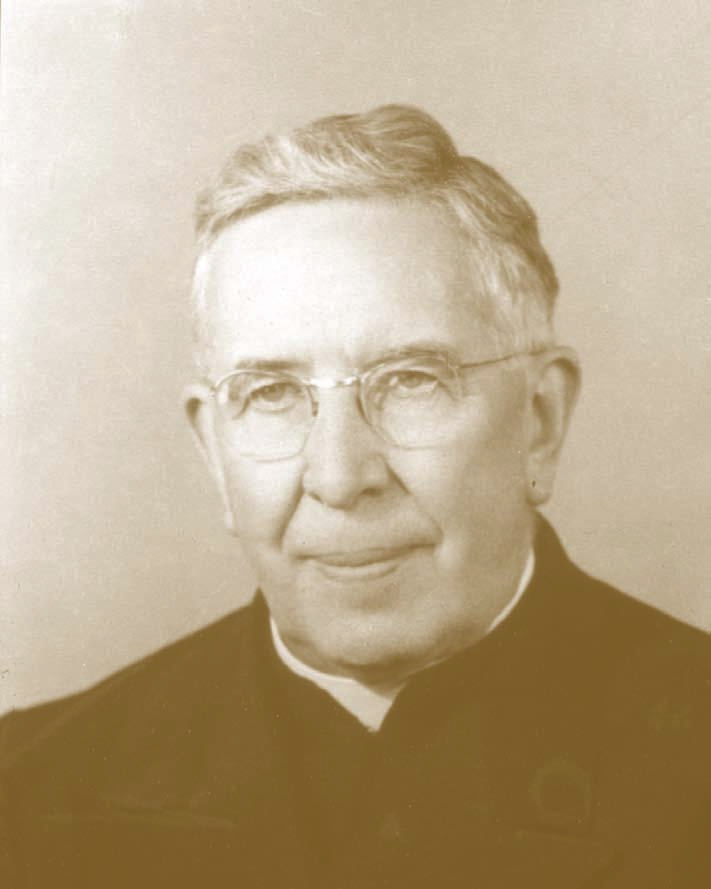
This later field of research became a dedicated area of Father Daniel O’Connell, who succeeded Stein as director of the Specola in 1952.
11 The Green Flash
From 1954 to 1957 O’Connell, in collaboration with Brother Karl Treusch, carried out an interesting piece of research on the socalled “green flash.” This striking phenomenon occurs when the atmosphere is particularly clear and calm: under these conditions, the last segment of the Sun at sunset (or the first at sunrise) appears not red but green. For a long time scientists were divided in their opinion as to whether this was a subjective phenomenon, that is an optical illusion, or whether is was an objective reality. Spectroscopy and color photography had finally established that the phenomenon was objective, but no one had yet put himself to publishing color photographs of it. And so O’Connell put himself to the task. As he related it, the idea to do this came to him from the fact that, although he had tried many times in various places to observe the green flash, he first succeeded in seeing it, and very clearly, looking out over the Mediterranean from the window of his office at Castel Gandolfo. And so he conceived the idea of obtaining color photographs of the phenomenon by using the Specola’s telescopes so that he might, if nothing else, confirm its objectivity.
The Specola’s mechanic, Treusch, who by this time had also become an expert in telescopic photography, was rather skeptical at the beginning because he could see the enormous difficulties to be confronted. In addition to the fact that it is not easy to predict, the phenomenon lasts for an extremely short time and it is, therefore, very difficult to photograph it. But, after the first tests, he became enthusiastic about the work, so much so that, as O’Connell himself says, the successful outcome was due principally to the talent and the patience of his capable assistant.
The results of this research were gathered together by the author in a splendid 200 page volume, The Green Flash and Other Low Sun Phenomena. It contains a selection of hundreds of color photographs of the green flash and of the Sun taken at sunrise and sunset and it is the first publication of its kind (see pp 22-23). Since the green flash has a certain poetic fascination for the public at large, it is without a doubt the research which is the most popularized of all the other programs of the Specola.
12 The Schmidt Astrograph
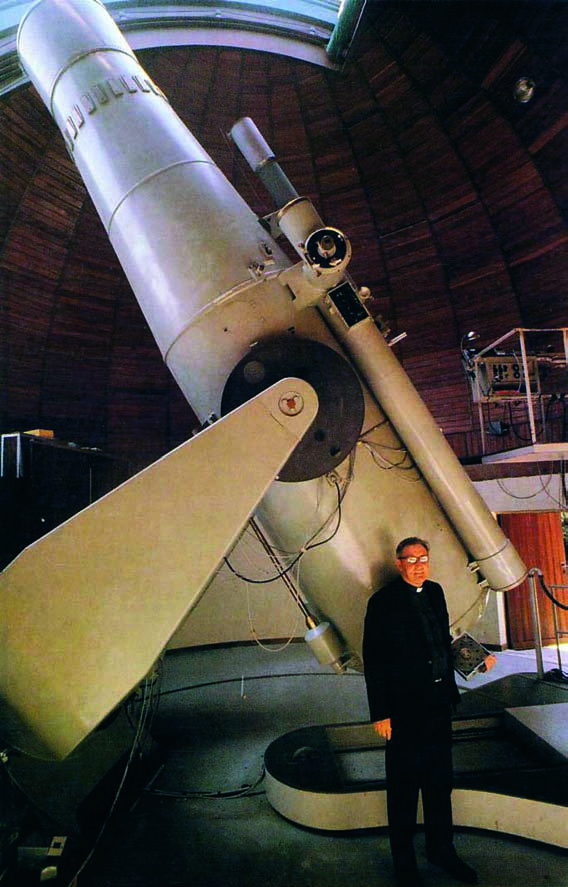
A new type of telescope called a Schmidt astrograph, invented in the last years before the Second World War, produced a veritable revolution in the field of Milky Way research. In 1949, Stein proposed the purchase of this type of telescope to the Holy Father and, cognizant of the need, Pius XII, gave his unhesitating approval. And so towards the end of that same year, the telescope was ordered from the firm of Hargreaves and Thomson of London. Five years later work began on the construction of the Schmidt building in the gardens of the Villa Barberini. The new building was joined to the dome which had already been built in 1942 to house the Carte du Ciel astrograph. The telescope was delivered in 1957; a few days before his departure from Castel Gandolfo that summer, the Holy Father was kind enough to visit and bless the new installation and telescope. It was strictly a private ceremony with only the fathers and brothers of the Specola taking part (see pp 174-175).
Several years were required for its installation and testing. It was only in 1962 that observational programs could begin with it.
The instrument is made of a five meter long tube at the bottom of which is a spherical mirror 98 cm in diameter. The 65 cm corrector plate, which determines the aperture, is mounted at the center of curvature of the primary near the tube opening. The focal length is 2.4 meters. The 20 x 20 cm photographic plate is placed at the focal plane which lies about half way down the tube. The usable field is about 5 x 5 square degrees. This means that one side of the plate covers about ten times the apparent diameter of the full moon, a field more than six times larger than that of the Carte du Ciel astrograph.
The telescope was primarily planned for stellar spectroscopy. For this purpose it is possible to mount a combination of three objective prisms at the tube opening; these prisms are among the most powerful in the world. Two of them, with angles of refraction of 4 and 8 degrees respectively, already belonged to the Specola since they had been supplied for use with the Zeiss double astrograph. The third, with a 65 cm diameter and an angle of refraction of 2.5 degrees, was purchased from the same firm that built the telescope.
Two reflector guide telescopes, made according to an original design of Junkes, were made in such a way as to permit one to directly observe the field being photographed by the Schmidt when it was equipped with a prism. In 1966 a third guide telescope was added, this one a refractor made in the Specola according to a design by Treanor. It was more suitable than the previous ones for guiding the telescope when it was used for long exposures without prisms or for those taken close to the zenith.
The Schmidt telescope was used for about twenty years to study the evolution of star clusters by stellar spectroscopy and by polarimetric measurements.
13 Astronauts and Computers Come to the Specola
The American astronaut Frank Borman was head of the Apollo VIII mission; in December 1968, together with Lovell and Anders, he made the first round-trip to the Moon, circling our satellite ten times. On his trip to Rome in February 1969, after an audience with the Pope and two formal talks which he gave in the Vatican, he also, at his own request, visited the Specola with his family.
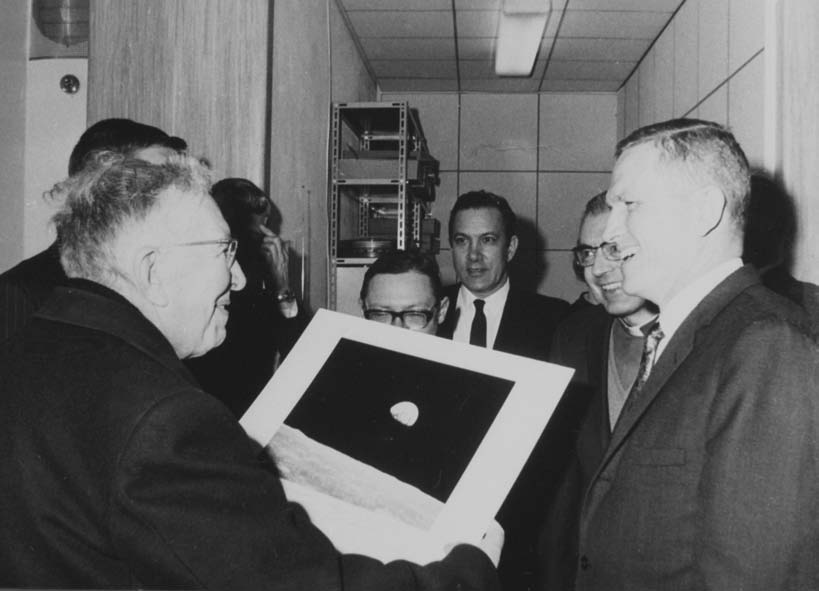
Then, on night of 20 July 1969, came the landing of the first man on the Moon. Accompanied by Father O’Connell, the Pope followed this great event from the facilities of the Schmidt telescope as it was transmitted by television. After he had observed the Moon at the telescope, he spoke to the astronauts in these words: “Here, from His Observatory at Castel Gandolfo, Pope Paul the Sixth is speaking to you astronauts. Honor, greetings and blessings to you, conquerors of the Moon, pale lamp of our nights and our dreams! Bring to her, with your living presence, the voice of the spirit, a hymn to God, our Creator and our Father. We are close to you, with our good wishes and with our prayers. Together with the whole Catholic Church, Pope Paul the Sixth greets you.”
Meanwhile, astronomical research continued in Castel Gandolfo. The analysis and interpretation of astronomical data almost always require such long and complex calculations that more time is usually required for them than for the actual telescopic observations. And so, towards the beginning of the 1960s the astronomers of the Specola began to make use of electronic computers. The first to be involved in this new venture was Father Florent Bertiau, who wrote programs for the IBM 1620 computer of the University of Rome and the Monte Mario Observatory. In 1963 an IBM 026 card punch machine was purchased in order to facilitate the preparation of programs for the computer. A second machine was acquired a little later and this was set up at the Schmidt telescope building.
Beginning in 1965 the Specola established its own independent Computer Center in the basement of the Schmidt telescope building and it was inaugurated by Paul VI on 7 August. The group of IBM machines included: the central 1620 computer, a 1622 card punch and reader, a 1623 active memory bank, a 1311 disk storage drive, a 047 printing tabulator, two 026 card punchers, a 080 card sorter, and passive memory disks.
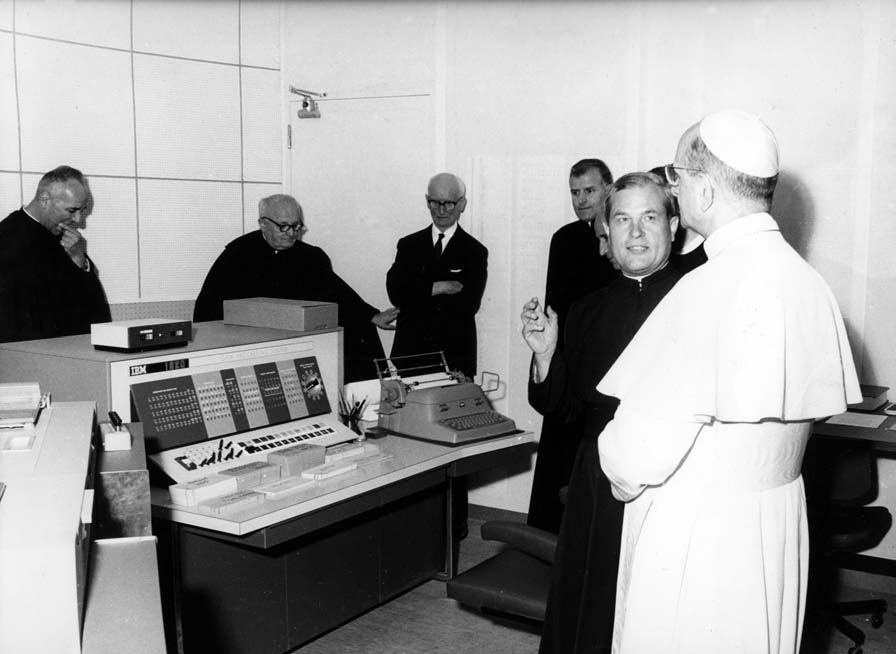
In 1971 there was a further improvement in the computer center with the addition of a teleprinter terminal linked by telephone to the Honeywell Mark I computer in Milan and later by satellite to a still more powerful Mark II in Cleveland, Ohio. A CalComp Plotter 210/563 controlled by this computer provided new possibilities to the Computer Center for the preparation of complex graphics needed by both the Observatory and the Astrophysical Laboratory. This computer was also used for research on light pollution in Italy.
The remarkable capacity of the new computer caused a reduction in the use of the old IBM 1620 until finally in 1978, thanks to the very rapid progress being made in computer technology, a new computer, an IBM 5100 with a CalComp control unit, replaced both the IBM 1620 and the telephone link with the Mark I in Milan.
In 1983 the Specola, like all other departments of the Vatican City State, was linked by a terminal to a Honeywell work-station set up in the Computer Center of the Governatorato. At the same time the Specola astronomers, who had taken up work in Arizona, began to make use of the computers available at the new location in Tucson. It thus came about that the computers at Castel Gandolfo were replaced in 1984 by a computer particularly suitable for scientific programs being carried out there. In 1990 the Consortium ICRA (International Center for Relativistic Astrophysics), of which the Specola is a member, began to make available at the Castel Gandolfo headquarters a series of ever more powerful workstations.
Today the needs of the Specola are met by the increasingly more powerful computers which are ever more numerable and connected to the Ufficio Internet of the Holy See. The new computers are so powerful that a research project such as the Astrographic Catalogue, which required so many years to complete, could be finished in a matter of days.
14 The Move West
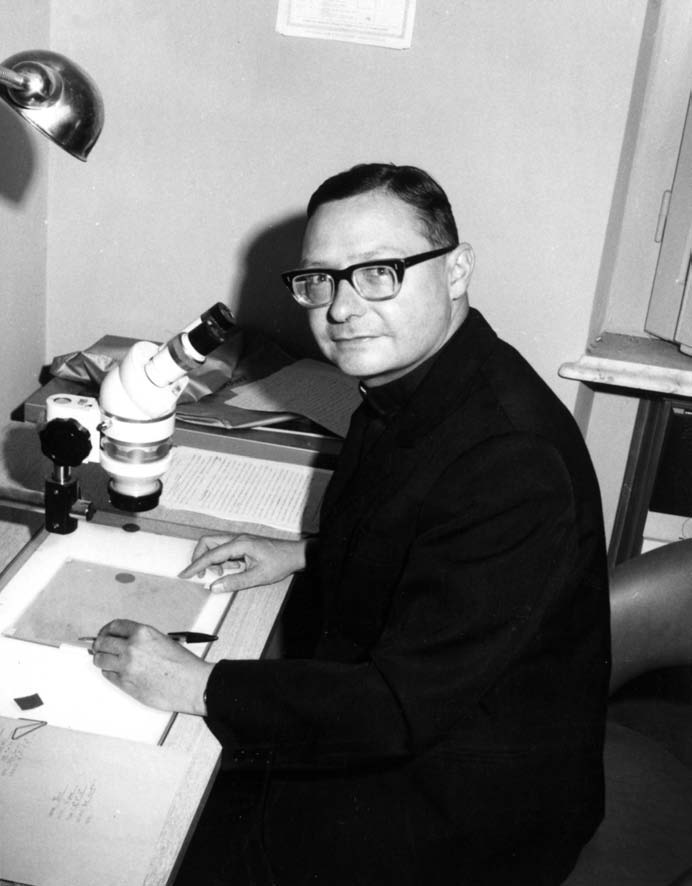
By the 1970s it was clear that the city lights that had driven the Specola out of Rome were now encroaching upon Castel Gandolfo as well. To look for a new site for the Specola’s observing programs, Treanor, in collaboration with Bertiau and De Graeve, began to research the darkness of the night sky in Italy (for which he designed a special portable photometer). As part of this research, which was also of interest to the Italian Astronomical Society, he served as Secretary of the Society’s commission which dealt with that research at the General Assembly of the IAU at Grenoble in 1976. It was at this Assembly that the Specola’s director Fr. Patrick Treanor presented the official invitation to celebrate the centenary of the death of Father Secchi by holding an IAU Colloquium at the Vatican. He organized the colloquium; but unfortunately could not participate because of his unexpected death on 18 February 1978.
Immediately after the death of Treanor various possibilities were considered for the future of the Specola. The idea of moving the Schmidt telescope to Sardinia was dismissed because, although it offered the best sky conditions in Italy, these did not appear to be such as to justify the trouble and expense of transporting there a telescope like the Schmidt. Other possibilities were, therefore, considered. One was to accept the invitation to transfer the Schmidt to the Canary Islands where an international observatory was being developed. Another was to make the Specola a member of the European Southern Observatory (ESO), a consortium of European countries with an observing station at La Silla, near the Chilean Andes, in a region where for varying periods of time astronomers of the Specola had worked in the past. Still another possibility was to accept the invitation to set up a branch of the Specola in Tucson, Arizona with the prospect of using the large telescopes located there and to collaborate with many other institutes which together make Tucson one of the most important astronomical centers in the world.
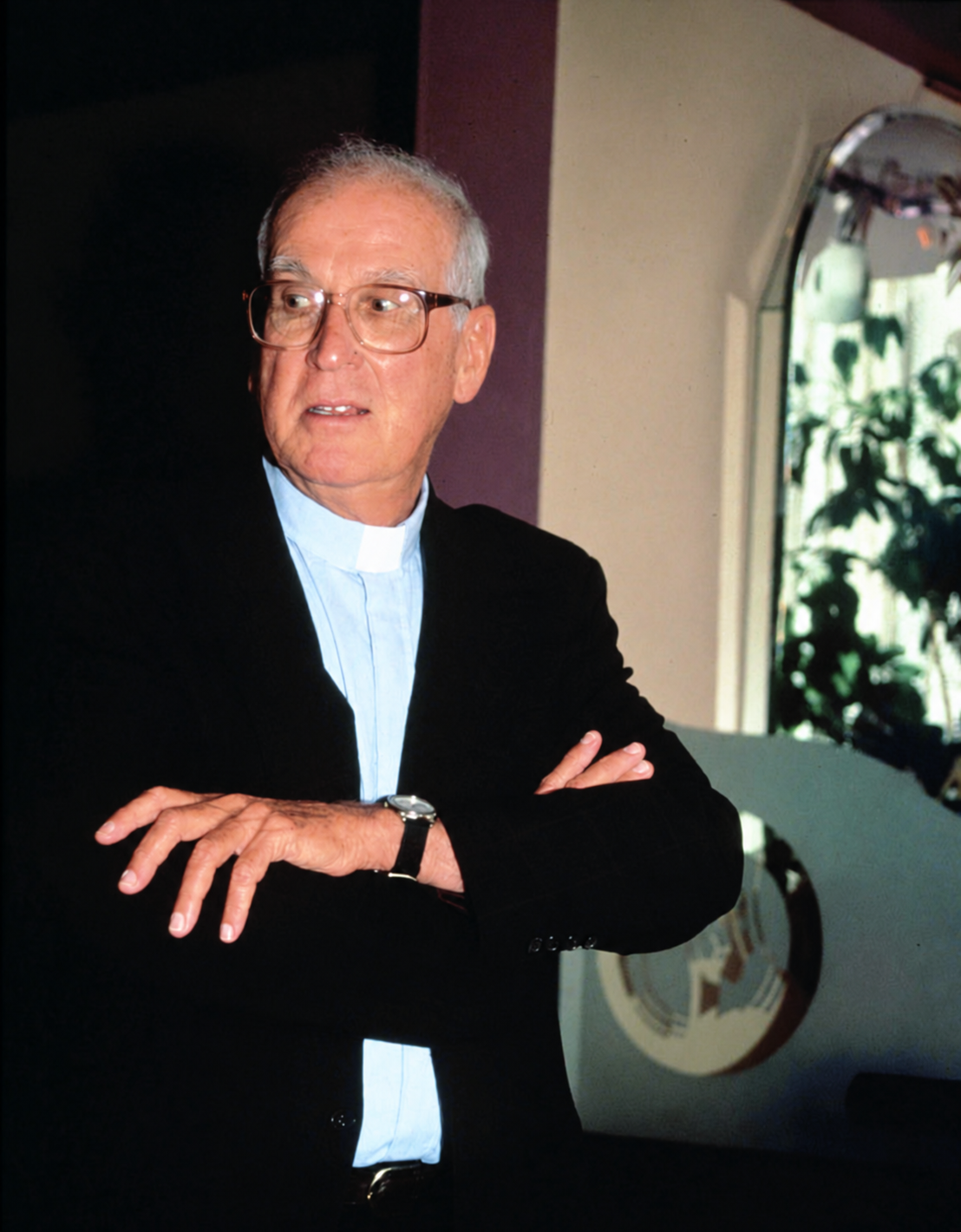
The appointment of Father George Coyne as Director of the Specola contributed in a decisive way to the choice of this last alternative. He had been a member of the Specola community since 1969 and had for some years conducted research and held teaching positions in Tucson with the several astronomical institutes of the University of Arizona. Over a period of time he had developed very good relationships with the astronomers at the University, so much so that at the time of his succession to Treanor he was Director of the Catalina Observatory and Acting Director of Steward Observatory, both institutes of the University.
In a similar way other astronomers at the Specola had been involved in research with institutes in the Tucson area. The fact is that for some time, at least among the younger members of the community of the Vatican Observatory, there was the growing expectation that research would not be carried out exclusively within the confines of the Specola at Castel Gandolfo, but that some permanent collaborative relationship would be established with an important university center capable of offering space and high quality instrumentation to the Specola astronomers. And so the new director, already himself a member of a very prestigious astronomical institute, considered it best to put off for the moment the project to transfer the Schmidt telescope to Sardinia and to try to set up a collaboration between the Specola and Steward Observatory of the University of Arizona in Tucson.
The experiment began in 1980. An agreement was established between the Specola Vaticana and the University of Arizona whereby, with the payment of an annual fee, the astronomers of the Specola in Tucson (they now became known as the Vatican Observatory Research Group or VORG) would be guaranteed both office space and services at the University and also access to the Steward Observatory telescopes. Furthermore, the choice of Tucson provided access to the many large telescopes which other institutes, such as the National Optical Astronomy Observatories, the Smithsonian Institution, and the University of Arizona Observatories, had located in the mountains bordering the desert about Tucson precisely because of the exceptional quality of the atmosphere and climate for astronomical observations.
The clearest and most tangible sign of the fruitfulness of the collaboration between the Specola and the University of Arizona, and in itself the best confirmation of the wisdom of preferring Arizona to other possible places, is without a doubt the Vatican Advanced Technology Telescope (VATT) on Emerald Peak at an altitude of 3200 meters in the Mt. Graham mountain chain about 160 kilometers northeast of Tucson.
This project, certainly not foreseen at the time the agreement was set up, had come about only because Steward Observatory, chosen collaborators of the Specola, already renowned for the high quality of its research and its valuable instrumentation, had in recent years gained a reputation in technological fields, specifically with the invention of a new method for fabricating large optical mirrors for telescopes.
All of this came about because the University of Arizona, together with the Smithsonian Institution, in the early 1980s had begun to promote the development of an international observatory with advanced technology telescopes. Most of the sites in the Tucson area were completely occupied. So the partners proposed the development of Mt. Graham and today this has become known at the Mt. Graham International Observatory (MGIO). It is now a reality but many obstacles had to be overcome in order to see it happen.
It was well known that in order to probe ever more deeply into space to observe astronomical objects ever fainter and more distant and thereby to look also further back in time, it is necessary to collect ever greater amounts of radiation from those objects. This is accomplished by increasing as far as possible the surface area (and, therefore, the diameter) of the telescope mirror which gathers the light in order to form the image of the observed object.
However, the old technology of making mirrors encountered both technical and financial difficulties in trying to increase the mirror diameter beyond a certain limit. In fact, the difficulties increase so rapidly with size that they soon become prohibitive. This explains why, after the construction in the 1940s of the five meter telescope on Mt. Palomar in California and the six meter Russian one, no other mirrors of such sizes had been made.
Now, however, several new different techniques are competing in the construction of mirrors 10 meters and more in diameter. We have thus entered into the era of the so-called advanced technology telescopes.
As we mentioned above, Steward Observatory is at the forefront in these efforts, having adopted a particular technique for mirror fabrication which uses a rotating furnace. The idea, which originated with Professor Roger Angel and his group, reduces enormously the construction time because the glass, melted in a rotating furnace at 1200° C, is distributed by the combined action of gravity and centrifugal force, in such wise as to give to its free surface a concave parabolic shape. A computer controls both the velocity of rotation and the cooling so as to determine very accurately the mirror’s shape as it solidifies. The final result is a glass disk which is rigid but relatively light because it is supported from behind by a honeycomb structure. Furthermore, because it is already concave it does not have to be ground but only polished and surfaced. This allows for remarkable savings in glass and in the polishing time. To appreciate this statement it is enough to consider that the five meter Mount Palomar mirror, begun in 1935, required about twenty tons of pyrex, twenty-five days for the fusion, one year for the cooling, and twelve years in the removal of about five tons of glass to obtain its parabolic surface.
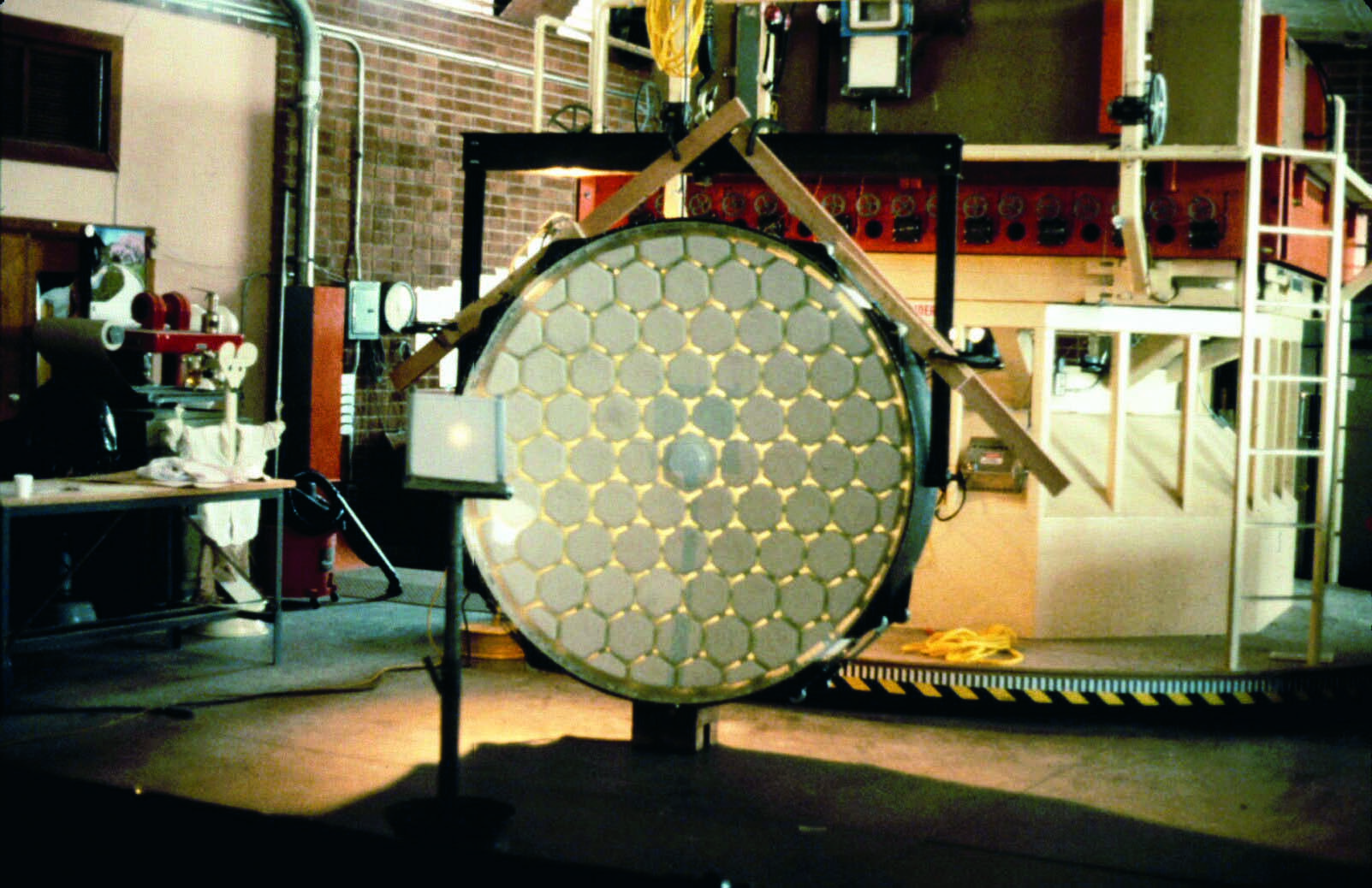
The first test mirror, 1.83 meters in diameter, was produced in 1985 as the first experiment in the new technology. It took four hours for the melting process and four for the cooling under rotation. A new technology was also applied to the polishing of the final surface. It is called stressed-lap polishing and can produce an exceptionally exact curvature for short focal length mirrors. Because it was an innovative technique, three years were required to polish the VATT mirror. It was completed in 1991. At the end a thin layer of aluminum is deposited on the surface.
The end result brought great satisfaction to the University of Arizona Mirror Laboratory and they were happy to offer to collaborate with the Specola in using it for the construction of a telescope to be shared on the basis of the respective contribution of each partner, 75% to the Vatican and 25% to the University.
The Vatican astronomers could not have received a more welcome gift. It is one thing to have access to telescopes of other institutes with the huge limitation of having to wait in line and then being granted only a part of the observing time requested; it is quite another thing to have one’s own telescope with the possibility of carrying out long range research programs, a privilege not allowed to many research groups.
The Holy See was not able to provide in its budget for the financing of this project but it encouraged the Specola to accept the offer to build the telescope, if it thought that it would be possible to raise the necessary funds among friends and benefactors.
The promising results of a first campaign in 1987 to gather funds in the United States led to the establishment of the VOF, an autonomous corporation legally recognized in the State of Arizona with the purpose of assuring the necessary means for the construction and operation of the telescope and associated observatory and of funding fellowships for young researchers who wish to collaborate with the Specola astronomers.
With a second campaign in 1989 a total of 3.5 million dollars was raised and this was deemed at that time adequate to begin the project. The primary mirror is the property of the University of Arizona. All of the remaining parts of the VATT are the property of the Foundation. Since it was the first telescope which employed the technology and since the major partner was the Vatican it was given its name, Vatican Advanced Technology Telescope (VATT).
The donors and supporters of this undertaking form the Vatican Observatory Guild. The honor of having their names attached respectively to the telescope and to the adjoining astrophysical facility fell to the lot of Mr. Fred A. Lennon, who asked that the telescope be named for his wife Alice, and Mr. Thomas J. Bannan, the two major donors. In light of the generosity shown by some American Catholics in wishing to contribute to the new efforts of the Specola Vaticana we hear again today those words, as it were prophetic, pronounced almost a century ago by Pius X, when as he crossed the iron bridge at the old Vatican Observatory, he commented: “Ah, these Americans, these Americans!”
On more than one occasion John Paul II showed his interest in the new undertaking and his gratitude to the American supporters. In September 1987, while on a pastoral visit to Phoenix, Arizona, he did not forget his astronomers residing in nearby Tucson. In fact, he received a delegation of scientists from the Vatican and from the University of Arizona who, led by Coyne, described the new telescope project to him. In June 1989, he also received some of the members of the Vatican Observatory Guild in a special audience.
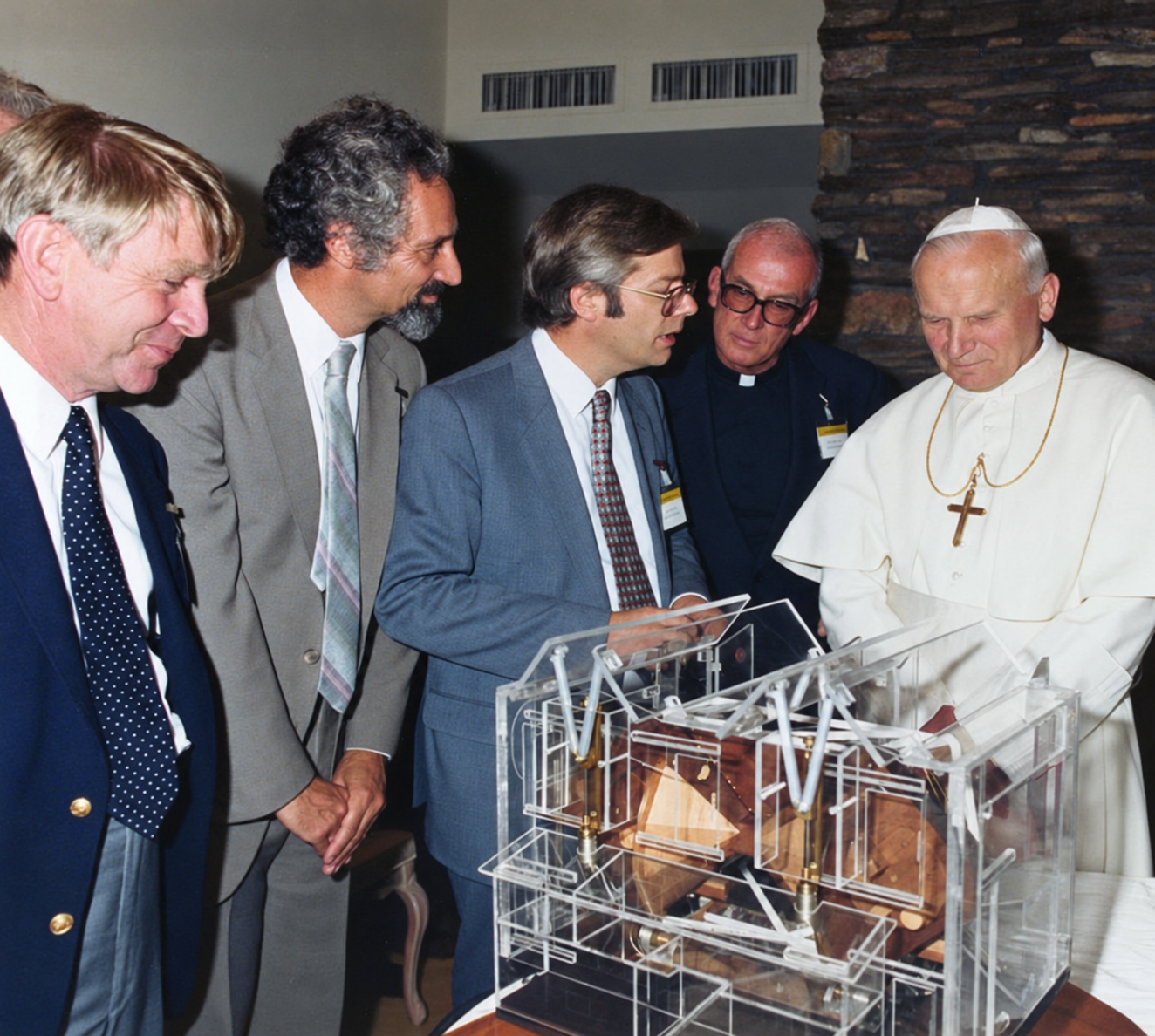
15 The Vatican Advanced Technology Telescope
The VATT, which was inaugurated with celebrations on the days 17-19 September 1993, has essentially two parts: the Alice P. Lennon Telescope and the Thomas J. Bannan Astrophysics Facility. The building contains the control center, the computer station, offices and a four bedroom apartment to accommodate the astronomers. The telescope is isolated both mechanically and thermally from the rest of the facility in order to avoid deterioration of the telescope images by vibrations or by heating, even that caused by humans.
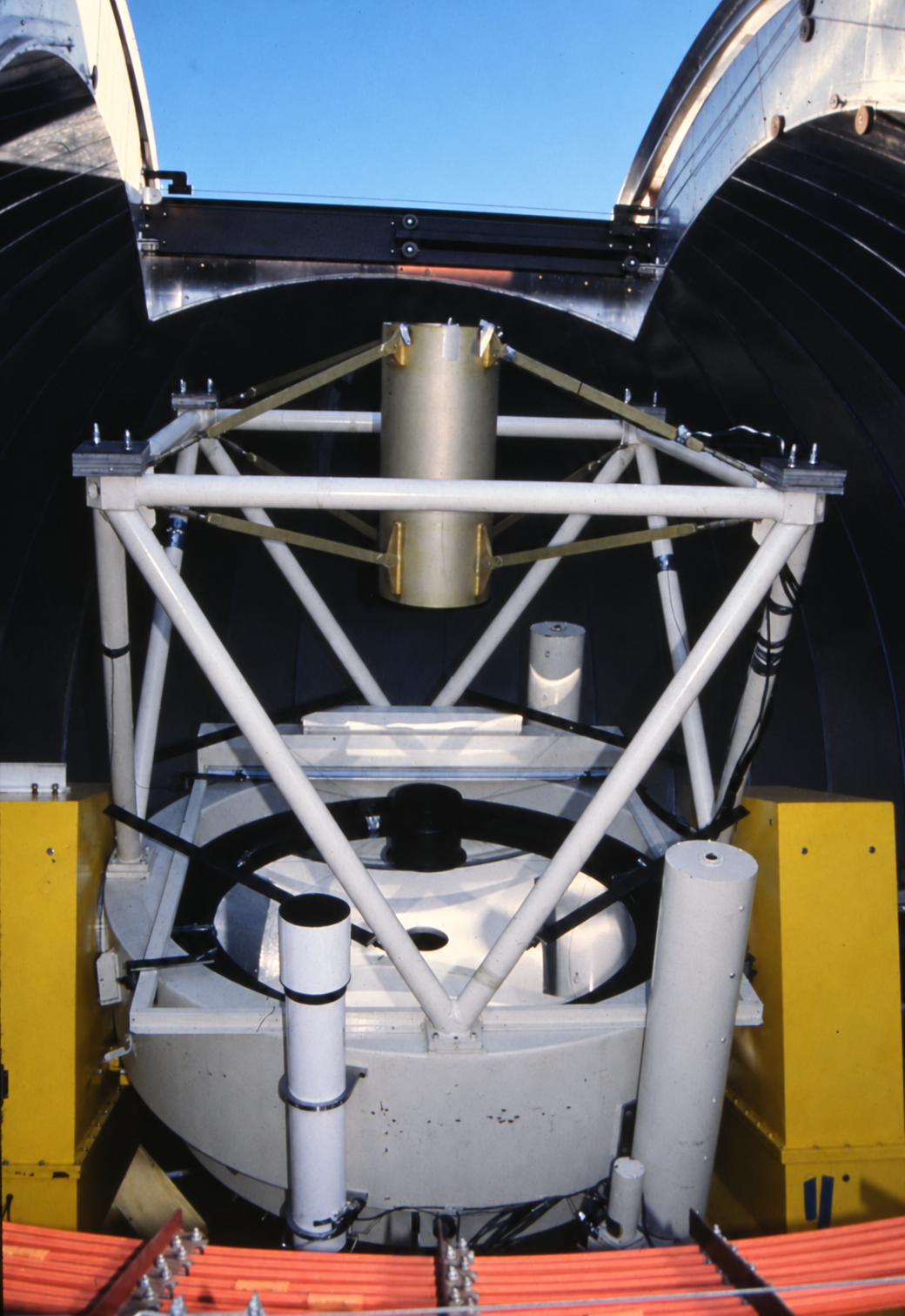
As to the optics the primary mirror has a focal length equal to its 1.83 meter diameter and, therefore, a focal ratio which, at least for mirrors of this large size, is altogether exceptional, and, in fact, unique. This fact makes it very compact and somewhat like a cube which, in addition to giving the telescope an unusual look, provides a large financial savings both in the telescope construction and in the building and dome which house it, since they too can be smaller than normal.
The aluminum Ash dome is 7 meters in diameter and has a shutter opening of 2.5 meters, an unusual relative size for the opening. The reason for this is to reduce to a minimum perturbations by the wind and by thermal differences within the dome and between the dome and the outside ambient. This contributes a great deal to the image quality.
The primary mirror of the new telescope is made of borosilicate (pyrex) glass backed by a honeycombed structure which makes it both rigid and light. This structure at the same time provides for a rapid and uniform response to changes in the ambient temperature and, in fact, air is circulated within the structure to help avoid deformations due to temperature differences.
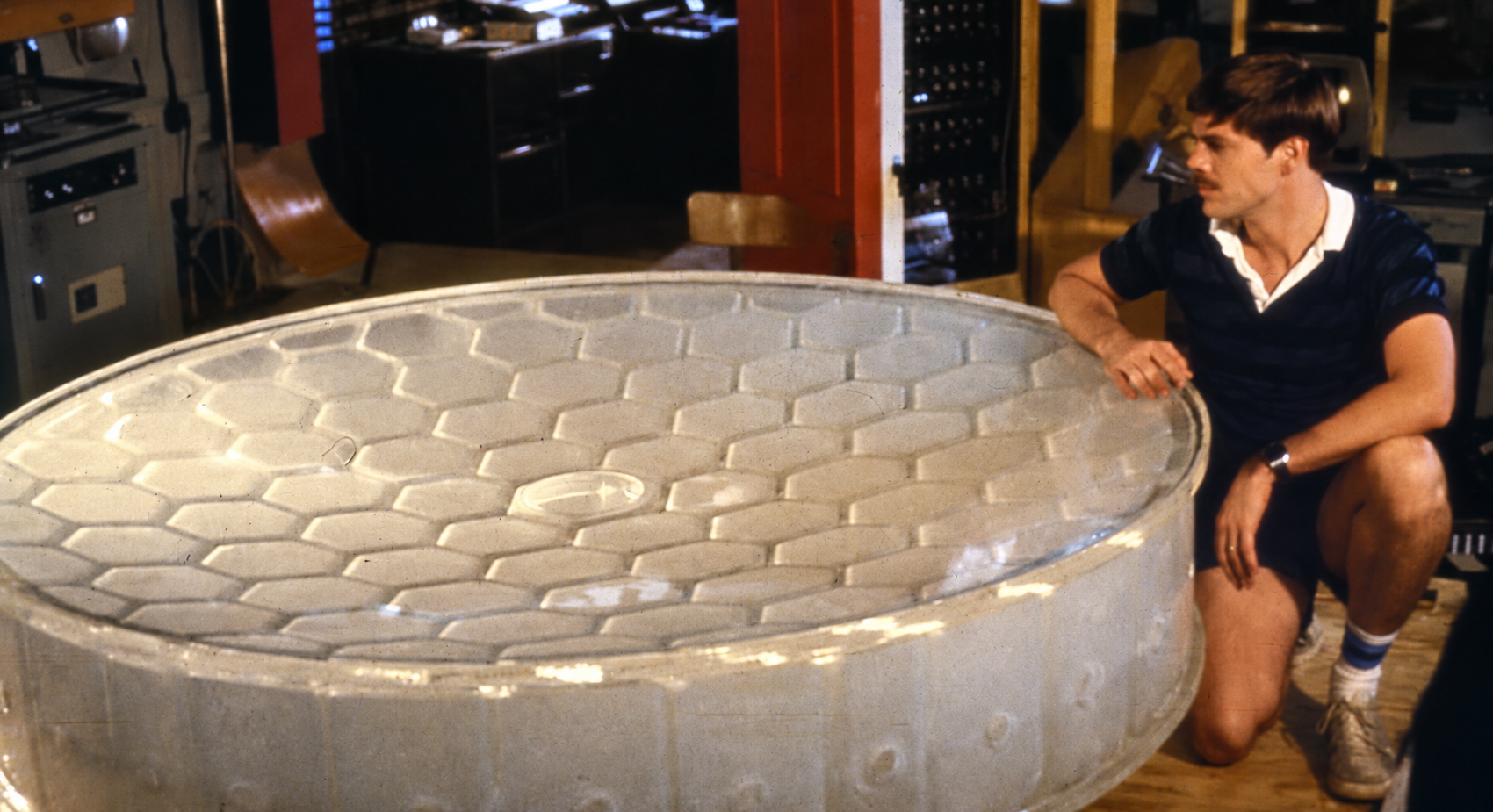
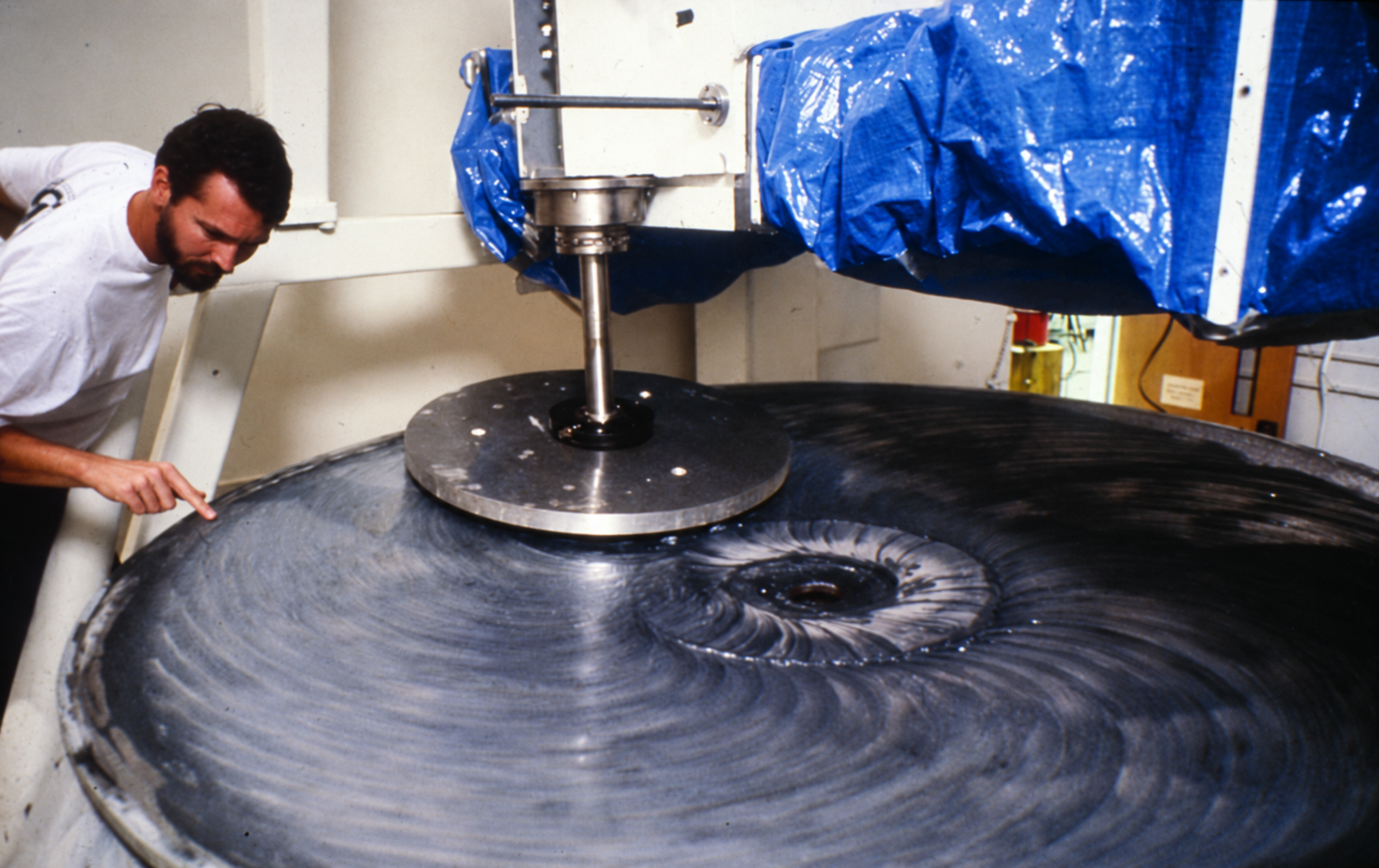
The images formed by the telescope are not observed visually, nor are they photographed; rather they are detected electronically using a charge coupled device (CCD) chip; displayed on a computer monitor; and recorded on disk.
The telescope is the Gregorian type in that it uses a concave secondary mirror made of zerodur glass. This too is an uncommon characteristic which provides advantages both from the optical and the financial point of view. The secondary provides an effective focal ratio of F/9 and is located beyond the primary focal point. With this focal ratio we have a good relative aperture without a long telescope. Thus the field of view is larger than one would have with a classical Cassegrain focus. In fact, it is 15 arc minutes, about one half the size of the moon, for the curved field and 10 arc minutes for the flat field seen by the CCD.
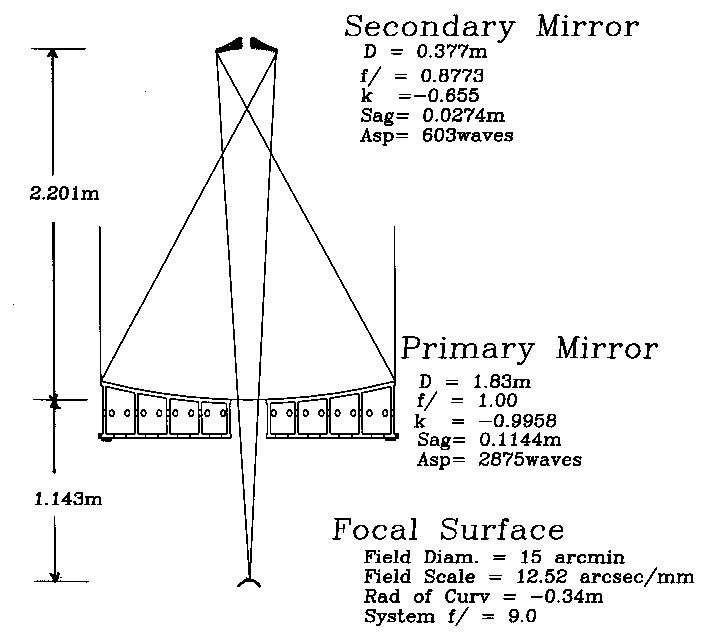
As to its resolving power, its ability to obtain well detailed images and to detect faint objects, thanks to its advanced technology and to the site, it today provides, in favorable atmospheric conditions, an image resolution of 0.7 arc seconds, two times better than that of a previous generation telescope of equal size. This also means that it is four times more efficient in detecting faint objects. An even better resolution of about 0.5 arc seconds will be obtained when adaptive optics is employed.
The image quality of the VATT is due also to its mechanical rigidity against the wind and thermal disturbances. It is compact because of the F/1 primary and the altazimuth mounting which is similar to a ship’s cannon. The direct linkage of large motors to the vertical and horizontal motions also contributes to the stability. These motors are regulated by a computer so that they can point automatically and follow celestial objects with high precision.
All of the technical successes of the VATT have made it a prototype for a whole series of the next generation of much larger telescopes. In fact, the rotating oven and stressed-lap have now been applied to the production of larger mirrors: 3.5 meters, 6 meters and the two 8.4 meter mirrors for the Large Binocular Telescope (LBT), recently constructed on Mt. Graham near the VATT.
16 The Science-Faith Dialogue
Writing in L’Osservatore Romano on 17 February, 1965, future director Fr. Patrick Treanor S.J. commented on how the Specola serves as an instrument of dialogue between scientists and philosophers. His ideas form the basis of the following reflection:
At the inauguration of the new headquarters at Castel Gandolfo Pius XI had done no more than reemphasize the ideas enunciated fifty years before by Leo XIII. He said that the purpose of the Specola was “to assure for the Faith and for Religion that implicit, rather explicit, support which shines forth and is more than ever persuasive each time that respect for the Faith is shown to be united in a fraternal embrace with the cultivation of science.”
The goal, therefore, was still to establish and facilitate the dialogue between science and faith, a goal which with each passing year has become ever more timely and vital in the Church’s self-awareness. In fact, from those times to today, science as a whole and in particular astronomy have made spectacular progress and the importance of science in human society is ever increasing.
At the same time, the climate of renewal which has animated the Church since the Second Vatican Council and the most recent pontifical messages, from Ecclesiam Suam of Paul VI in 1964 to the many specific interventions of John Paul II and Benedict XVI on science-faith issues, tell us that the Church is untiring in her search for ever more efficient ways for dialogue with today’s world.
The Church is well aware of the unity and the interconnection of all truth, a unity founded in God, the author of all truth. Under the influence of materialism and skepticism modern man has, now more than ever, lost for the most part this sense of unity. Faced with the rapid growth and the obvious power of science, he tends to find in the scientific method an alternative to the Christian philosophy of life. Even where there is no intentional opposition or conscious prejudice, the barriers of a different cultural substratum and also of a peculiar technical language isolate an ever growing part of mankind from the message of the Church, with the danger that the Church herself remains in turn isolated from what science has to say.
[In this regard it is important to note that John Paul II, in repeating how necessary the science-faith dialogue is, also put the emphasis, more so than any of his predecessors had done, on the fact that the dialogue cannot exist as a one way street. If it is true that science must be open when theology seeks to approach it, it is no less true that theology must be open and attentive to progress in science.]
It must be said, to be truthful, that modern cosmology, that part of astronomy which has undergone huge developments in the past decades as it explores the physical origins and evolution of the universe, offers today an altogether new and special opportunity for the exchanges which the science-faith dialogue imply.
Cosmology, in fact, more than any other branch of science, brings the scientist to deal with problems and formulate conclusions which, as they touch upon interdisciplinary matters, lead in a natural way to ultimate questions which are no longer only about physics but rather about metaphysics, and not infrequently about theology. And so today scientists on the one hand and philosophers and theologians on the other find themselves being challenged anew to mutual exchanges where they each set out to meet the other knowing that they must together both give and receive.
In this perspective, the way in which the Specola sees its mission in today’s world becomes clear. The first object is to become a part of the intellectual life and the ongoing development of modern astronomy in a clear productive manner. It is not a matter of creating an image which gives the appearance that the Church is interested in science, but rather to do science in the fullest sense of the word. Through this work one hopes to instill in the modern world, Catholic and otherwise, an exact evaluation of the place of science in Christian life and thought and to help colleagues in science to recognize the value, no longer only physical, but philosophical and theological, of the ultimate questions to which they, more and more naturally, are led by their research in physics and, in particular, in cosmology.
17 Competition or Collaboration?
But how can the Specola pretend today to be up to doing serious and competitive scientific work when there are an always increasing number of institutes who rely for their research on space telescopes or on the new observatories being constructed around the world which are equipped with instruments enormously more powerful and costly than those of the Specola?
We should remember in this regard that modern astronomy covers a vast variety of research programs and each of them has need of instruments with special characteristics, of which size is but one, and not always a necessary or sufficient one. The most powerful telescopes must carry out research at the very limits of their great potential and they can only do this well if they have at their side smaller telescopes fitted for research that is equally fundamental and fascinating and for which the large telescopes would be poorly employed. The relationship, therefore, between large and small observatories is such that they complement rather than compete with one another.
It is worth the trouble, in this regard, to remember how totally valid today are the words which Treanor wrote in 1973 with respect to the challenge facing the Specola due to the enormous development of astronomy in recent decades:
It would be an illusion for us to put ourselves on an equal footing with the large institutes which have almost unlimited technical and economic resources. The world offers us many other examples of Observatories, relatively small but good, whose contribution to scientific progress exceeded by a large measure their physical dimensions.
We have inherited from Father Secchi a tradition which has carried the Specola’s interests toward ever deeper studies of our stellar system, that is, the Galaxy. It is a field in which our astronomers are already known for their expertise and for which our instrumentation (thanks to a strategic up-dating initiated during the last decades) is particularly suitable. Above all it is a field of astronomy in rapid growth where observatories, even those with limited resources, can make a notable contribution to the observational techniques and interpretation on which all progress in astronomy is ultimately based.
With the installation of the advanced technology telescope on Mount Graham in Arizona, the Specola has brought its instrumentation up to today’s standards, thus taking a place among those observatories equipped with instruments of modest power, the larger number by far in the world.
18 A New Way of Doing Research
The fact that there are now two locations, Castel Gandolfo and Tucson, marks a new stage in the history of the Specola, a new way of doing research. Characteristic of this new way is international collaboration, ever more widespread and at various levels, so much so that the work of the Pope’s astronomers is today, more so than in the past, carried out on a worldwide basis.
In fact, the Tucson venture on the one hand has nurtured the real scientific research development of the Vatican astronomers and their collaboration with the prestigious institutes located in Tucson. On the other hand, quite contrary to what one might have thought, there has been at Castel Gandolfo the development of new, intense, and flourishing initiatives on an international scale. These include meetings and summer schools, which had never been held there before.
One might say that the new program represents a way whereby the staff of today’s Specola carry out their work in tune with the vision of the modern Popes to promote dialogue with all peoples.
From the beginning of the 1980s with the arrival of some new Jesuit astronomers at the Specola and with the opening of the VORG in Tucson, Arizona, there began, in addition to continued studies on our own Galaxy, research on external galaxies and theoretical studies in planetary sciences, astrophysics, and cosmology.