
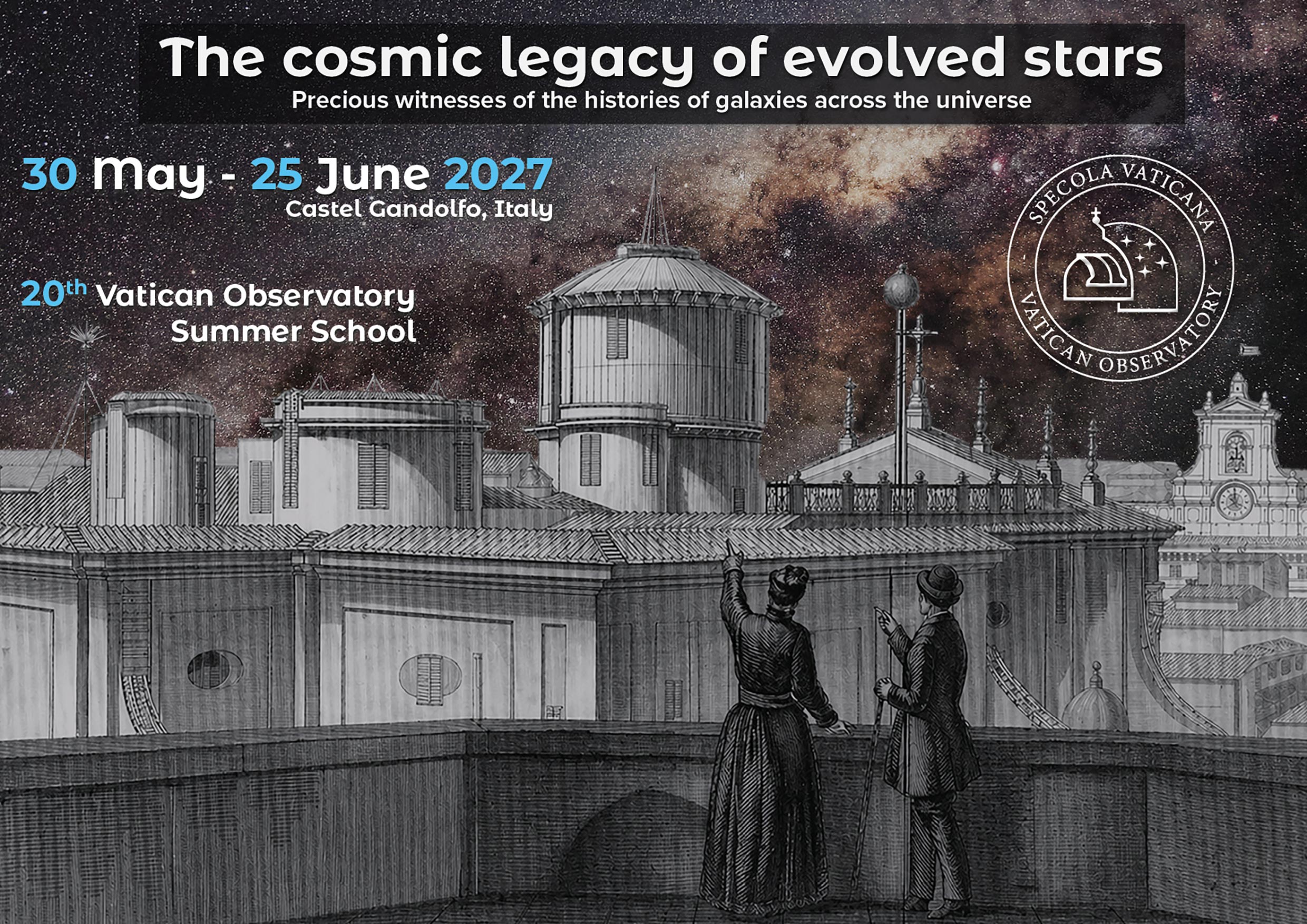
The late stages of stellar evolution stand at the frontier of modern astrophysics — a domain where extreme physics, complex chemistry, and transformative processes converge. As stars ascend the red giant and asymptotic giant branches, shed their outer layers through powerful winds, and blaze through the planetary nebula phase before fading into white dwarfs, they become pivotal engines of chemical enrichment in their host galaxies, making them essential to understanding how galaxies assemble across cosmic time.
The dawn of a new observational era — defined by JWST and the Roman Space Telescope — brings both unprecedented opportunity and urgent demand for researchers deeply fluent in evolved stellar physics.
Through a curriculum spanning stellar interiors and nucleosynthesis, dust formation and mass loss, and the use of evolved stars as distance indicators and population tracers, participants will develop the physical intuition and observational toolkit needed to tackle the open questions at the intersection of stellar evolution, interstellar chemistry, and galaxy formation — questions that the next decade of facilities is poised to answer.
In addition to an intensive course of studies, students will participate in various excursions and social activities. The social program is still in development, but in the past students have visited cultural sites in the area around Rome, a visit to the beach, and enjoyed an audience with the Pope. Furthermore, past students have enjoyed sports and movies together, and celebrated an evening of sharing the cultural cuisine of their home countries.
The school is intended for students from the final year of their undergraduate studies to the early part of their post-graduate (graduate) studies (that is, in preparation for their masters or PhD or equivalent) in astronomy-related fields.
Selection is based entirely on the background, interest, and ability of the student; the only limit is that we choose only two students from any one country. Religious faith is not part of the selection criteria. Students of all faiths are encouraged to apply.
There is no required fee to attend, and students with financial hardships can apply for support toward their travel and housing costs.

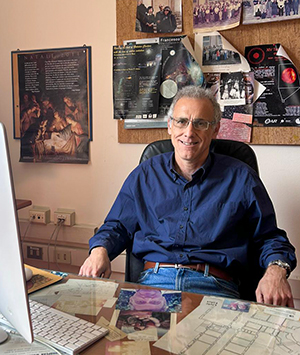
Paolo Ventura is astronomer at the Observatory of Rome, and Professor of Stellar Astrophysics at the University of Rome Roma Tre. His main field of research is the study of stars and stellar systems. He acquired a consolidated expertise in the interpretation of globular clusters data, with particular emphasis to the scenarios for the formation of multiple populations in globular clusters. A significant fraction of the research activity was devoted to study the advanced evolutionary phases of stars, all the way from the core helium burning until the planetary nebula phase. He investigated the dust production mechanisms in the wind of evolved stars, and the relevant effects on the modification of the spectral energy distribution: these studies opened the way to interpret data of galaxies from the most popular infrared space missions (Spitzer, ISO), and set up the basis to analyze the incoming results from the James Webb Space Telescope.
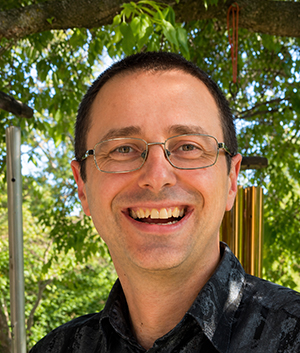
Eric Bell is Professor of Astronomy at the University of Michigan, where he is the chair of the graduate program. The main focus of his work is to learn and understand more about how galaxies work – how they form and continue to change and grow to the present day, what processes are important in shaping their properties. He coordinated several studies to learn about the growth of galaxies and their satellite systems, to understand the physical drivers of galaxy evolution, and to measure the effects of dust on measurements of galaxy properties.
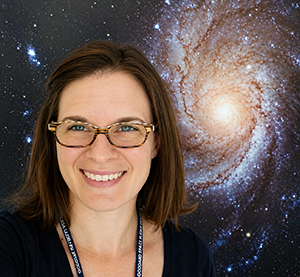
Martha Boyer is an astronomer at the Space Telescope Science Institute in Baltimore, where she leads the Near Infrared Camera (NIRCam) Instrument team for the James Webb Space Telescope (JWST). Her research interests include dust production by evolved stars and their contribution to the interstellar medium of nearby galaxies. She is also interested in the life cycles of evolved stars and the ways in which they influence the appearance and evolution of their host galaxies. Her work centers on observations of stellar populations in nearby galaxies using optical and near-infrared telescopes, especially the Hubble Space Telescope, JWST, and the Spitzer Space Telescope.

Flavia Dell'Agli is an astrophysicist at the INAF - Observatory of Rome. She received her Ph.D. in 2016 from La Sapienza, University of Rome, then held a postdoctoral position at the Instituto de Astrofísica de Canarias, before joining the Observatory of Rome as a permanent staff member in 2019. Her research explores the evolution of stars and how their lives impact the environment in which they form. She studies stellar populations in nearby and distant galaxies to reconstruct the history of star formation and chemical enrichment across the Universe, exploiting the most powerful observational facilities of our era: JWST, Euclid, Roman, and ELT. She is particularly fascinated by the origin of cosmic dust, an essential ingredient for the life cycle of stars and planets.
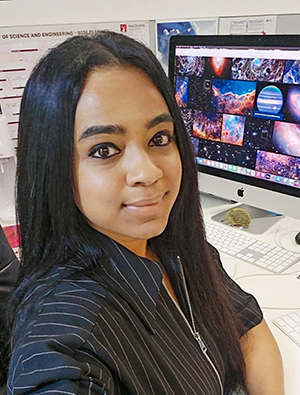
Associate Professor Devika Kamath is an internationally recognised stellar astrophysicist whose research on late-stage stellar evolution in low- and intermediate-mass stars has transformed the field by accurately quantifying the production of chemical elements, informing next-generation stellar models, and supporting extragalactic studies with upcoming facilities such as the Giant Magellan Telescope. Her work has also uncovered novel planetary formation environments around dying stars, reshaping our understanding of planet formation and guiding future exoplanet observational programs with major international instruments. She is currently Head of the School of Mathematical and Physical Sciences at Macquarie University. She has served as Chair of the Astronomical Society of Australia’s Inclusion, Diversity and Equity in Astronomy (IDEA) Chapter. Her achievements have been recognised through multiple awards, including Science & Technology Australia’s Superstar of STEM and the Australian Institute of Physics’ Young Tall Poppy Award. She has secured more than A$7.5 million in competitive research funding and is deeply committed to mentoring the next generation of researchers.
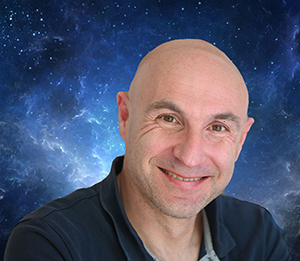
Maurizio Salaris is Research Director at the Astrophysics and Space Science Observatory of Bologna, after spending almost three decades at the Astrophysics Research Institute of Liverpool John Moores University. He has been Associate Editor of the journal Astronomy & Astrophysics, and is a Fellow of the Royal Astronomical Society. His research centres mostly on stellar physics, the computation of stellar structure and evolution models, and the development and application of tools to determine the ages and initial chemical compositions of stellar populations. The main focus is on old populations, which witnessed the early stages of galaxy formation, from the globular clusters of the Milky Way to the old clusters of the Magellanic Clouds, and the dwarf galaxies of the Local Group. Among his various projects, he has employed data from the Hubble Space Telescope and the James Webb Space Telescope to study the oldest white dwarfs in the Milky Way's globular clusters.
Tel.: +39 06 698.85266