
The Vatican Observatory is one of the oldest active astronomical observatories in the world, with origins dating back to 1582 and the reform of the Julian calendar.
Today, the Observatory staff includes more than a dozen Jesuit scientists from many different countries, who study the universe using rigorous scientific methods.
They are at the forefront of scientific research covering a wide range of topics, from the study of the smallest particles of interplanetary dust to the origins and structure of the universe.
The Jesuit astronomers of the Vatican Observatory have contributed to discoveries in numerous fields, from the origins of our Solar System to the structure of galaxies.
Scientists around the world recognize their work in planetary science, cosmology and philosophy, as well as in stellar and extragalactic astronomy.
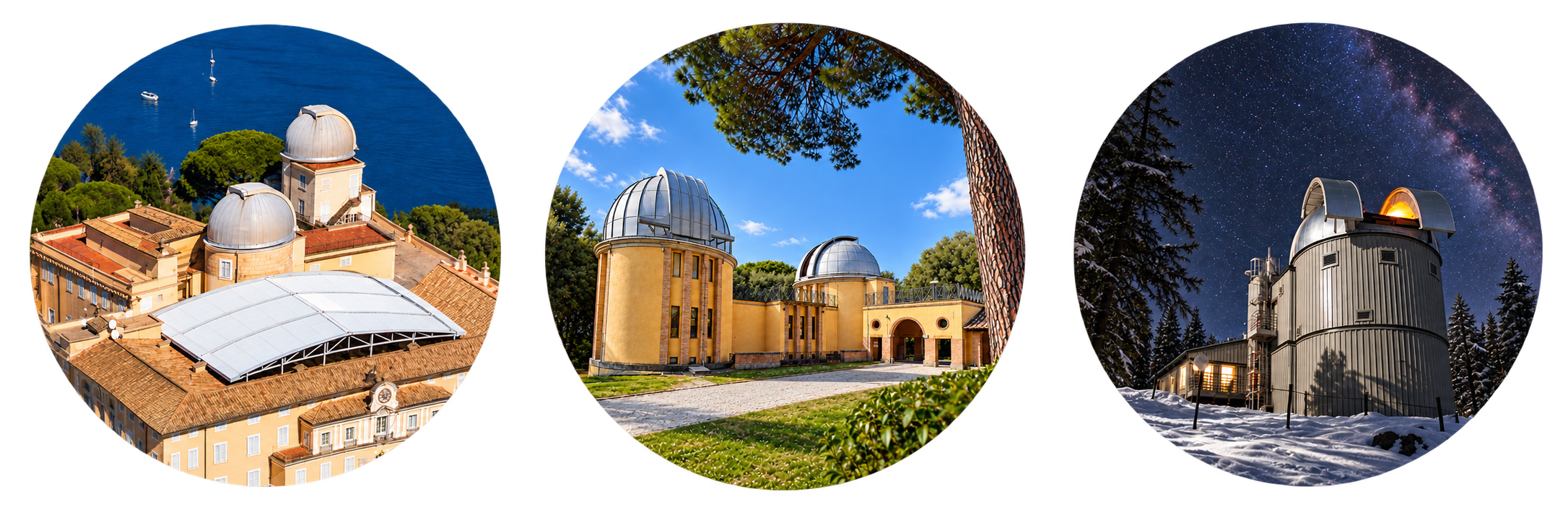
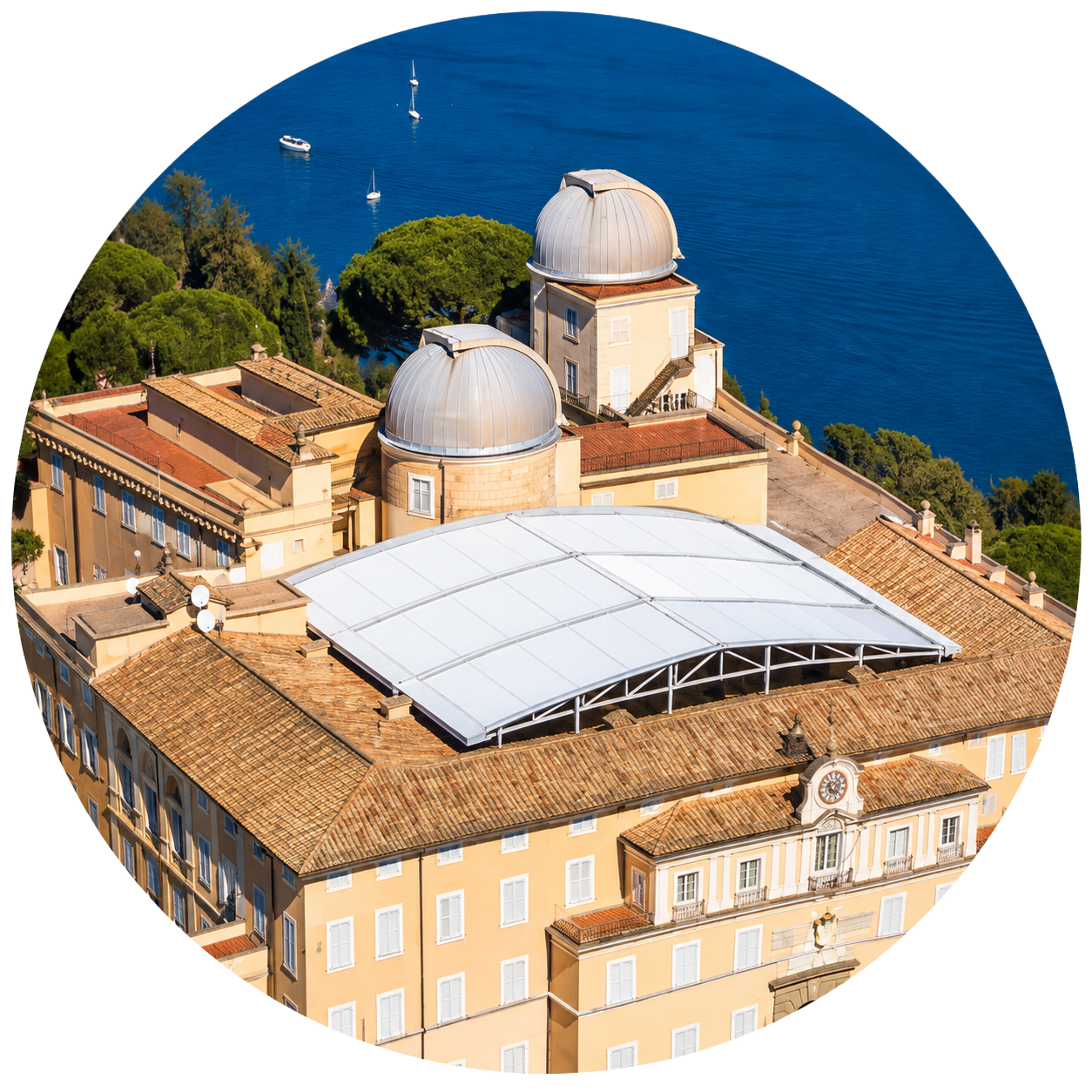
The Observatory has its headquarters in the gardens of the Pope's summer residence at Castel Gandolfo, about an hour south of Rome and Vatican City, and a research center, the Vatican Observatory Research Group, in Tucson, Arizona, one of the world's leading centers for observational astronomy.
Today, most observational research is carried out at the Observatory's telescope on Mount Graham, Arizona, about one hundred miles east of Tucson.
In addition to being home to four historic telescopes, the Vatican Observatory at Castel Gandolfo also houses an important archive of astronomical photographic plates dating back to the late nineteenth century, a library containing numerous scientific works of historical importance, a collection of historic astronomical instruments, and one of the world's most important meteorite collections, which is studied in a recently renovated, state-of-the-art meteorite laboratory.
Zeiss Visual Refractor
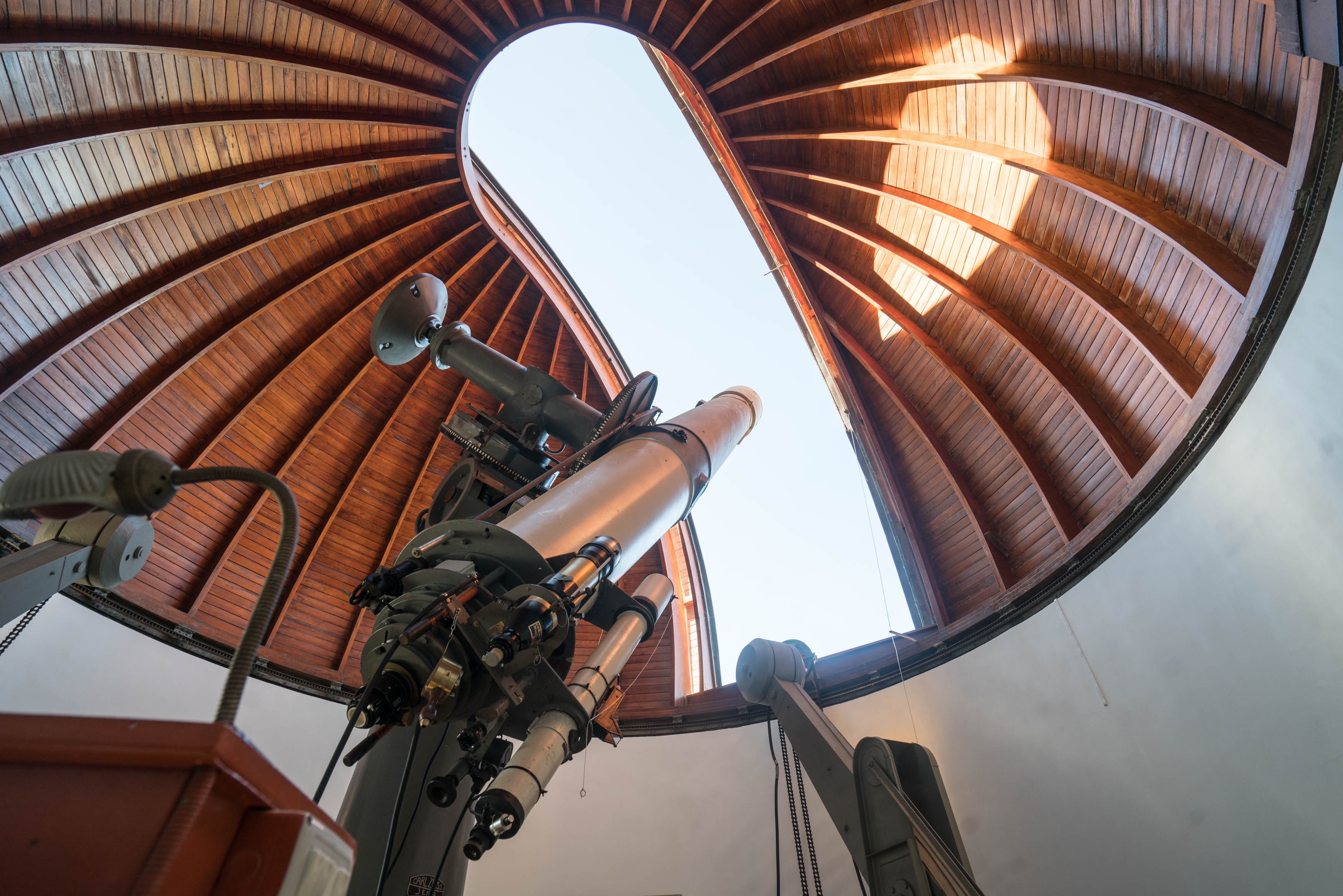
In the early 1930s, plans for a new Vatican Observatory at Castel Gandolfo were prepared by the Carl Zeiss company of Jena. Construction began in 1932 and was largely completed by 1935. The new visual refractor was installed beneath a large wooden dome 8.5 meters in diameter, resting on the massive structure of the palace's ancient spiral staircase.
Zeiss supplied a 40 cm objective with a focal length of 6 m, together with a set of nine eyepieces and various accessories. The instrument was also equipped with a Graff photometer for observing variable stars and a micrometer for measuring double stars.
A Danjon stellar interferometer was later added. This instrument was built in the Observatory workshop and could be used to determine the separations and positions of double stars and the diameters of planets.
“Carte du Ciel” Telescope
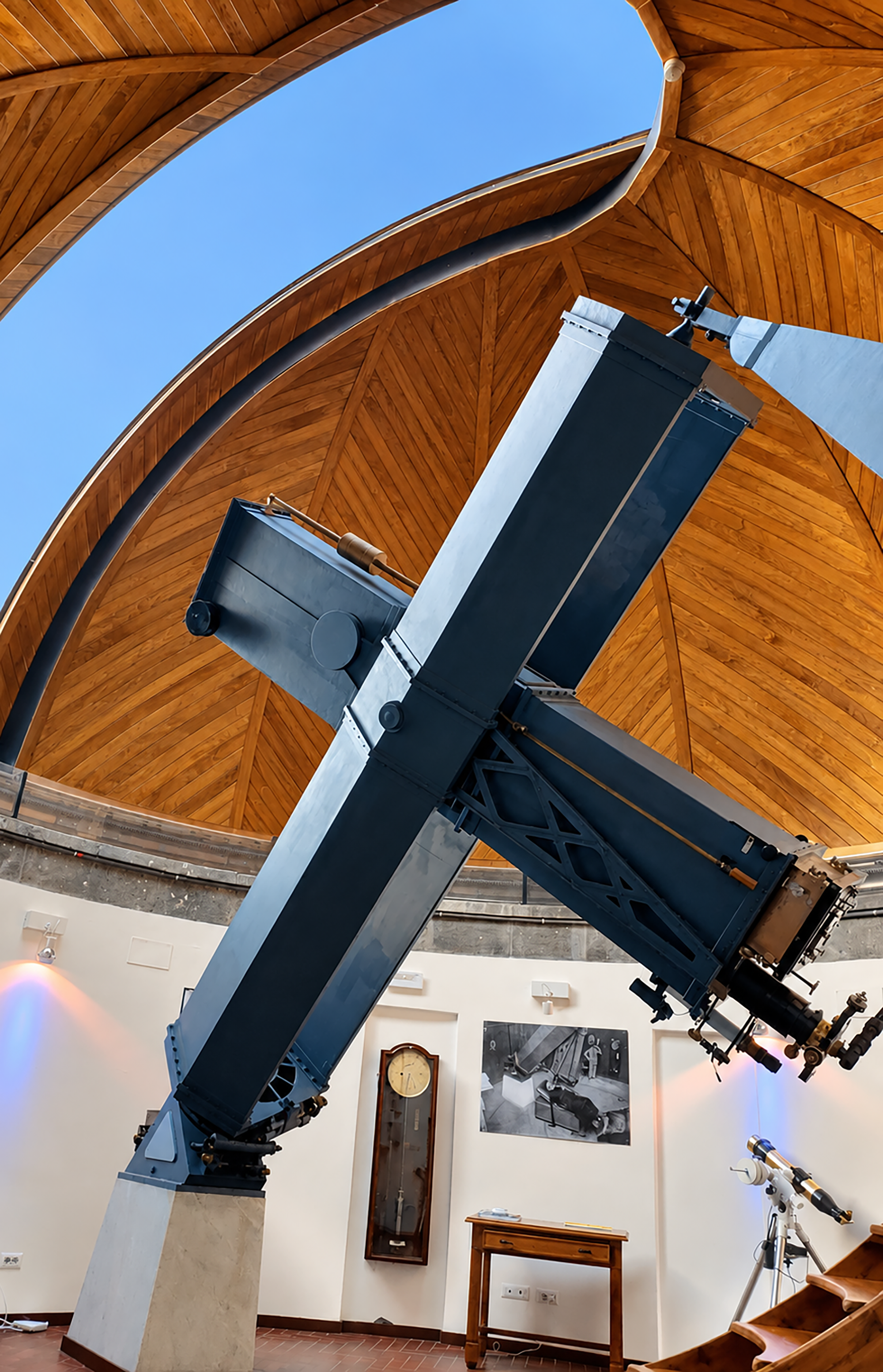
In 1887, astronomers meeting in Paris laid the foundations for the first photographic atlas of the stars: the Carte du Ciel (Map of the Sky). The photographs were to be used first to produce a map and subsequently a catalogue of the stars. Eighteen observatories in countries on every continent participated in the project.
The Vatican Observatory was assigned the portion of the sky between the +55 and +64 degree parallels. The Paris agreements established that all eighteen observatories participating in the Carte du Ciel should use instruments with the same characteristics in order to ensure complete uniformity of the results.
The characteristics of the objective provided, on a photographic plate of 16 cm², a useful field of 13 cm², corresponding to two degrees in the sky, approximately four times the diameter of the Moon. The scale was therefore approximately 1 arcminute/mm.
The photographic equatorial telescope and the eight-meter rotating dome, built in Paris at the Gilon workshops, were installed on the Leonine Tower in 1891, near the present location of the Vatican heliport, today known as the Tower of St. John.
Its walls are as much as four and a half meters thick, and it is one of the few surviving bastions of the fortification known as the “Leonine” wall, built by Pope Leo IV in 840 as a defense against Saracen invasions.
The telescope was transferred to the gardens of the summer residence at Castel Gandolfo in 1942; the final photographic plates for this project were taken in 1953.
Zeiss Double Astrograph
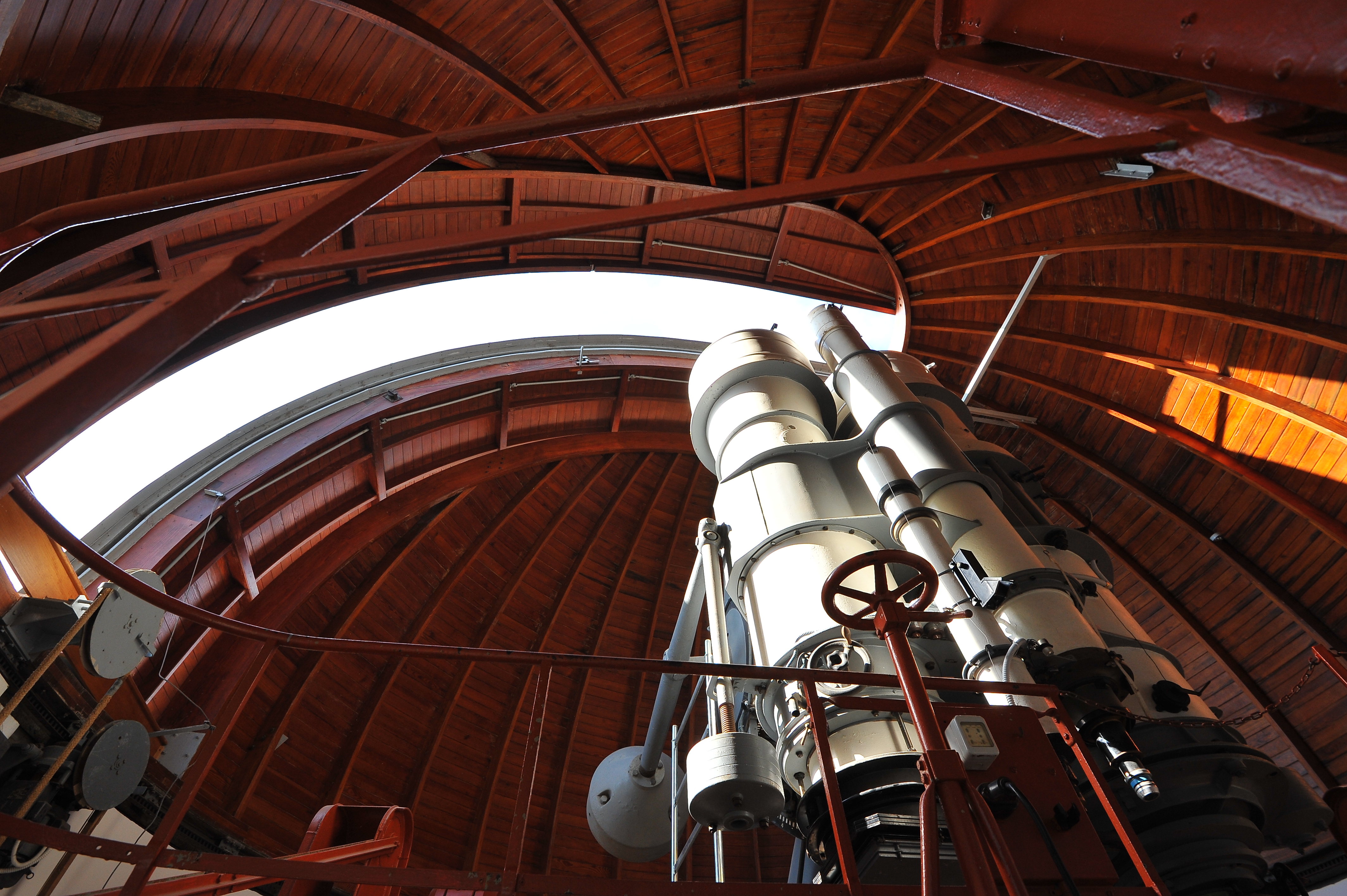
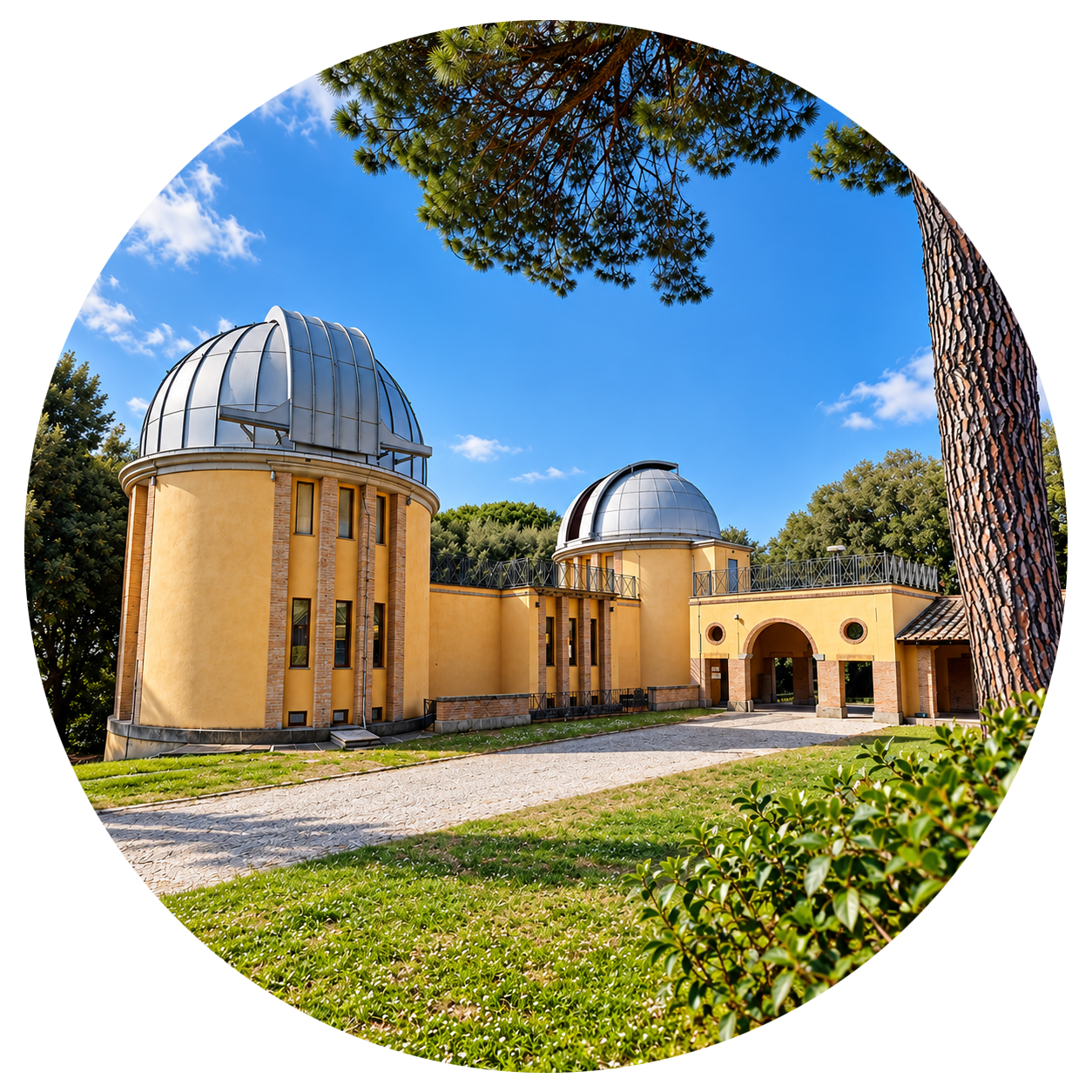
In the second rotating dome, 8 meters in diameter, also constructed of wood and built on the solid foundation provided by the northeastern corner of the palace, the observatory's principal instrument was installed: the Zeiss Double Astrograph.
It consisted of a refractor with a four-lens 40 cm objective and a focal length of 240 cm, and a telescope with a 60 cm parabolic mirror, with a Newtonian focal length of 200 cm and an equivalent focal length of 8.2 m at the Cassegrain focus. Both instruments, together with two finders and a guide telescope, were rigidly connected and mounted on the same polar axis.
A large spectrograph for astrophysical research could be mounted on the reflector. The four-lens astrograph could produce 30×30 cm photographs with image correction; it was particularly well suited to photographic observations of variable stars and to the photographic determination of the positions of minor planets and comets.
Two large flint prisms, 61.2 cm in diameter and with refracting angles of 4 and 8 degrees respectively, could be attached individually or together to the upper end of the reflector or refractor, making it possible to obtain spectra over wide fields.
Schmidt Telescope
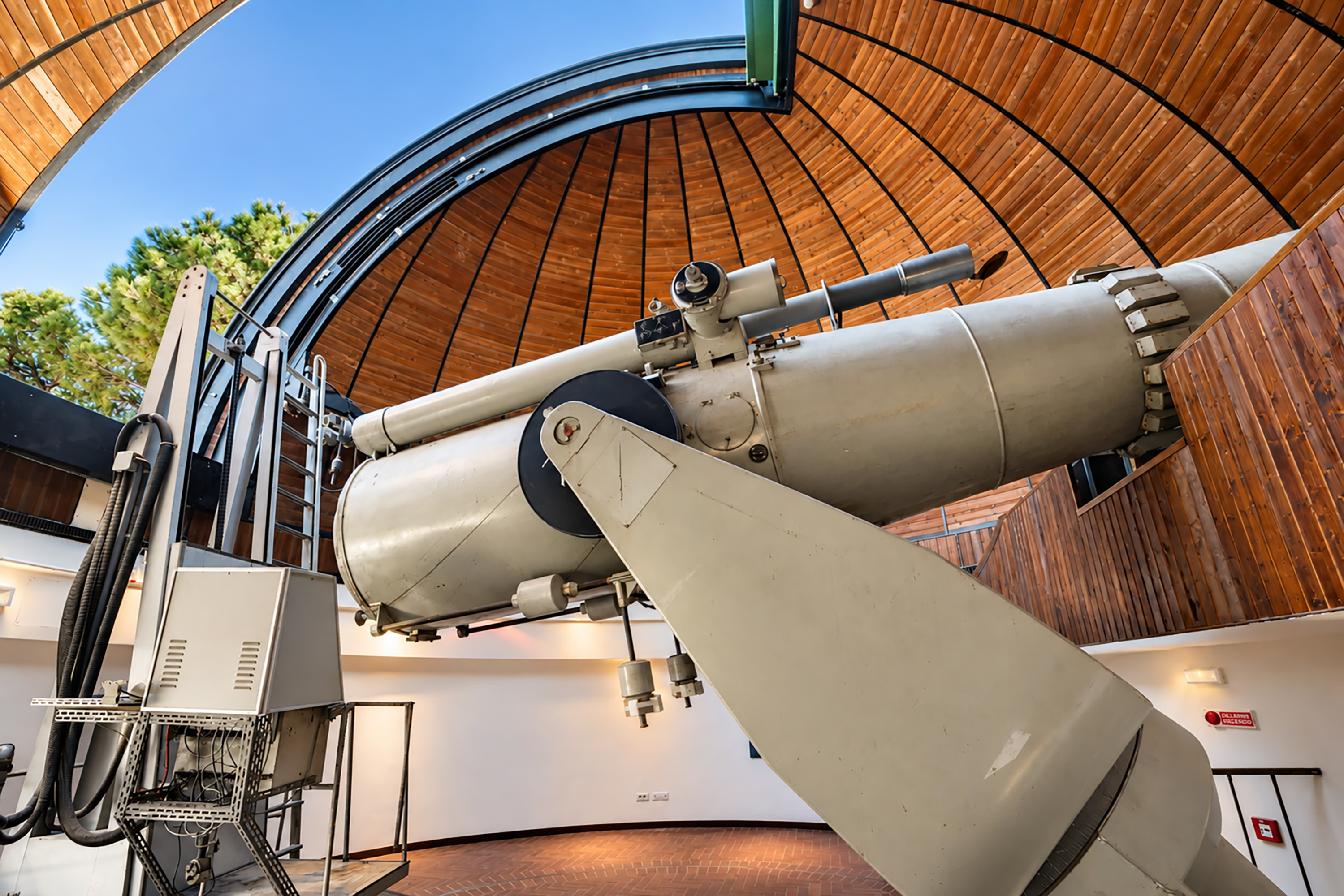
In 1949, a Schmidt telescope was ordered from Hargraves and Thomson of London. Five years later, construction began on the Schmidt building, connected to the dome built in 1942 for the Carte du Ciel. The telescope was delivered in 1957; after several years required for installation and testing, observing programs began in 1962.
The instrument has a spherical mirror 98 cm in diameter, with a 65 cm corrector lens (its aperture) mounted at the center of curvature of the primary mirror, near the opening of the tube. The focal length is 2.4 meters. The 20×20 cm photographic plate is located at the focal plane, approximately halfway along the tube. The useful field is approximately 5×5 square degrees, more than six times larger than that of the Carte du Ciel astrograph.
For spectroscopy, a combination of three objective prisms was placed at the aperture of the tube; these prisms are among the most powerful of their kind in the world. The Schmidt telescope was used for approximately twenty years to study the evolution of star clusters through stellar spectroscopy and polarimetry. Unfortunately, light pollution from the surrounding towns made the site unsuitable for this work by the early 1980s.
Vatican Advanced Technology Telescope (VATT)
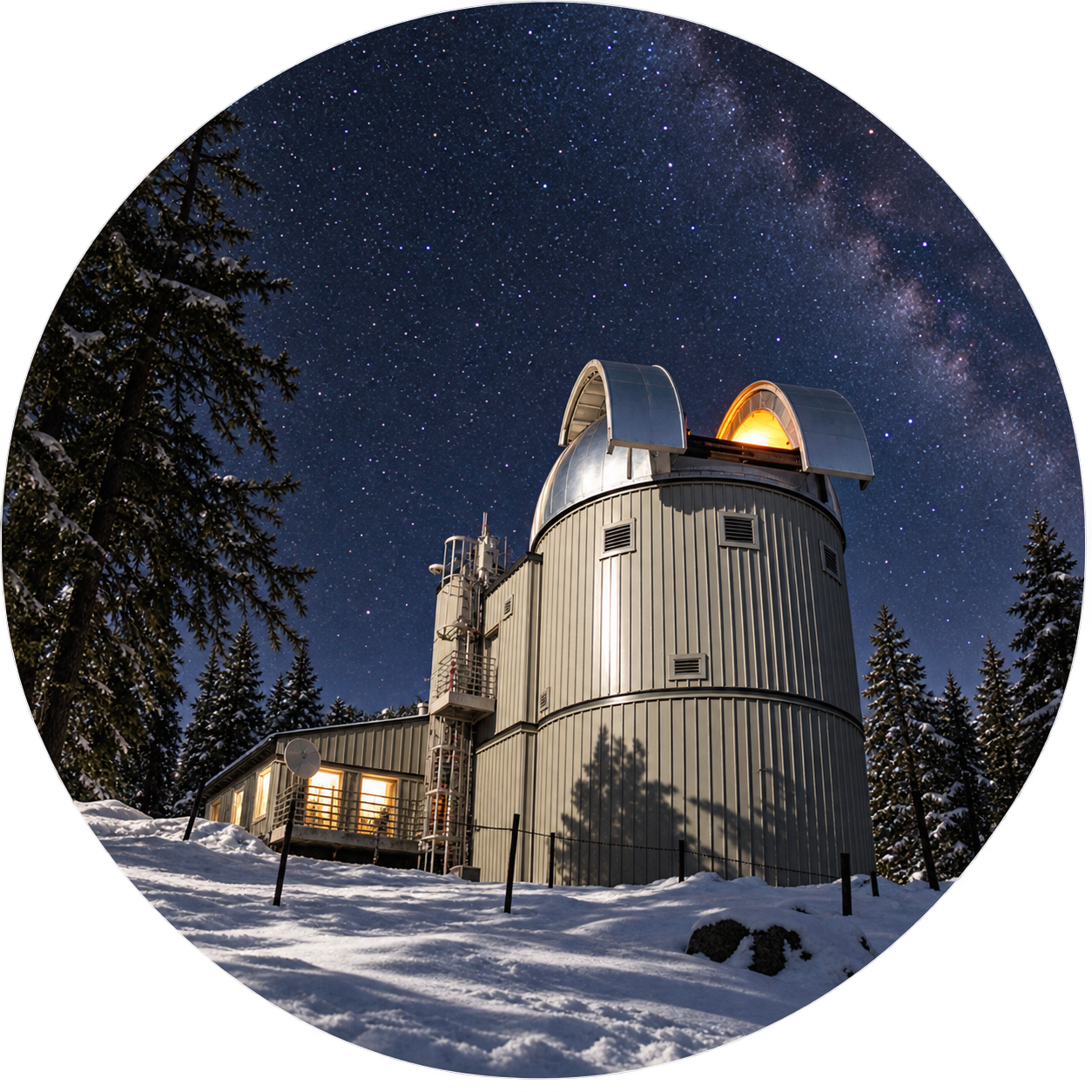
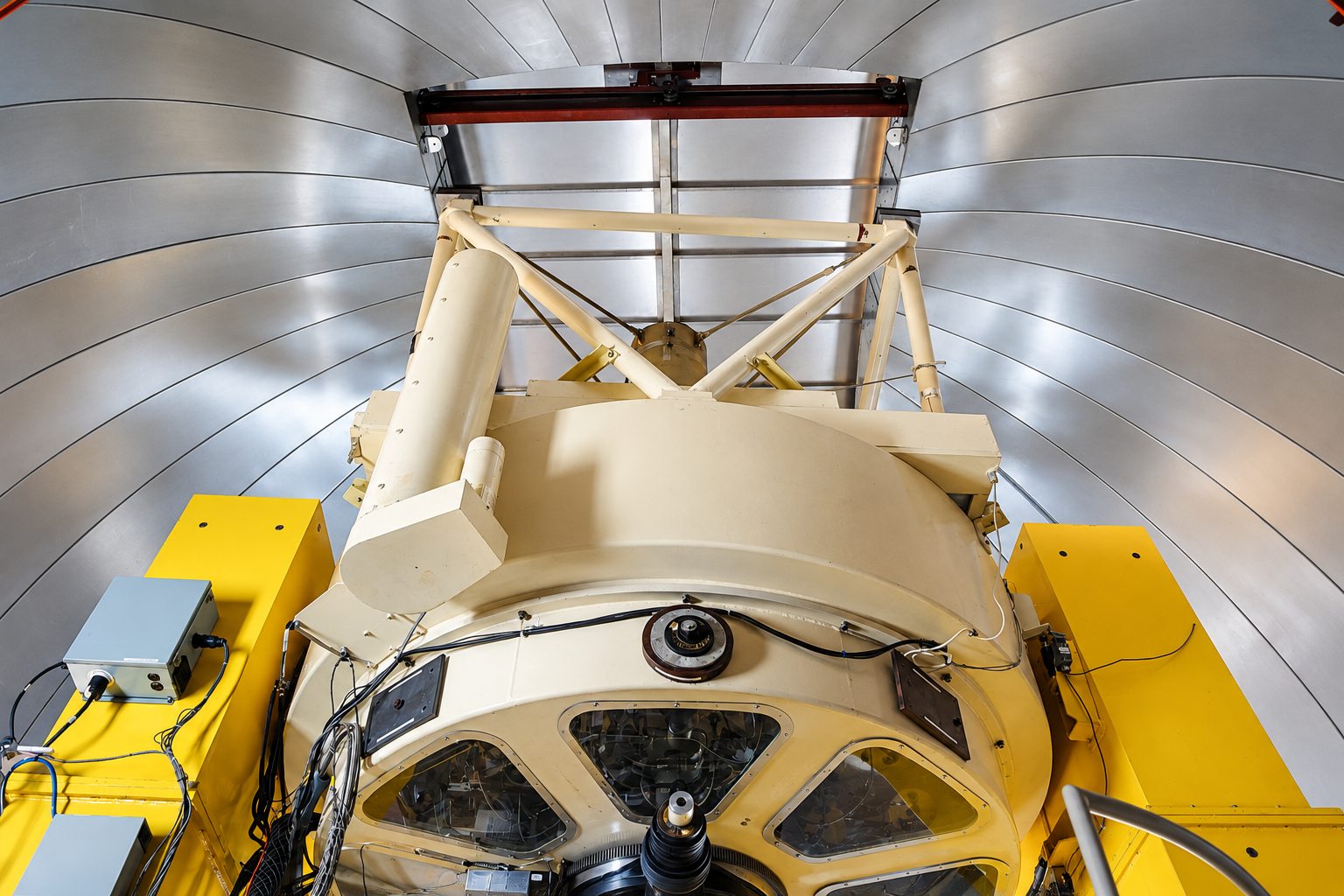
In 1993, the Vatican Observatory, in collaboration with Steward Observatory, completed the Vatican Advanced Technology Telescope (VATT) on Mount Graham in Arizona, probably the finest astronomical site in the continental United States.
It is the first optical-infrared telescope of the Mount Graham International Observatory (MGIO), a project that would see the construction of some of the world's most sophisticated and largest telescopes.
The VATT pioneered new technology for producing large, lightweight and stable mirrors in a rotating furnace. With the VATT, the Observatory carries out long-term research programs that, although characteristic of its research at Castel Gandolfo, could not previously be pursued from Tucson.
From its two locations at Castel Gandolfo and Tucson, the Vatican Observatory therefore continues a variety of ongoing studies and international collaborations.