
01 The new Vatican Observatory
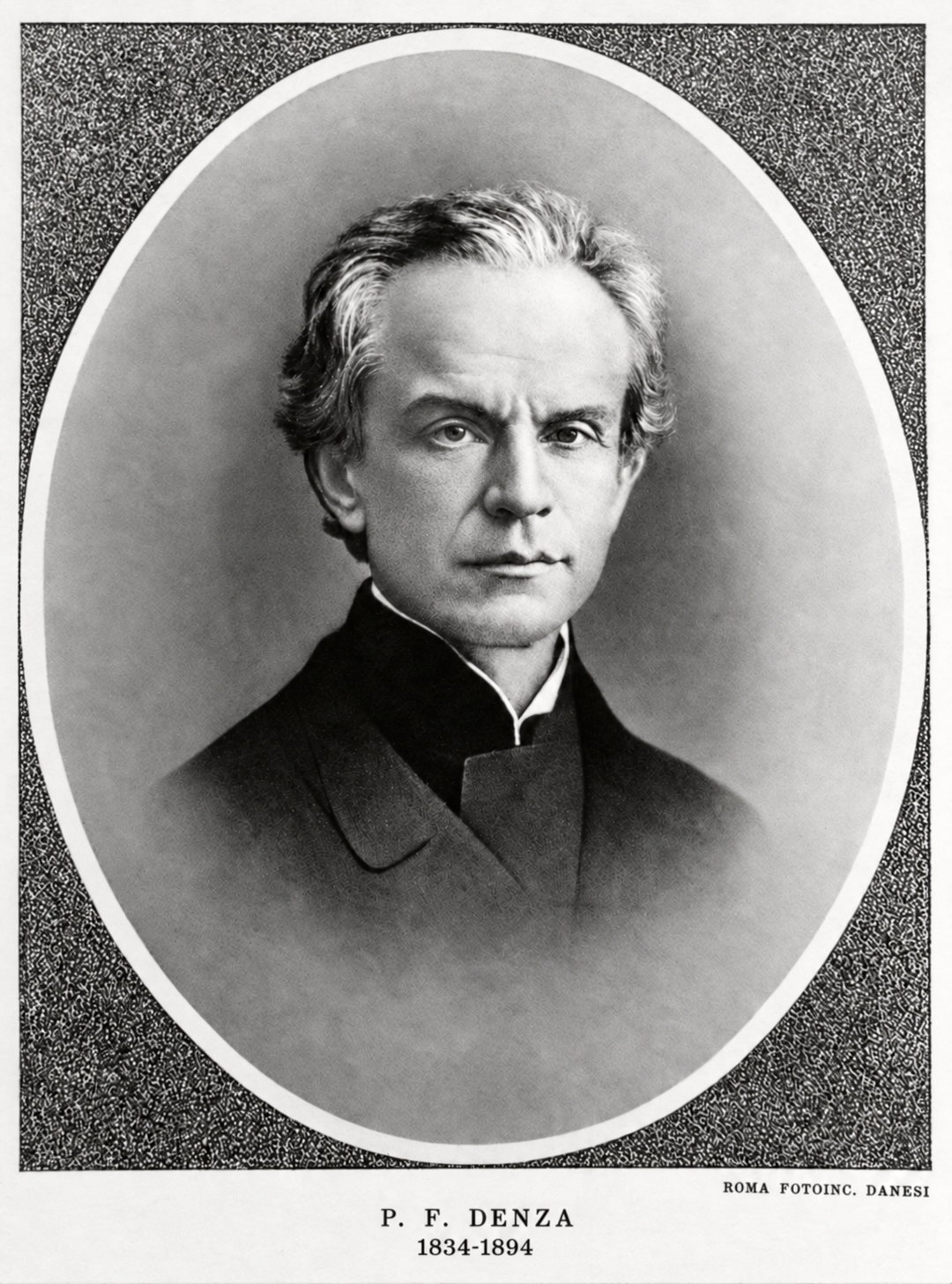
Eighteen years after the Italian State had taken over the Pontifical Observatory on the Capitoline Hill, and just ten years after its takeover of the Collegio Romano Observatory in 1878, immediately following the death of Father Angelo Secchi (1818–1878), the Barnabite Father Francesco Denza (1834–1894), founder of the Italian Meteorological Society, obtained permission from Pope Leo XIII (1810–1903), on the occasion of his priestly jubilee, to reopen the old “Vatican Observatory” in 1888. At this observatory, situated in the famous Tower of the Winds, built by Gregory XII (1502–1585) in preparation for the calendar reform, Monsignor Luigi Gilii (1756–1821) had carried out a modest programme of meteorological and astronomical studies from 1800 to 1820.
The reopening was only the first step towards reviving the scientific activity of the new observatory. This required a modern, substantial research project capable of restoring the prestige and scientific credibility enjoyed by the pontifical astronomical institutions before Italian unification.
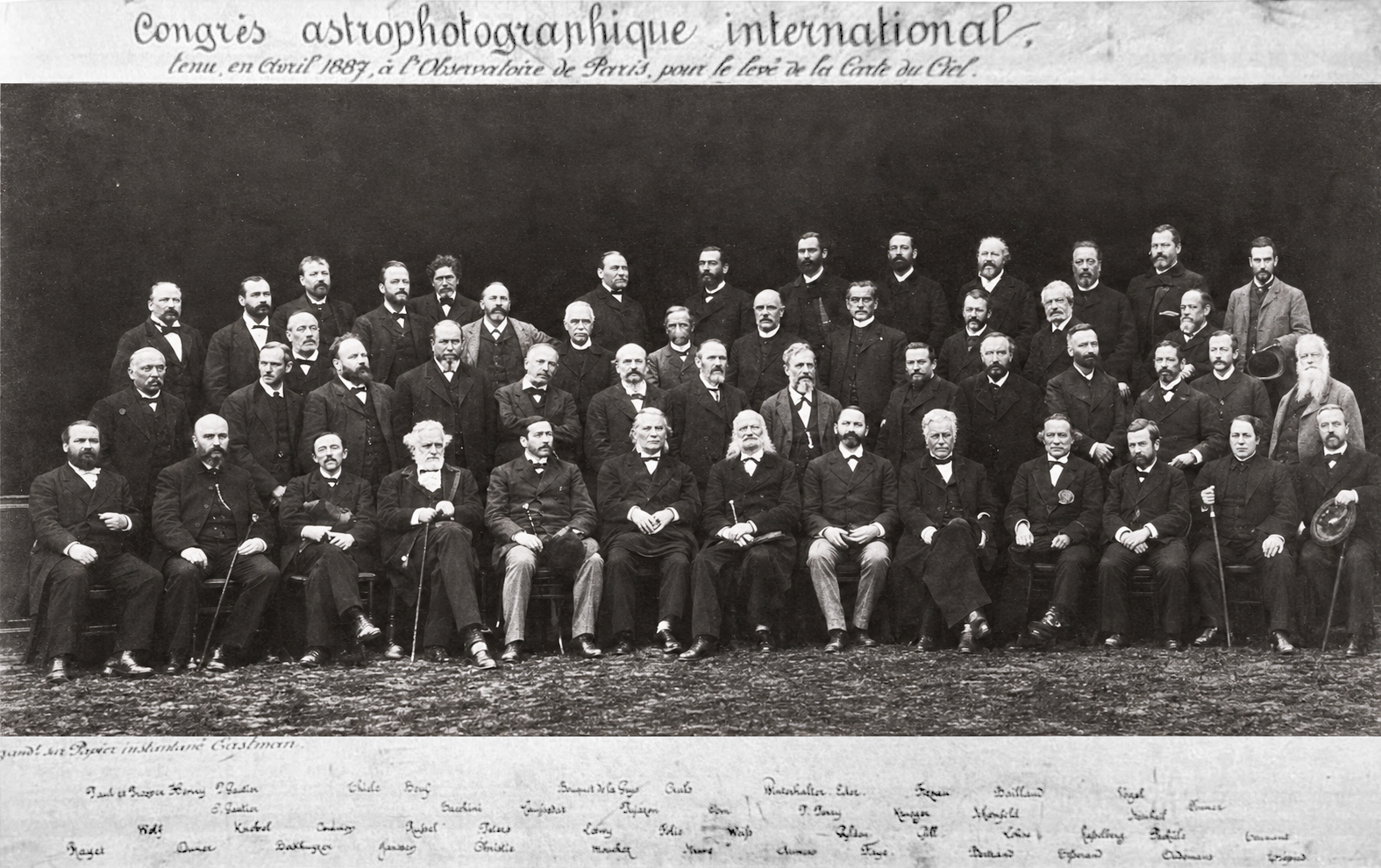
In 1887, the director of the Paris Observatory, Admiral Ernest Mouchez (1821–1892), had promoted, under the patronage of the Académie des Sciences, an international scientific initiative to produce a photographic Catalogue and Chart of the entire sky according to a unified plan (fig. 2). Father Denza perceptively recognised this as an excellent opportunity for the Observatory and proposed to the Pope that it should join the project. The Pope immediately understood the importance of the proposal and sent Father Denza to Paris in 1889 to attend that year's meeting of the Permanent Committee and secure the Observatory's admission among the participating observatories. This was granted at the session of 19 September 1889. On that same day, the two objectives, photographic and visual, were commissioned from the renowned opticians Paul (1848–1905) and Prosper Henry (1849–1903), while the mounting for the double refractor and the macromicrometer needed to measure the Catalogue plates were ordered from the instrument maker Paul Gautier (1842–1909).
In the history of astronomy, this undertaking represented the first major international collaboration on a worldwide scale. Eighteen observatories in different countries on every continent joined the project, and four more joined later. Italy was represented by the Catania Observatory, which purchased a Steinheil objective (cat. no. 5.1.S.03) and had its astrograph (fig. 8) built by the Salmoiraghi company.
Each participating observatory was assigned a band, or zone, of the sky between two parallels of the celestial sphere, with the task of producing two series of photographs: one with short exposures, to catalogue stars down to magnitude 11 according to their brightness and position; the other with long exposures, to reach magnitude 14, after which the photographs themselves would be appropriately enlarged and printed on paper.
The Vatican Observatory was assigned the band between the parallels +55° and +64°. The photographic work required to represent it adequately involved taking 1,040 plates for the Catalogue and the same number for the Chart.
The field photographed on each plate would be a square whose side corresponded to an arc of approximately two degrees on the celestial sphere. Since the Catalogue would require the most precise possible measurement of the position and brightness of every photographed star, arrangements were made for each region of the sky to be photographed twice. To achieve this, it was decided that the centres of the plates should always fall on whole-degree parallels, using the method known as center to corner overlap. Later, because of the lengthy exposures required for the Chart and the high cost of printing its sheets, observatories were allowed to produce only one series of plates. The Vatican's number of plates for the Chart was thus reduced to 540.
To distinguish genuine stellar images from spurious marks caused by impurities or imperfections in the plate or paper, multiple exposures would be made on each plate in at least one of the two series: the series centred on even-degree or odd-degree parallels. For the Chart, it was decided to take three exposures of forty minutes each for every plate in the selected series, moving the telescope slightly after each closure of the shutter. This produced a triple image of each star (fig. 3), at the vertices of a tiny equilateral triangle whose centre represented the star's exact position. Three exposures were also prescribed for the Catalogue, lasting 6 minutes, 3 minutes and 25 seconds respectively, with the equatorial telescope moved through a small angle in declination each time. This made it easier to measure the brightness and positions of the stars on the plates. The exposures were also much shorter than those required for the Chart, since the Catalogue did not extend beyond stars of magnitude 11.
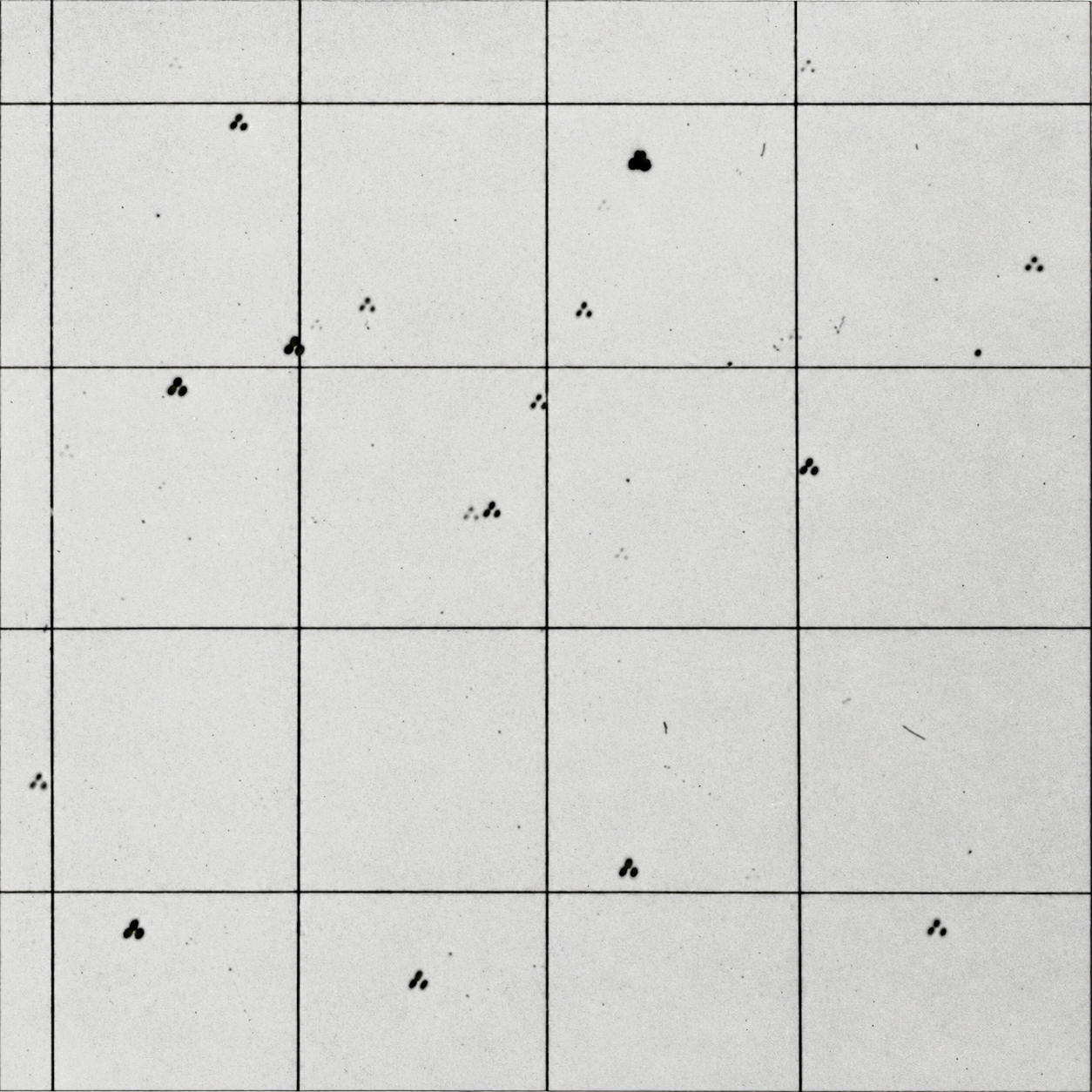
Before each photograph, a fine grid was to be photographed onto every plate, for both the Chart and the Catalogue. It divided the plate into 26 × 26 squares, each 0.5 cm on a side, providing a reference for precisely defining the position of individual stars on the plate. It was also useful for revealing any deformation of the photographic emulsion.
The triple-exposure system also helped identify stars whose images might otherwise have been covered by the grid lines.
It was further agreed that the coordinates of all photographed stars should refer to the date of 1 January 1900.
02 The Carte du Ciel astrograph
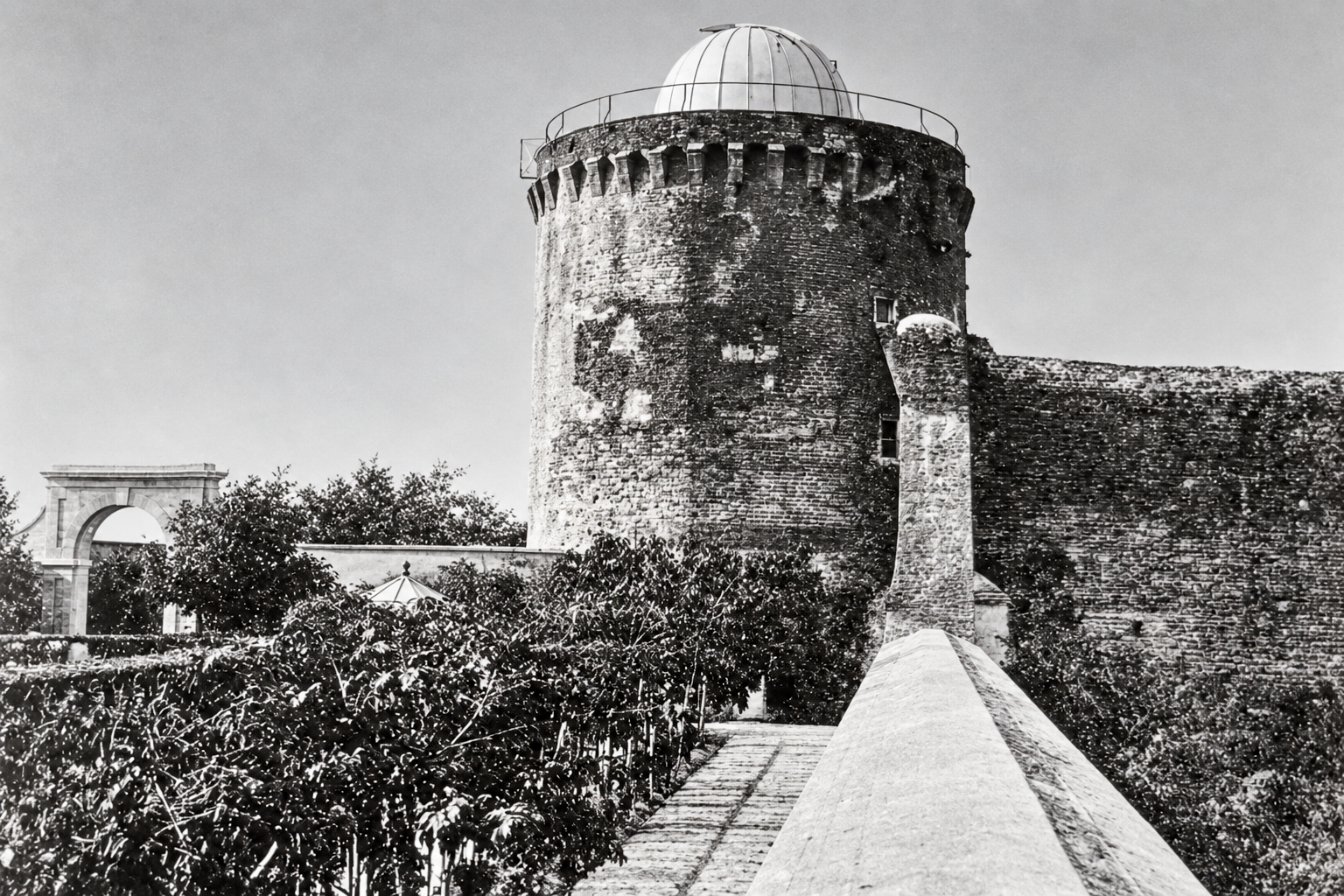
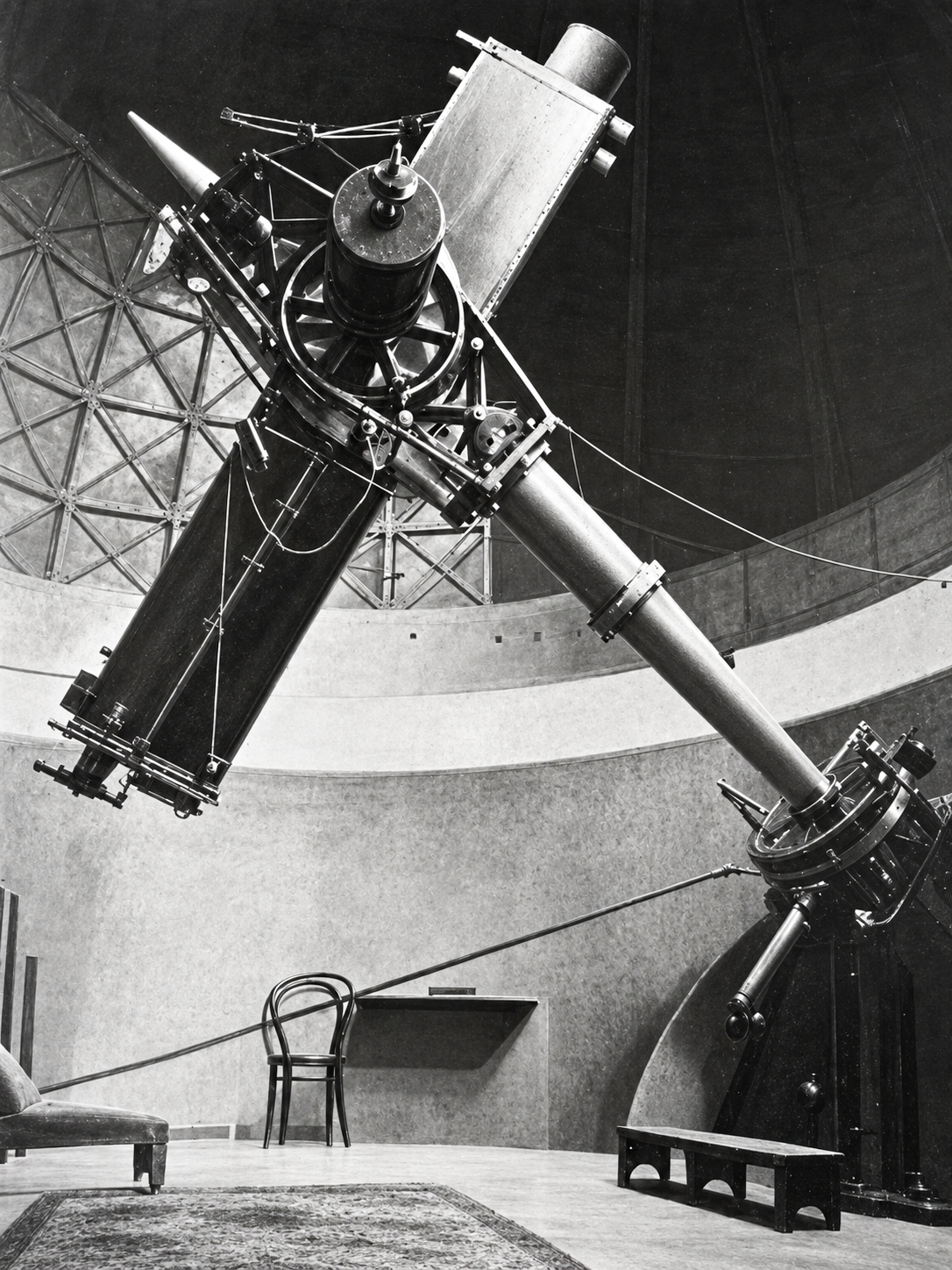
The photographic equatorial telescope and its rotating dome, eight metres in diameter and also built in Paris at the Gilon workshops, were installed on the Leonine Tower in 1891 (fig. 4). The instrument consisted essentially of two parallel refractors: a photographic telescope with an aperture of 33 cm and a focal length of 3.43 m, and a collimating telescope with an aperture of 20 cm and a focal length of 3.60 m, joined together on an English equatorial mounting.
On the 16 × 16 cm photographic plate, the objective provided a usable field represented by a square 13 cm on a side, corresponding to 2° on the celestial sphere. The resulting scale was therefore approximately 1/mm.
Under the Paris agreements, all eighteen observatories initially involved in the sky-chart project acquired instruments with the same characteristics, to ensure consistent results.
Thus, in 1891, with the acquisition of this important instrument and its participation in the major project launched from Paris, the new Vatican Observatory suddenly became a scientific institution of international importance.
03 The official foundation
On 14 March 1891, through the motu proprio Ut Mysticam, Leo XIII solemnly confirmed the re-establishment of the institution, which would continue to be called the Vatican Observatory, as in the past, and secured its activity through a financial endowment. The document reflects the considerable tension that existed at that time, particularly in Italy, between the Church and the scientific world. It concludes with words clearly expressing the true reason for the re-establishment: to defend the Church against accusations of obscurantism, opposition to science and incompatibility between science and faith:
... in undertaking this work, we have not been concerned solely with advancing a most noble science, which more than any other human discipline raises the minds of mortals to the contemplation of heavenly things. Our foremost aim has been what we have constantly endeavoured to achieve from the beginning of Our Pontificate, through words, writings and deeds whenever the opportunity arose: namely, to make it clear to everyone that the Church and her Pastors do not oppose true and sound science, whether human or divine, but embrace it, encourage it and promote it with all the commitment within their power.
Unfortunately, Father Denza's poor health allowed him to witness only the beginning of the photographic work entrusted to Father Giuseppe Lais (1845–1921): he died on 14 December 1894. With his remaining strength, he had completed the great work of establishing the Observatory in an incredibly short time and had secured its future.
04 Father Giuseppe Lais
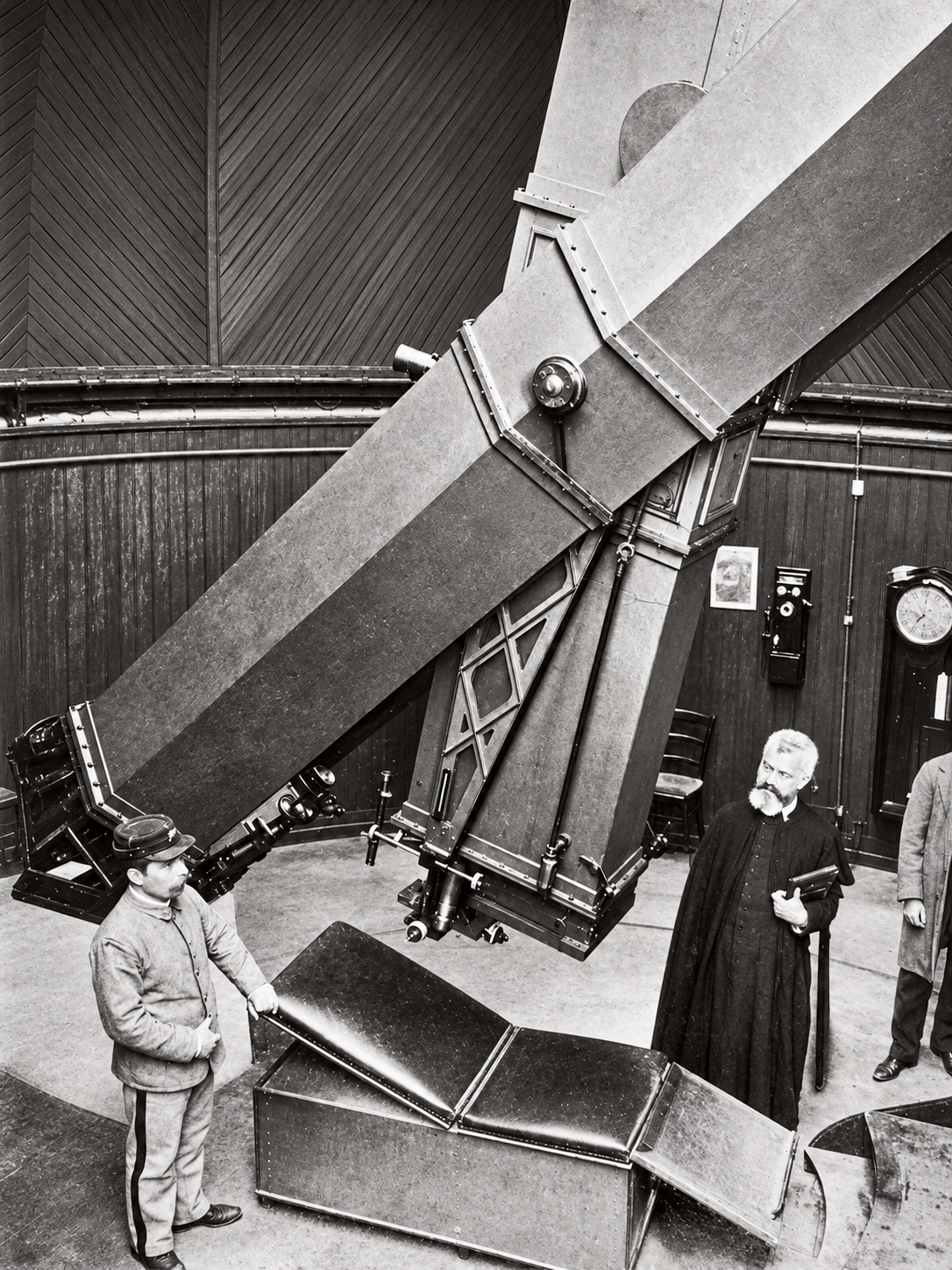
To discuss the sky-chart work, which was the Vatican Observatory's principal commitment during its first forty years, is to discuss the patient contribution that Father Lais made without interruption until his death in 1921. Particularly admirable were the selflessness and generosity with which he devoted himself entirely to this service. Not only did he always perform it without payment, but he also frequently helped finance the photographic work by obtaining grants from the Académie des Sciences, and contributed to the Observatory's equipment by donating important and costly instruments.
With youthful enthusiasm, Father Lais, already forty-five years old, applied himself to carrying out the photographic programme to which the Observatory had committed itself, travelling to the Paris Observatory for practical training.
Photographs for the Catalogue began in 1894, and those for the Chart in 1900. In the early years, he worked at the Leonine Tower on alternate nights in close collaboration with the engineer Federico Mannucci (1848–1935). After Mannucci was assigned other duties, however, Father Lais was practically alone in devoting himself for almost twenty-five years to this monotonous work. He carried it out with the utmost conscientiousness and without sparing personal expense, working daily from sunset until midnight and personally handling the development, enlargement and printing in the photographic laboratory he had specially set up.
Father Lais's zeal and exclusive dedication to this work were the principal reasons why the Observatory did not encounter particular difficulties in carrying it out, unlike several other observatories engaged in the same project, especially at the beginning.
Of the 1,040 plates that the Vatican Observatory had undertaken to produce for the Catalogue, almost all had been completed by the time of Lais's death in 1921. Of the 540 plates for the Photographic Chart of the Sky, each requiring a two-hour exposure, 277 had been taken, and some had also been enlarged and published.
But the Catalogue itself—the list of stars according to their brightness and position—was not yet ready, although this had been the Observatory's principal objective. Father Johann Georg Hagen (1847–1930) would tackle this task on a large scale and bring it successfully to completion.
05 A difficult period
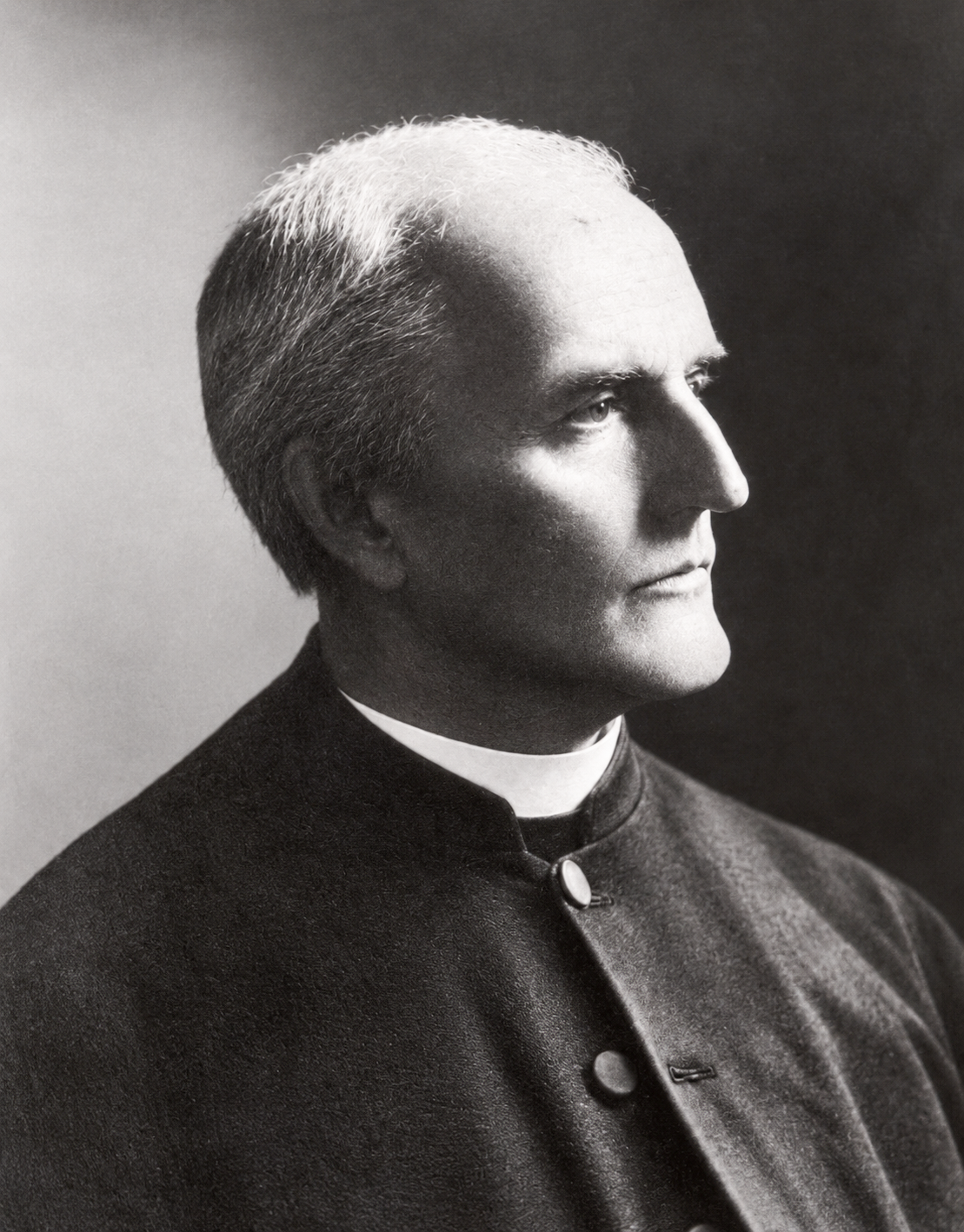
After Father Denza's death, the Observatory remained without a director for four years, until Father Angelo Rodríguez (1859–1935), a Spanish Augustinian better known as a meteorologist than as an astronomer, was appointed to succeed him in 1898. Unfortunately, the new director proved unequal to his assigned task. His conduct not only alienated his colleagues but also exposed him to controversy and humiliation. Two major examples were the withdrawal from circulation, by order of Pius X (1835–1914), of the first volume of the Astrographic Catalogue, which he had published in 1903, because of the errors reported in it, and the severe criticism directed at his so-called Dynamic Meteorology.
The difficulties of this period considerably slowed the photographic work. It is enough to note that, in 1900, no representative of the Observatory was invited to Paris to attend the meeting of the Permanent Committee.
It should be added that the Observatory's difficulties during this period were also due to the rather irresponsible conduct of Father Giovanni Boccardi (1859–1936).
Having joined the Observatory after Father Denza's death, he spent eight months in Paris at the Holy See's expense learning the mathematical methods for reducing photographic data. He then placed himself in a position that obliged him to leave his post precisely when the new director arrived, at the very moment when the Observatory needed him most.
The situation changed in 1906 when Pius X, on the advice of the Observatory's new president, Pietro Maffi (1858–1931), Archbishop of Pisa and later a Cardinal, appointed the Austrian Jesuit Johann Georg Hagen as the new director. Until then, Hagen had directed the Georgetown College Observatory in Washington and was an astronomer well known and respected among specialists for his original work on variable stars.
06 Completing the Astrographic Catalogue
Father Hagen's first concern on arriving at the Observatory in April 1906 was to organise the work for the Astrographic Catalogue, whose prompt completion was a matter of honour for the Observatory, and thus begin measuring the plates. The Gautier macromicrometer purchased by Father Denza and the instrument designed by Professor Herbert Hall Turner (1861–1930), used by Father Rodríguez, nevertheless proved unsuitable because they were too slow for such a large volume of work. Father Hagen therefore studied better methods and arranged more suitable equipment, commissioning two identical micrometers for measuring the plates from the Repsold firm in Hamburg.
The Repsold micrometer was essentially a microscope beneath which the plate could be moved in the x and y directions. This allowed the position of each photographed star to be measured using graduated drums attached to micrometer screws. The plate was illuminated by natural light. The microscope objective formed a real image of an area of the plate corresponding to four grid squares on a glass slide. Onto this slide, a very fine grid covering a square with sides of 1 cm, called the photographic diaphragm, had been photographically reproduced. It was ruled with 200 × 200 lines, producing an area of one square centimetre covered by 40,000 small squares, each with a side corresponding to an angular width of 3″. Measurements were made by observing through the eyepiece one square centimetre at a time—that is, four squares of the plate, equivalent to 10′ × 10′—focused precisely onto the square centimetre of the diaphragm. This made the measurement of stellar positions relatively fast and ensured a reading error of less than 1/1,000 of a millimetre, equivalent to 0.3″, or three-tenths of an arcsecond.
For the staff who would perform the measurements, Father Hagen followed the example of the Paris Observatory and other institutions that had found it advantageous to employ women for this task.
He therefore approached the nearby Institute of Mary Bambina, which kindly placed three sisters at his disposal from 1910 until the measurements were completed in 1921 (cat. no. 5.1.L.03). The positions and magnitudes of the stars were recorded twice, with the plate in reversed orientations, measuring respectively the coordinates of the images from the three-minute exposure and the diameters of those from the six-minute exposure.
After the first two stages of constructing the Catalogue—taking photographs at the telescope and measuring the stellar coordinates on the plates—the most complex work remained: calculating the coordinate reductions required to prepare the final Catalogue.
This part of the work was carried out at the Oxford Observatory under the direction of Professor Herbert Hall Turner.
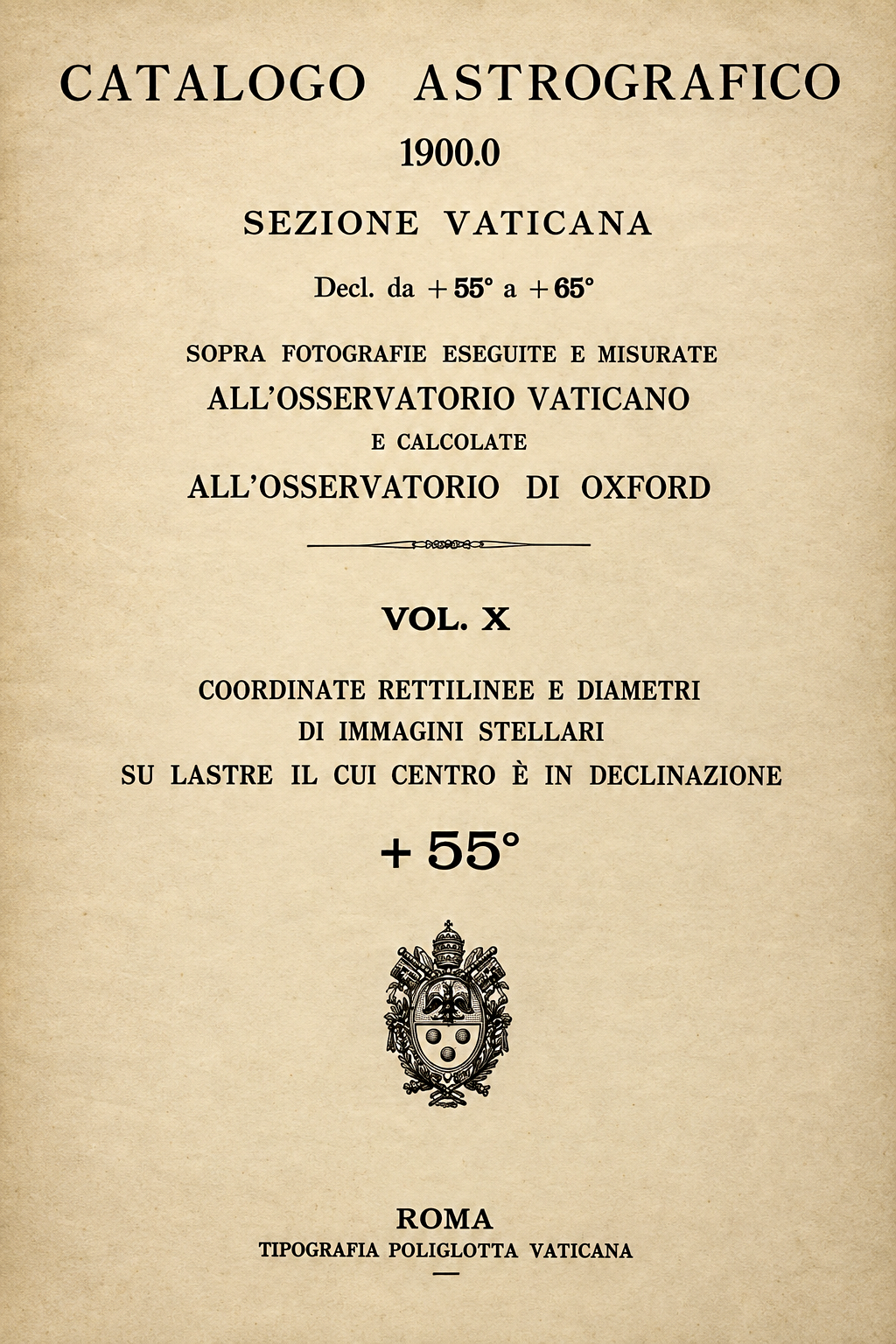
The first of the ten volumes of the Vatican Catalogue appeared in 1914, and the last in 1928. Each volume contains the data for plates centred on one of the ten assigned parallels, from 64° in Volume I to 55° in Volume X.
In each volume, the numerical tables containing the data for individual plates and for all the stars on each plate are preceded by an introduction explaining the measurement methods, the meaning of the symbols and the rules for converting the rectilinear coordinates measured on the plates into the celestial coordinates of right ascension and declination.
To appreciate the complexity of this work, it is useful to recall that, to identify precisely the celestial coordinates to be assigned to the centre of each plate, several thousand reference stars, known as “guide stars”, were selected from particularly reliable stellar catalogues so that several dozen appeared on each plate. Using these stars, whose coordinates were well known, it was possible to identify precisely the celestial coordinates to assign to the plate centre and hence to every other point on it. The guide stars were also used to determine the so-called “constants” of individual Catalogue plates. These constants were essential for the calculations needed to convert the x y coordinates of the stars measured on the plates into celestial coordinates.
After approximately ten years of painstaking and sustained work, the monumental undertaking was complete: it listed the brightnesses and positions, in rectangular coordinates, of 481,215 stars. The ten volumes were printed with the utmost care by the Vatican Polyglot Press.
The quality of the work, particularly that of the sisters who measured the plates, is attested by a letter that Professor Turner, then also President of the Astrographic Committee of the International Astronomical Union, wrote on 4 October 1921 to Cardinal Maffi, President of the Vatican Observatory:
…the entire work has also been analysed here at Oxford, and I have no hesitation in saying that it has all been carried out with great care; [...]; and that the whole now represents a permanent contribution to astronomy of great value, taking its deserved place alongside the work of the other observatories that have collaborated. [...]
In expressing to you, therefore, on behalf of the Committee, our most grateful thanks for this vital assistance, may I ask you to convey our appreciation to Sister Emilia and her colleagues, whom I know quite well through their work, though not by their names.
I think our thanks should also go to the Mother General of the Order, who undoubtedly made a great sacrifice in devoting such an important part of the Order's energies to astronomical work; work which, I believe, falls rather outside the everyday purpose of their activities.
The Vatican Observatory had thus completed its part of the Catalogue, preceded only by the observatories of Greenwich, Oxford, Algiers and the Cape of Good Hope. This was a particularly clear demonstration of the project's enormous difficulties, whose scale could not have been assessed during the initial enthusiasm. It also revealed the tenacity of Father Lais, who, practically alone, had taken almost all the Catalogue photographs up to his death in 1921, and the energy and organisational talent of Father Hagen, who had completed all the measurement and printing in such a short time. As already noted, Professor Turner, assisted by his colleagues, made a decisive contribution to the successful progress of this work by undertaking, in a spirit of true friendship, the rather demanding calculation of the plate constants. Also deserving of mention are Pio Emanuelli (1888–1946), Father Hagen's secretary; Carlo Diadori, the Observatory's custodian; and Professor Vincenzo Cerulli (1859–1927), an honorary member of the Observatory, who contributed in various ways to the project's success.
Father Hagen's selfless contribution to the Astrographic Catalogue becomes even more significant when one considers that, personally, he was a visual observer of the old school and wished to remain so. He never became enthusiastic about astrophotography, which had already made considerable progress since his youth, although in his old age he did use photographs to draw the stellar charts for his Atlas Stellarum Variabilium.
07 The photographic sky chart
Father Hagen was less successful with the second major task: completing the Chart.
It is true that Father Lais, also thanks to substantial grants from the Académie des Sciences and several French families, had already taken more than half the required photographs—277 out of 540—but at Father Hagen's death in 1930, only 107 of the 540 chart sheets had been published.
Father Johan Stein (1871–1951), who had just succeeded Father Hagen, fully recognised the difficulties of the situation. Nevertheless, particularly through the wishes and encouragement of Pius XI (1857–1939), in 1935, after completing the installation of the new observatory at Castel Gandolfo, he resumed printing the sheets, assigning this work to his own staff. The originals were enlarged onto Perutz Topo plates, and the final reproductions, printed on photographic card, were more attractive and clearer than the earlier ones.
08 Completion of the work
After the war, the astrograph, installed since 1942 at Villa Barberini in Castel Gandolfo, resumed its work. First Father Josef Junkes (1900–1984), then Father Jules De Kort (1910–1994), took advantage of every favourable night and, by the middle of 1953, succeeded in completing the remaining plates. Brother Mattieu Timmers (1907–1954) initially carried out the enlargements and photostatic reproductions. After his untimely death, Brother Aloysio Puhl continued the work under the direction of Father Peter Albert Zirwes, completing it by 1955. Thus, fifty-five years after the work had begun, the most laborious part of the task assigned to the Vatican Observatory in 1889 by the Permanent Committee for the Chart of the Sky was finally completed. All the stars down to magnitude 14 in ten sky zones between the celestial parallels +55E and +64E had been reproduced on 540 sheets measuring 26 × 26 cm. Placed end to end, they would form a strip 140 metres long!
About one hundred copies of the entire work were printed, and approximately ninety were sent as gifts to the principal observatories. The official announcement that the Vatican had completed its work was made at the General Assembly of the International Astronomical Union held in Moscow in 1958.
09 The challenges of the project
Father Denza was far from imagining that the Chart would require so much time. In 1891, based on Admiral Mouchez's assurances, he wrote: “At least three or four years will be needed to complete this arduous and difficult task, which will reveal thirty or forty million stars to us”.
Beyond the slowdown caused by the difficulties during Father Rodríguez's directorship, it should be remembered that an undertaking of this kind inevitably required many years, considering that the Catalogue had to be developed alongside the Chart
and that, under the Paris agreement, each of the Chart's 540 plates, after being prepared with a superimposed photograph of the reference grid, required three exposures of thirty to forty minutes each, amounting to approximately two hours of exposure. In the later years, exposures were shorter thanks to the plates' increased sensitivity. Furthermore, to avoid the harmful effects of atmospheric refraction, photographs could be taken only when the fields were close to the meridian, limiting the available observing time to a few hours. Excluding moonlit nights and those with cloudy skies or very humid weather, in practice only about fifty nights a year could be relied upon.
Further delays arose when photographs sometimes had to be repeated because of poor plate quality. Producing the sky charts was no less delicate and laborious. In the initial period, as noted, 107 of the 277 plates taken by Father Lais were reproduced by heliography by the Schutzenberger firm; reproduction was then suspended because of the high
cost of this printing technique. Another significant cause of delay was that, after Father Lais's death, there was no longer anyone who devoted himself exclusively to this work as he had done. Further interruptions resulted from the transfers to Castel Gandolfo, first of the entire Observatory and later of the astrograph, and from the war years.
The Observatory's success in completing this commitment is all the more remarkable considering that, among the twenty-two observatories involved in the project, although a substantial majority completed the Catalogue, very few finished the Chart. Four never began it; others took the photographs but did not publish the sheets, mainly because of the high printing costs, and were replaced by observatories that volunteered to continue the work. Others published only part of it. In some cases, photographs were taken but became unusable through poor preservation, as at the Catania Observatory. As telescopes became more powerful, other observatories began to doubt the value of the undertaking, especially when the Mount Wilson Observatory announced a sky-photography programme producing charts that covered a field of thirty-four square degrees, compared with the Chart's four, and recorded stars down to magnitude 20 and beyond with greater definition. This inevitably caused discouragement and slowed the work of young astronomers who had been assigned a task decided by others many years earlier.
Because of these delays, the International Astronomical Union was able to declare the Catalogue complete only in 1964. Commission 23 for the Carte du Ciel was dissolved only in 1970. Established within the Union at its foundation in 1919, it had inherited the work of the Permanent Committee created in Paris thirty-two years earlier.
10 The project's value and future prospects
It is true that the Carte du Ciel project kept a considerable number of important observatories engaged in astrometry for many years, while astrophysics developed and made great strides mainly in the United States. Nevertheless, the project also had many merits.
First, it played a decisive role in establishing photography as a scientific technique,
whereas previously it had been used almost exclusively for artistic purposes.
Second, the Catalogue and the Chart will remain in the history of modern astronomy as one of the earliest examples, if not the first, of a major undertaking in which many institutions, belonging to different countries on every continent and often in conflict with one another, collaborated for many years. With prior agreement on the programme and substantial continuity of commitment, they worked towards the same extensive research objective.
The Catalogue (cat. no. 5.1.L.01), initially considered secondary to the Chart, proved over time to be the truly useful outcome of the entire undertaking. The Catalogue plates, exposed at the various observatories over approximately three-quarters of a century, from 1890 to 1970, become increasingly valuable with the passage of time because of the opportunities they offer for studying stellar proper motions. These motions can be detected by comparing photographs of the same sky region taken at widely separated epochs, provided that both photographs were taken with the same telescope. For this reason, Carte du Ciel astrographs still preserved in good condition at the participating observatories retain their value, despite being more than a hundred years old and largely surpassed by modern instruments.
Research of this kind began at the Observatory in the 1960s in collaboration with the observatories of Vienna, Greenwich and Leiden. It was carried out principally by Father De Graeve between 1975 and 1983, in collaboration with Professor Van Altena of the Yale University Observatory.
The most striking confirmation of the Catalogue's overall value came from the United States itself, where astronomers a century earlier had considered participation in the Carte du Ciel project unnecessary, but where modern astronomers recognised the usefulness of the enormous body of data collected through so many years of patient and demanding work. Between 1989 and 1991, astronomers Sean Urban and Thomas Corbin used data from no fewer than 150 stellar catalogues to produce a new catalogue of great reliability and precision, known as the Astrographic Catalogue Reference Stars (ACRS), containing the positions and proper motions of more than 300,000 stars. Then, between 1991 and 1997, the US Naval Observatory carried out a new reduction and correction of all the data in the old Catalogue. The result, known as AC 2000 and available on CD-ROM, was obtained using both the more recent reference-star data from the ACRS catalogue and the reference system adopted in the Hipparcos catalogue. It provides proper-motion values with a precision of ±3 milliarcseconds per year7.
It should also be added that, in recent years, through initiatives of the International Astronomical Union and the European Astronomical Union, the now unanimous recognition of the undertaking's importance led to the creation of a working group within the IAU. Its task was to study and propose the best methods for fully exploiting, through digitisation, the data contained in the Catalogue and Chart plates. In this context, the Vatican Observatory and other observatories began pilot projects, digitising the oldest Catalogue plates for regions along the ecliptic and the Galactic plane. The ecliptic region is important for improving the determination of the orbits of “nearby” asteroids, or NEOs (Near Earth Objects), and “hazardous” asteroids, or PHAs (Potential Hazardous Asteroids), while the Galactic-plane region is of interest for studying variable stars in our Galaxy8.
Compared with the Catalogue, the Chart has the advantage of containing data for stars down to magnitude 14. However, besides the fact that only half of it was completed, its data present greater difficulties for automatic digitisation because of the triple stellar images.
Finally, as already noted, we should not overlook the political importance for the Holy See of participating in this undertaking. It contributed considerably to the Observatory's institutional purpose: overcoming the isolation of the Holy See and the clergy from certain scientific circles, and securing international recognition of the Vatican as an independent state.