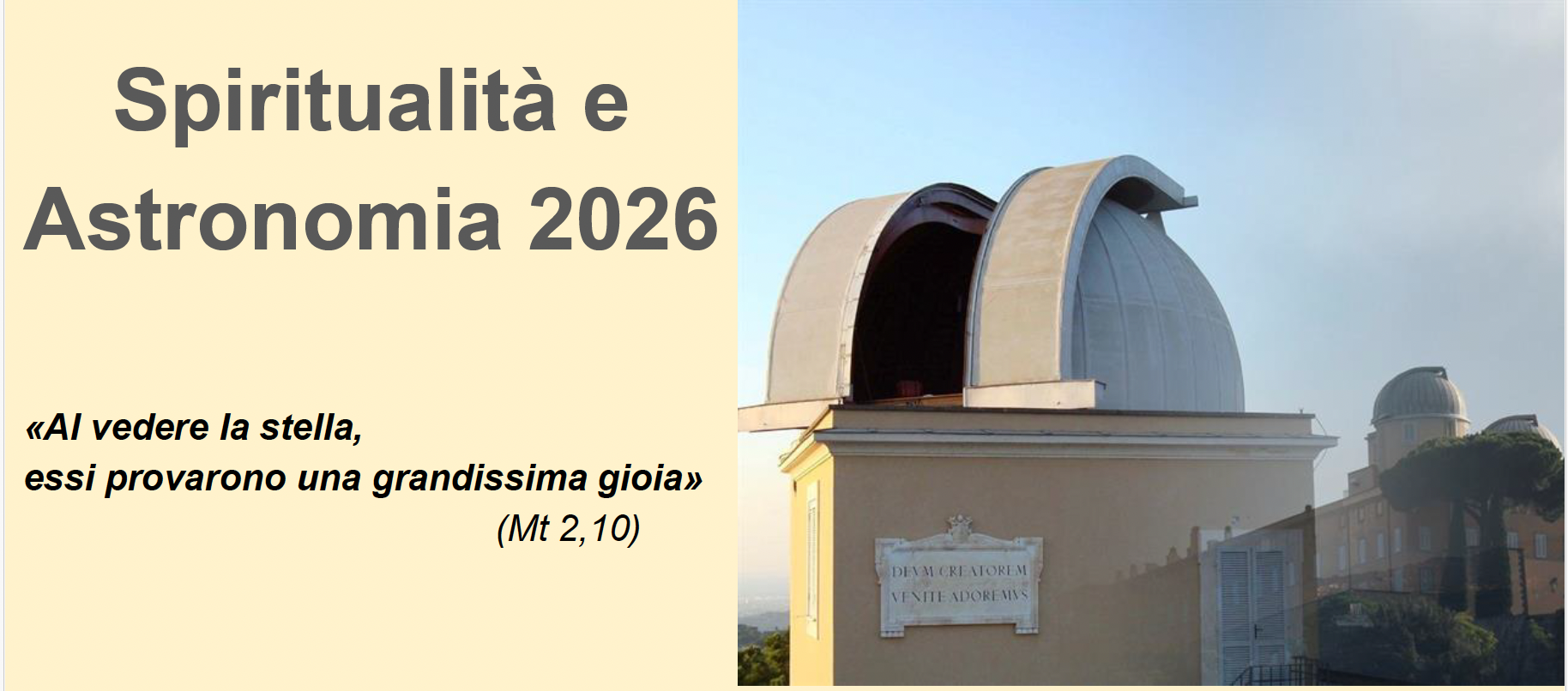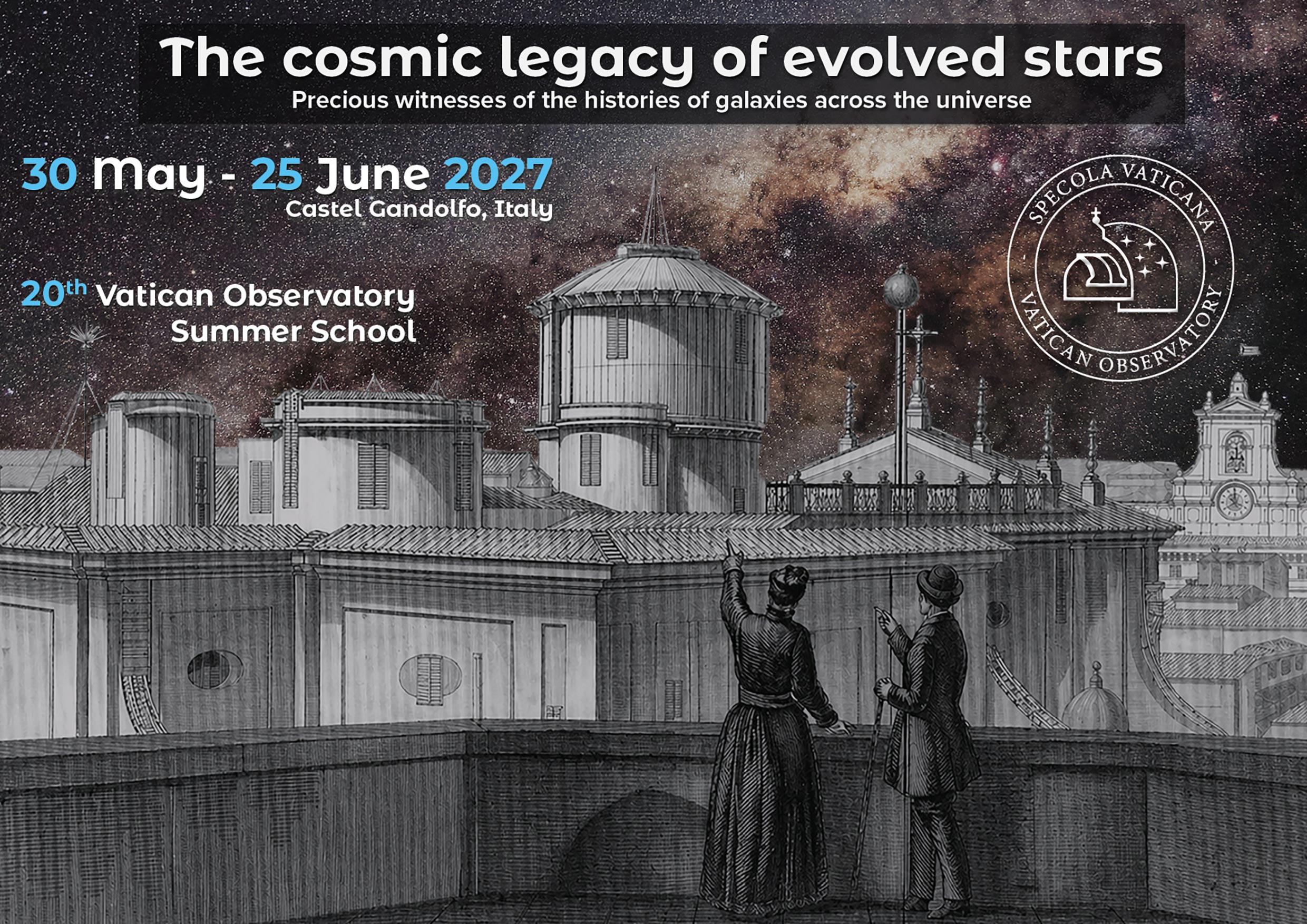

The Vatican Observatory — Vatican City State's astronomical observatory — is currently running a lecture series at its Castel Gandolfo headquarters on one of modern physics' most captivating problems: the Vatican Observatory Lectures on Quantum Gravity 2026. A group of doctoral candidates and young researchers is being guided by internationally renowned experts through the problem of quantum gravity — the challenge of unifying quantum mechanics, which governs the world of elementary particles, with Einstein's general relativity, which describes gravity and the large-scale structure of space-time. This unified theory is expected to explain the genesis and earliest moments of our Universe.
The central difficulty is this: in general relativity, space and time aren't a fixed backdrop against which physics plays out — they are themselves active participants, curving, deforming, and taking part in the dynamics. When quantum mechanical rules are applied to these same quantities, deep mathematical inconsistencies arise. The best known is so-called perturbative non-renormalizability. In theoretical physics, "renormalizing" means keeping the infinite quantum corrections that appear in calculations under control by absorbing them into a finite set of experimentally measurable parameters. This works flawlessly for nature's other forces, but fails for gravity: the quantum corrections proliferate uncontrollably, producing infinitely many free parameters and stripping the theory of any predictive power. Finding a way around — or through — this obstacle is one of the central goals of quantum gravity research.
Coordinated by Fr. Gabriele Gionti, SJ, and Fr. Matteo Galaverni of the Vatican Observatory, the lecture series explores four distinct approaches to the problem. Professor Claus Kiefer (University of Cologne) presents the canonical quantization of gravity and the problem of time: in a theory where time itself is a dynamical variable subject to quantum fluctuations, how can the evolution of a physical system even be defined? Kiefer also takes up open questions surrounding black holes — objects where gravity reaches extreme intensities — and their quantum description, including the nature of the singularities at their core.
Professor Roberto Percacci (SISSA, Trieste) demonstrates a covariant approach to quantizing gravity, treating gravitons — the quanta of the gravitational field, analogous to photons for light — as spin-2 particles. He introduces the asymptotic safety program, an elegant proposal suggesting that gravity could become quantum-mechanically consistent through the particular behavior of its fundamental constants at high energies, without requiring any exotic new ingredients.
Professor Sergio Cacciatori (University of Insubria) confronts the subtler conceptual puzzles: what does it even mean to quantize a theory in which the very arena of space and time is subject to quantum uncertainty? How do you measure time when time itself is fluctuating? These questions may sound philosophical, but they carry precise — and still unresolved — technical consequences.
Professor Pierpaolo Mastrolia (University of Padua) brings the perspective of scattering amplitudes, the mathematical tools physicists use to calculate the likelihood that two particles collide and produce new ones. He highlights striking structural parallels between the amplitudes of gauge theories — which describe the electromagnetic and nuclear forces — and those of quantum gravity, particularly supergravity and string theory, revealing unexpected connections between seemingly distant corners of theoretical physics.
These lectures give participants a genuinely singular experience. The Vatican Observatory, a centuries-old institution that has always paired scientific rigor with intellectual openness, offers these young researchers more than just a place to study — it offers an atmosphere where open exchange and curiosity remain at the heart of the work. Because the biggest open questions — and the quantum nature of space and time surely ranks among the biggest — are best faced together.