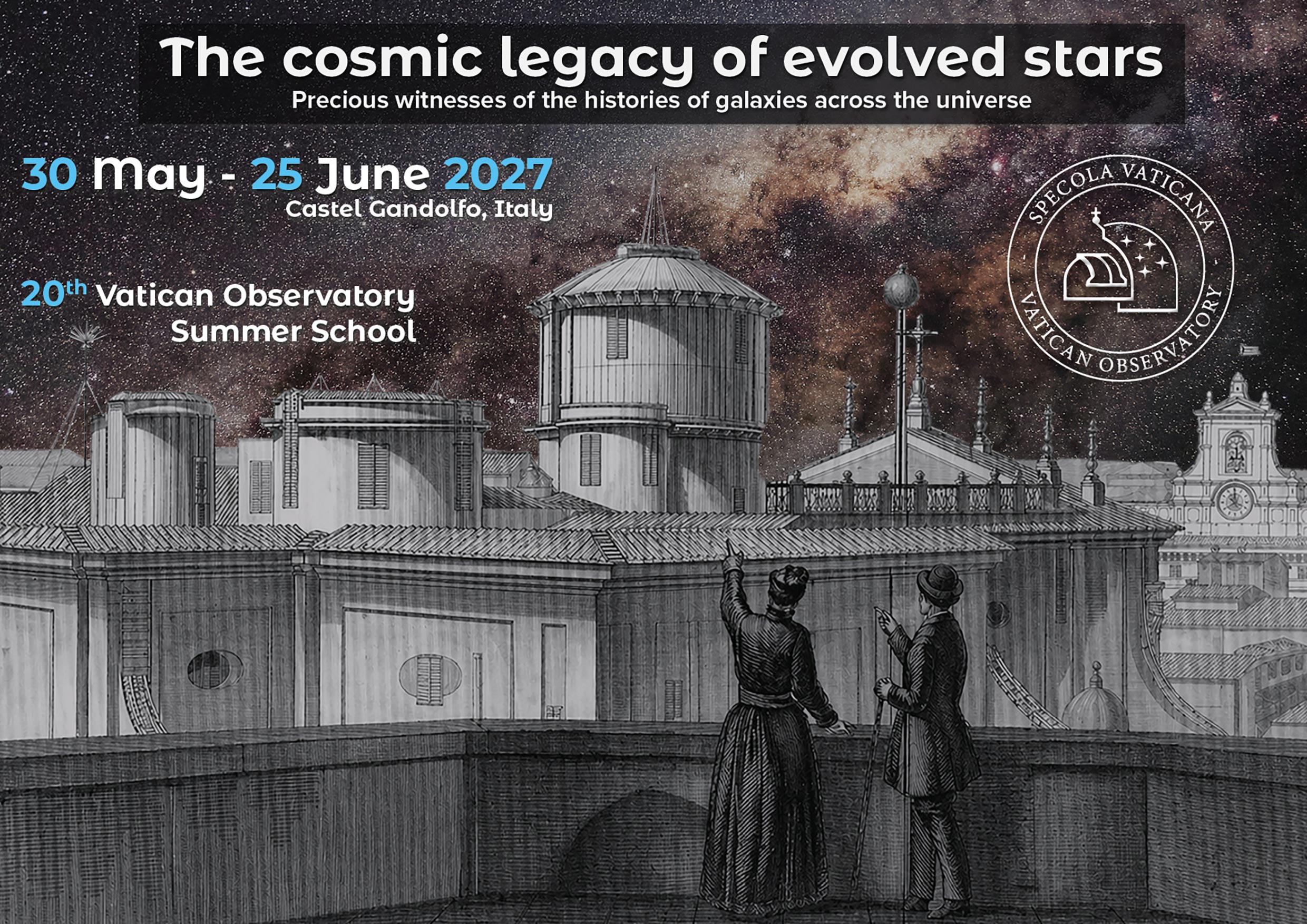
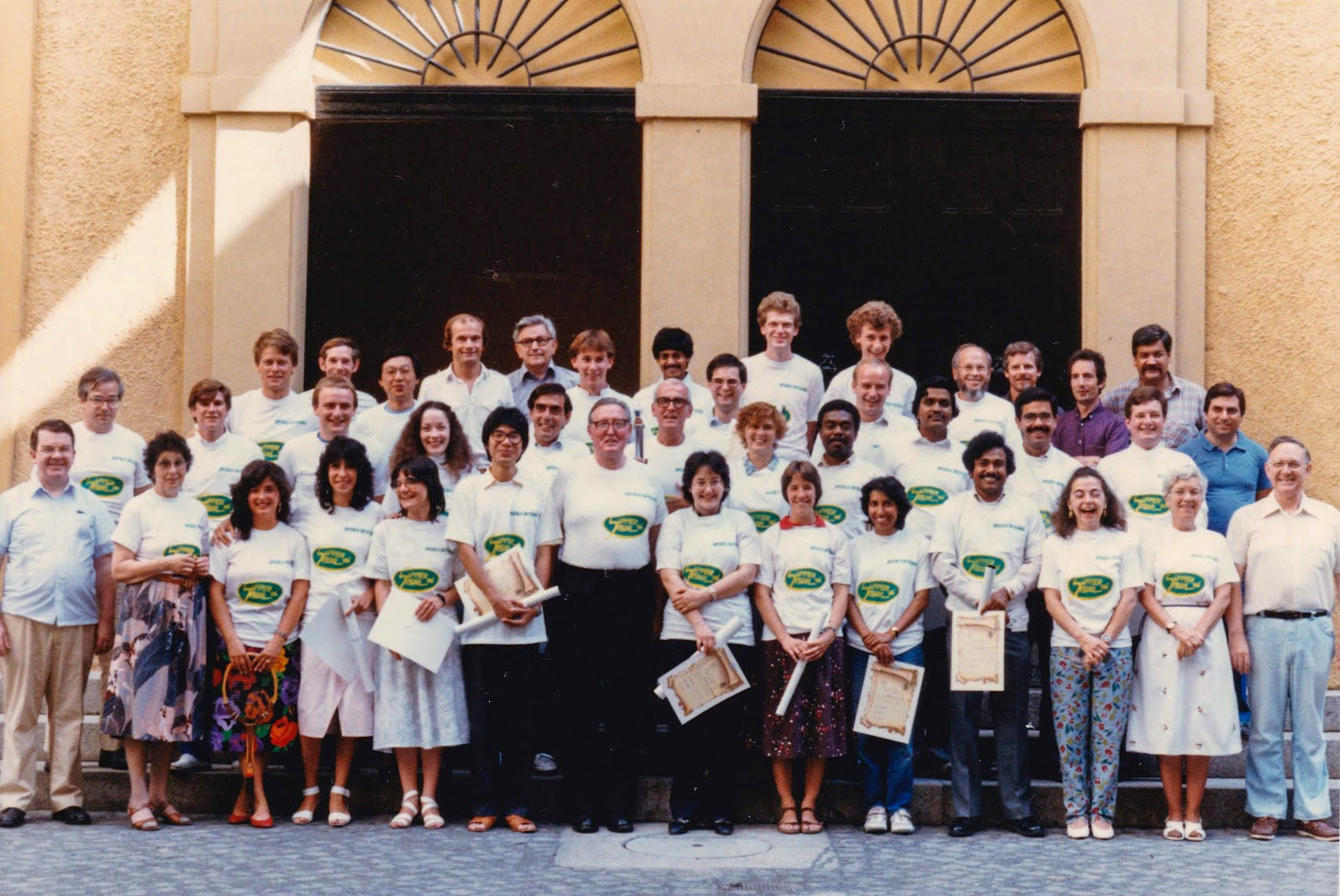
When twenty-five students and three faculty members gathered for the first Vatican Observatory Summer School (VOSS) in June of 1986, they were the result of a far-reaching idea that occurred to Father Martin McCarthy, S.J., in late summer two years earlier. It was evening at Castel Gandolfo. He was packed and ready for an early ride next morning to Fiumicino airport for a flight to Washington, D.C., and he was pacing the large terrace at the top of the Papal Palace. On his mind was the fact that he and his fellow Vatican Observatory astronomers effectively reached out to their peers, but what might the observatory do for the younger generation of astronomers to further them in their careers. Of course! Run a summer school for early graduate level students, selected worldwide, without regard for their religion or none, but just wanting to help those with ability and a passion for astronomy to succeed. Martin slept on the idea, discussed it with the Director, Father George Coyne, S.J., who drove him to the airport and himself was passionate about education…and VOSS was born.
The first VOSS had a wonderfully pioneering feel about it. The faculty had to be people with a strong reputation for research, both to ensure the courses were of high quality and that recommendations they would write afterward for the students bore significant weight. So Martin, as Dean of the School, asked his friends David Latham and Vera Rubin to cover the fields of stars and galaxies respectively. Vera, who as a woman had had considerable challenges to overcome in her distinguished career, insisted on a high proportion of young women in the final selection of students. This was readily agreed upon by Martin and David, and by George as overall Director. The other selection principle was to emphasize students from developing countries so that they could make firm contacts with the faculty and fellow students who could help them find graduate and postdoc positions in the astronomy departments of industrialized countries. Both principles, without any imposed bias save that of accepting no more than two from any one country, tuned out to be naturally present in the list of selected students.
Now, since “all work and no play makes Jack, and Jill, a dull person”, George made sure there were plenty of non-academic activities during the School. Every Saturday brought an excursion into cultural Italy, including the beaches, and the middle weekend had everyone travel to Florence for a two-night stay. The “School” parts of that were to see the Italian National Arcetri Observatory above the city and visit the History of Science museum, not neglecting to look for the display of Galileo’s finger. Lunch for all was cooked by two Jesuit Brothers, John (Hollywood, S.J.) and “Juice” (Lemon, S.J.), amid many culinary challenges; but if we had to wait a bit for the meal, we could enjoy a gorgeous view of Lake Albano from a palace terrace and keep chatting over a glass of wine. George made sure every student thrived during the four weeks. He would even do late-evening raids on the library and gather up over-earnest students to take a “gelato break” outside in the square before the bars closed.
The VOSS was deliberately made longer than other summer schools in astronomy. The magic of its pioneering formula has worked again and again to bring strangers together for a month so they leave as colleagues and firm friends who will help each other in life and in careers. Forty years after the first VOSS a distinguished alumnus writes upon sending a picture he kept of the 1986 School: “They are great memories, we were so young!”
Christopher Corbally, S.J.