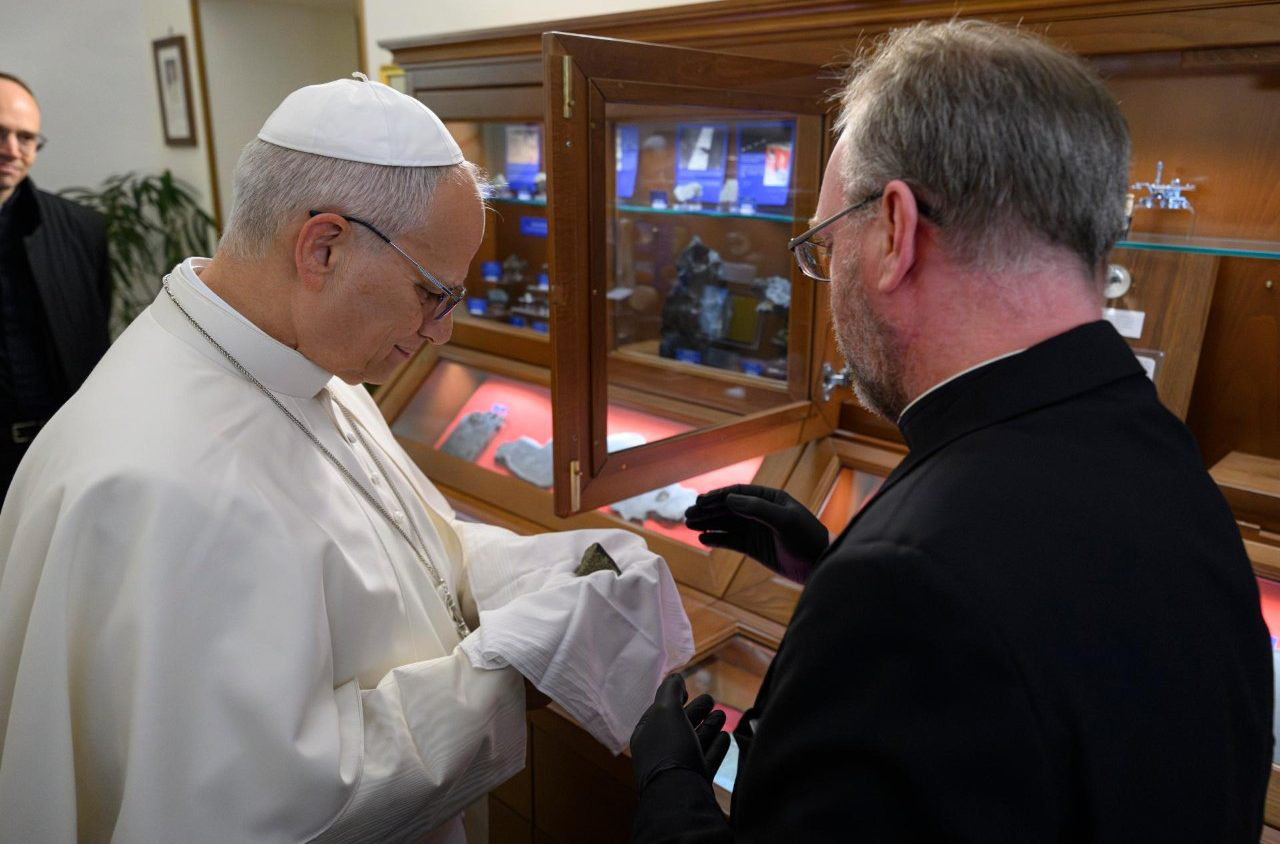
On May 19, Pope Leo XIV visited the Vatican Observatory in Castel Gandolfo for the second time. His previous visit took place on July 20, on the occasion of the 56th annuversary of the Moon landing, an event that the scientific community and the Church have remembered as a sign of human curiosity and responsibility toward the universe.
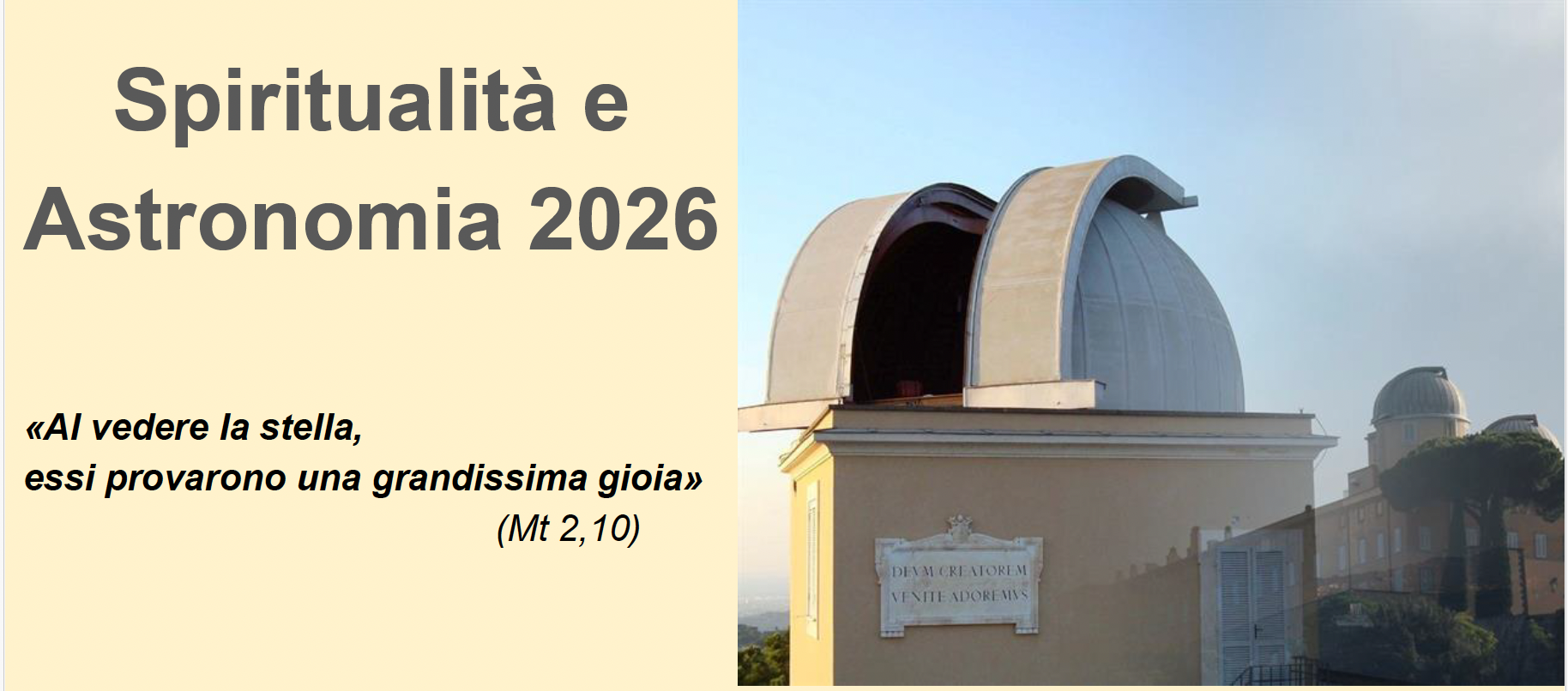
The Vatican Observatory, located in the historic town of the Castelli Romani, where the Holy Father spent the day alternating between work commitments and moments of rest, welcomed the Holy Father in an institutional setting. Sr. Raffaella Petrini, President of the Governatorate of Vatican City State, welcomed the Pontifex together with the Secretaries General, Archbishop Emilio Nappa and Attorney Giuseppe Puglisi-Alibrandi.
Accompanying the Holy Father and presenting the scientific activities of the Observatory were its Director, Father Richard Anthony D’Souza, and his predecessor, Brother Guy Consolmagno, current President of the Vatican Observatory Foundation. The meeting provided an opportunity to present the ongoing research project, scientific outreach initiatives and the care of the historical collections preserved at the Observatory, including valuable astronomy texts and meteorite specimens.
The visit continued with a moment of prayer in the chapel of the Jesuit Fathers’ Community, during which the Holy Father paused in prayer and reflection with the members of the religious community. Afterwards, Pope Leo XIV met with the staff of the Observatory – the scientific and religious staff and lay collaborators – and personally greeted them, exchanging words of encouragement and appreciation for the service they carry out in the fields of research and education.
The meeting highlighted the role of the Observatory as a place of dialogue between faith and science, where the commitment to understanding Creation is accompanied by ethical and spiritual reflection. During the visit, international collaboration projects and educational activities aimed at schools and the general public were also recalled. These initiatives contribute to promoting astronomical culture and fostering dialogue between the scientific community and civil society.