
Dear friends of the Vatican Observatory,
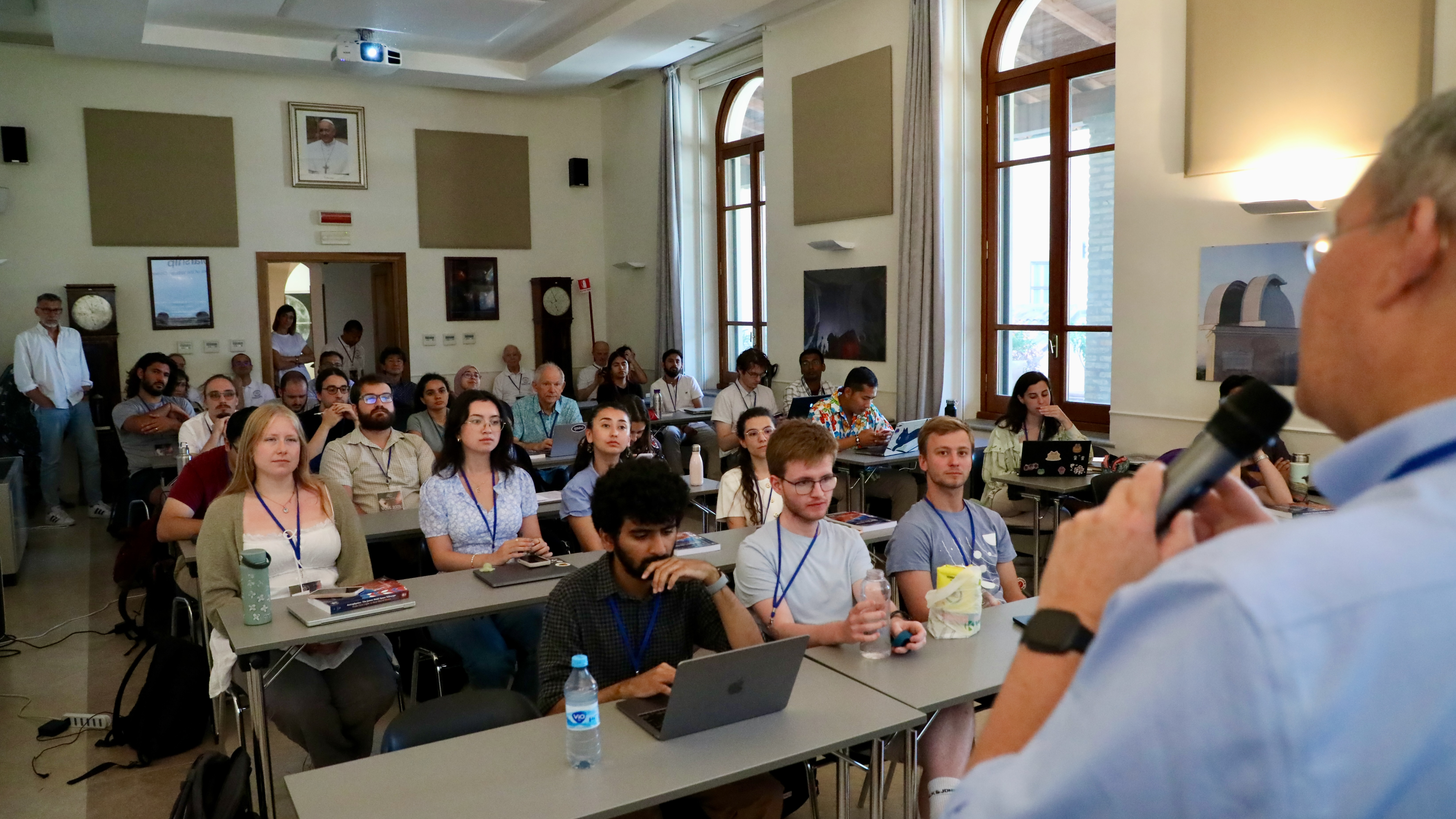
since 1986, the Vatican Observatory has held a prestigious biennial month-long summer school (which we affectionally call VOSS) for young astronomy students from around the world, with a particular focus on helping students from developing countries launch into academic careers. The schools remain a memorable event in the lives of all our students. Today, the network of ex-students from these schools extends all around the world: they are well inserted in academic and university positions, and this in turn earns a lot of goodwill for the Observatory and the Church. Not only has the model of these schools been replicated by other institutions, but today we are witnessing the phenomenon in which many of our successful ex-students return to lead future schools as faculty and resource persons – in some way passing on to the next generation what they so freely have received in the past. Above all, the summer schools train students not only to be the best in their field but also help them to concentrate on relationships and building networks.
The summer school VOSS 2025 was a great success. It is now time to start planning for VOSS 2027. Thus, I am officially opening the call for proposals for the next Vatican Observatory Summer School, VOSS 2027.
We need to determine the faculty and topic by spring 2026 so as to prepare the call for students by the summer. Students will apply in the fall of 2026, be selected in early November, and notified before Christmas, giving them (and us) time to make all the necessary travel arrangements in the spring of 2027.
Proposals for VOSS 2027 can come from the full astronomy community: Vatican Observatory staff; from VOSS alumni; and indeed from any scientist including those outside the VOSS community who might have a wonderful idea to share with us. Therefore, please feel free to forward this email to any colleagues who might interested in organizing VOSS 2027.
The summer schools have enjoyed an illustrious history since their inception in 1986. Vera Rubin was among the first instructors at VOSS. What distinguishes VOSS from other programs is its intensity and duration: four weeks during which strong relationships are formed among students, and between students and faculty. Alumni of the summer schools often remain in contact for many years afterward. The summer schools are made possible by the generous contribution of our benefactors through the Vatican Observatory Foundation based in the US.
The DEADLINE for submitting VOSS 2027 proposals to
Your proposal should include:
1. A title identifying your topic. It should be something exciting, which we can use to advertise the school to potential students
2. A list of proposed faculty. This should indicate the chairperson, who will have responsibility for the final academic program, and also two or three other faculty members who will be available for most if not all of the 4 weeks of the program.
The faculty should include a wide variety of backgrounds, both scientific and personal. Students are not all going to have a complete background in your proposed topic, so having faculty whose expertise goes beyond the topic in several different dimensions increases the odds that the students can find someone they can go to for questions.
In addition, our faculty act as role-models for the students, so it strengthens the proposal (and the school) to have a variety of ages, nationalities, etc. among the proposed faculty.
We can’t pay a stipend. However, we are happy to handle the travel and lodging expenses for the faculty. For the chair we will take care of travel and lodging expenses for their family as well.
3. A short description of the range of the topic, including a justification for why it is timely, why the faculty are especially appropriate, why students from around the world will particularly benefit from attending the school, etc.
4. A list of individual topics likely to be covered in the morning lectures. We don’t need a full syllabus, simply an idea of the depth and range of the material to be covered.
5. A list of the possible afternoon research projects that can give students some hands-on experience in the subject at hand. Let us know if special equipment (e.g. computers with NVIDIA cards, etc.) might be needed.
6. A list of potential evening guest speakers (including colleagues or family members who might be likely to be available in person or via Zoom) to make the program all the more enriching.
Note that we generally get several excellent proposals, and they get even better when they are proposed a second or third time! So just because you were turned down previously, please don’t be discouraged. And if you are just thinking of a school for the first time, feel free to propose now with the thought that even if you aren’t chosen, the experience will make for a better proposal (and school) the next time!
Now is the time to talk up the idea with your colleagues and come back with a proposal. If yours is selected, I can promise months of hard work, but also a chance to meet incredible students in a fabulous setting, and an experience that will affect not only their lives and careers, but yours as well! We would be also very grateful if you could pass on this request to your astronomy colleagues in your home country.
Thank you for your consideration!
— Fr. Richard D’Souza SJ
Blog Categories
Recent Posts
Connect
Subscribe
Please insert your API key for mailchimp.